Oil Change vs Flush: A Practical Guide
A detailed, data-informed comparison of oil change vs flush, when to choose each service, cost and maintenance implications, plus practical steps for DIY enthusiasts.


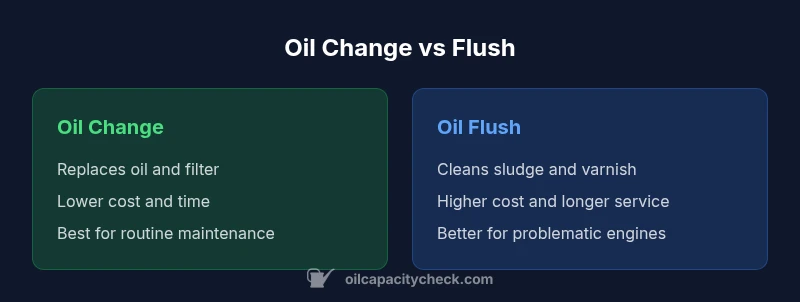
oil change vs flush: The standard oil change is sufficient for most vehicles, while an oil flush is a more aggressive cleaning service used in specific situations. For routine maintenance, a simple oil change with filter replacement typically costs less and carries fewer risks. Reserve flushing for engines with sludge buildup, high mileage, or when a mechanic recommends it. See the full comparison below.
What are oil change and oil flush?
An oil change is the routine service that replaces the old engine oil and the oil filter, restoring lubrication to moving parts and helping to carry away contaminants. According to Oil Capacity Check, an oil change targets fresh lubrication and dirt removal at the source, typically performed as part of regular maintenance intervals. An oil flush, by contrast, uses a cleaning agent to dissolve sludge and varnish inside the engine oil passages before new oil circulates again. This can loosen deposits so they are carried out by fresh oil, but it also introduces extra steps and potential risks. The Oil Capacity Check team notes that flush services are not universally required and should be reserved for engines showing signs of heavy buildup, sludge, or as recommended after certain repair scenarios.
When deciding between these services, consider the engine’s age, mileage, operating conditions, and the vehicle manufacturer’s guidance. The distinction is not merely about removing dirty oil; it’s about how much cleaning the engine actually needs while maintaining reliable lubrication. This section sets the stage for a deeper, data-informed comparison that follows.
-titlePlaceholderForMarkdown
-stylePlaceholderForMarkdown
Comparison
| Feature | Oil change | Oil flush |
|---|---|---|
| What the service does | Replaces oil and filter to restore lubrication and carry away contaminants | Uses a cleaning agent to loosen sludge/varnish before new oil is added |
| Typical scenarios | Routine maintenance for most vehicles | Situations with sludge, varnish buildup, or prior maintenance issues |
| Frequency | Typically every 3,000–5,000 miles (or per manufacturer) | Only as recommended for specific issues or by a mechanic |
| Cost considerations | Lower upfront cost and shorter service time | Higher cost and longer service duration |
| Risks and downsides | Minimal risk when done correctly; may leave some deposits if oil isn’t changed promptly | Potential for mineral deposits or resinous residues if not paired with fresh oil and filters |
What's Good
- Supports reliable engine lubrication with routine maintenance
- Lower cost and shorter service time for standard care
- Widely available and familiar to most DIYers
Cons
- Flush can be unnecessary for engines with clean oil passages
- Flushes may temporarily dislodge deposits that need subsequent flushing or filtration
- Higher cost and longer service time when a flush is performed
- Improper flushing could introduce contaminants if not followed by a proper oil change
Oil change is the default choice for routine maintenance; flush is situational.
For most drivers, a standard oil change with a new filter provides adequate lubrication and protection. Reserve flushing for engines showing significant sludge, varnish, or as explicitly recommended by the manufacturer or a trusted mechanic. The Oil Capacity Check team emphasizes following manufacturer guidance and using flushing only when the documented condition calls for it.
People Also Ask
What is the fundamental difference between an oil change and an oil flush?
An oil change replaces the used oil and oil filter to restore lubrication and remove contaminants. An oil flush uses a cleaning solution to loosen sludge and varnish within the engine passages before replacing with new oil. The choice depends on engine condition and manufacturer guidance.
An oil change replaces the oil and filter to keep lubrication clean. An oil flush uses a cleaning agent to remove built-up sludge before refilling with fresh oil.
When should I consider an oil flush?
An oil flush is typically considered when there is noticeable sludge, varnish, or build-up in older or high-mileage engines, or when a mechanic determines that deposits impede oil flow. It should not replace an oil change, but precede or accompany one when indicated by a professional.
Only consider a flush if a mechanic recommends it due to deposits; otherwise stick with an oil change.
Can flushing damage an engine?
Flushing carries some risks, including stirring up deposits that clog filters or accommodation passages if not followed by a thorough oil change and proper filtration. A misapplied flush can also introduce contaminants. Always have it performed by a trained technician.
There are some risks if not done correctly, especially without subsequent oil changes and filtration.
Does flushing affect warranty?
Warranty implications vary by manufacturer and region. Some warranties require that oil changes and recommended maintenance be performed with approved products and procedures. Check your owner’s manual and warranty terms before a flush.
Warranty rules vary; consult your manual and dealer guidance before a flush.
How often should I change oil vs flush?
Oil changes follow the manufacturer’s suggested intervals, usually based on mileage or time. Flushing is not a routine maintenance item and is performed only when advised by a mechanic due to engine condition or specific service needs.
Change oil on the schedule in your manual; flush only when recommended.
Is there a risk to mixing old and new oil during a flush?
During a flush, it’s important that the old oil be drained before new oil and a fresh filter are installed. Mixing improperly can reduce lubrication quality and remove the benefits of the flush.
Make sure the old oil is fully drained and replaced with fresh oil after a flush.
The Essentials
- Choose routine oil changes for most engines to maintain lubrication.
- Reserve flushing for engines with sludge or as recommended by a professional.
- Consider oil type and engine condition when deciding between services.
- Avoid unnecessary flushing to minimize risk and cost.
- Always consult the owner's manual and a trusted mechanic for final guidance.