Difference Between Fluid Change and Flush: A Practical Guide
Explore the difference between fluid change and flush, when to choose each, what to expect during service, and smart maintenance tips from Oil Capacity Check.


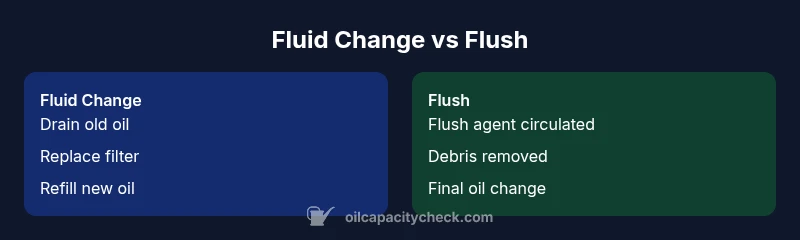
Fluid change and flush are two distinct oil services. A fluid change simply drains old oil, replaces the filter, and refills with fresh oil, while a flush uses a cleaning agent to cleanse passages before refilling. The difference between fluid change and flush largely comes down to maintenance needs, engine condition, and potential deposits; for most healthy engines a standard oil change suffices, whereas flushing is reserved for sludge or severe buildup.
The core difference: fluid change vs flush
According to Oil Capacity Check, understanding the difference between fluid change and flush helps car owners choose the right maintenance path. The phrase difference between fluid change and flush highlights a practical distinction: a routine oil change replaces lubricants and filters, while a flush attempts to reclaim a system by removing sludge, varnish, and stubborn deposits. For most drivers in normal service, a simple oil change is adequate, but when deposits accumulate or viscosity is degraded, a flush may be considered. This section lays out how the two services diverge in purpose, technique, and expected outcomes, so you can make an informed choice without speculation. The goal is to keep engines reliable, efficient, and within manufacturer guidelines without unnecessary procedures.
- Core objective: oil change focuses on new lubricant supply; a flush targets buildup in passages.
- Typical signals: service history, engine temperature behavior, and oil clarity guide the choice.
- Practical result: smoother operation with fresh oil vs potential debris removal and deposit disruption.
Throughout this article, you’ll see how the two options compare on processing steps, risk profiles, and long-term value for different engine conditions.
How each service works: the mechanics
Both services start with a drain and a filter change, but the subsequent steps diverge significantly. A standard fluid change involves opening the drain plug, letting gravity do the work, replacing the filter, and refilling with the recommended oil grade and volume. The entire process is usually quick—often under an hour—and designed to minimize disruption to engine components. A typical oil change also includes a quick inspection of the drain plug, gaskets, and seals to ensure there are no leaks after refilling.
A flush, by contrast, introduces a flushing agent into the oil system. The engine is run at operating temperature to circulate the cleaner through galleries and passages, loosening sludge and varnish. After a prescribed interval, the oil and cleaner are drained, the system is flushed again with fresh oil, and a new filter is installed. Because flushing can mobilize deposits, it’s critical to verify that the oil pickup, passages, and filters remain clear after the process. This section emphasizes the mechanical steps, what each phase aims to achieve, and how to prepare for the service.
Notes on safety and compatibility: not all engines tolerate aggressive cleaning agents, and some manufacturers discourage flushing certain systems. Always consult the owner’s manual and rely on a trained technician’s assessment to determine if flushing is appropriate for your vehicle.
When a simple fluid change is enough
For most modern engines with regular maintenance history, a straightforward fluid change is the most practical route. If the oil appears clean, viscosity is within spec, and there are no symptoms of sludge or excessive wear, replacing the oil and filter is typically sufficient to maintain lubrication and cooling performance. A fluid change preserves the original design intention and minimizes the risk of dislodging deposits that could migrate to critical clearances. It’s also faster and cheaper than flushing, making it the preferred option for routine maintenance intervals between more invasive services. Regular oil changes support fuel efficiency and engine longevity, especially when paired with a timely filter change and a correct oil grade per manufacturer specifications.
- Signals of sufficiency: clean oil color, stable viscosity, no unusual consumption or noises.
- Maintenance alignment: tie oil changes to mileage-based intervals or manufacturer recommendations.
- Monitoring plan: track oil temperature, pressure indicators, and service history for early warning signs of deposits.
As with all maintenance, documentation matters. Record the oil type, viscosity, and change date so you can predict future needs and avoid unnecessary procedures. Oil Capacity Check emphasizes following OEM guidance and staying consistent with service intervals to maximize long-term engine health.
When flushing is appropriate: sludge and deposits
A flush gains relevance when there is evidence of sludge buildup, varnish, or restricted oil flow that a simple change cannot address. Engines with prolonged idling, poor oil changes, or extreme driving conditions may accumulate deposits in galleries, oil passages, or the oil cooler. A flush is intended to clear these deposits, restore flow, and improve lubrication pathways. However, the process can release debris that temporarily circulates through the system, so a subsequent oil change and filter replacement are essential. Oil Capacity Check notes that flushing is most beneficial for engines with symptomatic deposits or a documented maintenance history that suggests buildup.
- Signs deposits exist: darker, thicker oil; reduced oil pressure; unusual engine noises at idle or low RPM.
- Post-flush steps: drain, replace filter, and use fresh oil to ensure residues don’t recirculate.
- Limits and cautions: flushing is not a substitute for addressing root causes like infrequent changes or poor oil quality.
This approach should be reserved for scenarios where a technician confirms deposits and the manufacturer does not prohibit the procedure. The goal is to improve lubrication paths and prevent long-term damage by removing hard residues that hinder oil flow.
Safety, risks, and engine wear considerations
Both fluid changes and flushes aim to protect engine wear, but each carries distinct risk profiles. A conventional fluid change, when done correctly, has minimal risk beyond potential leaks if seals are worn. The main safety consideration is using the correct oil grade and ensuring a precise fill quantity to maintain pressure and lubrication. A flush, however, introduces moving deposits into the oil system and can temporarily worsen oil circulation if not followed by a proper oil change and filter replacement. Over-aggressive flushing or using incompatible cleaners can affect seals or gaskets and may lead to leaks or chemical reactions with certain engine materials. Always verify the compatibility of the flushing agent with your engine and review OEM guidance before proceeding.
- Common risks: moved debris, misrouting of oil flow, gasket or seal stress.
- Practical safeguards: use manufacturer-approved cleaners, ensure complete drainage, and perform a final oil and filter change after flushing.
- Technician role: a trained professional can assess engine condition, determine suitability, and monitor for adverse reactions during the process.
Cost, time, and value context
Cost and time are major differentiators between a fluid change and a flush. A basic oil change involves replacing oil and the filter, typically at a lower price point and shorter service time than a flush. Flushing adds material costs for the cleaner and a longer labor window due to the additional steps and checks. The overall value depends on engine condition, service history, and the specific parts of the system being cleaned. Oil Capacity Check guidance suggests weighing the long-term benefits against immediate expenses, especially if the vehicle has a robust maintenance history and no evidence of sludge. In many cases, the incremental cost of a flush is justified only when it addresses a real performance limitation or clear deposits. Remember that prices vary by region and shop, so compare multiple quotes and verify the service plan with your technician.
- Factors that drive cost: oil type, filter quality, cleaning agent, and labor time.
- Time considerations: a simple fluid change is usually faster; a flush may require additional checks and a follow-up oil change.
- Value framing: align the service with engine condition and manufacturer guidance to avoid unnecessary work.
Maintenance planning: a decision checklist
To help you decide, use this checklist before your next service: (1) Review the manufacturer’s recommendations for oil change intervals and whether flushing is advised for your engine type; (2) Inspect oil appearance and condition for sludge or varnish indicators; (3) Consider driving patterns—short trips and heavy city driving increase sludge risk; (4) Assess service history—any gaps or previous flushes?; (5) Consult a qualified technician who can tailor the plan to your vehicle’s needs. By applying these checks, you’ll reduce the chance of unnecessary work and align maintenance with the engine’s actual needs. Oil Capacity Check emphasizes that a well-documented maintenance history and OEM guidance yield the best outcomes over time.
- Keep a running log of oil type and change dates.
- Schedule future services in line with OEM or professional recommendations.
- Use high-quality oil and filters to maximize the effectiveness of either service.
This proactive approach helps you distinguish between routine maintenance and more invasive procedures, and it supports accurate budgeting for future upkeep.
Maintenance best practices after service
After any oil service, adopting prudent practices extends the benefits of the chosen method. Ensure the engine has had a climate- and operation-appropriate cooling period after the change or flush, allowing oil to circulate fully before heavy driving. Verify that all drain plugs and seals are properly torqued to spec and monitor for any leaks in the first 24 to 48 hours post-service. Keep an eye on oil level and color in the following days; if you notice unusual consumption or discoloration, revisit the service history and discuss potential root causes with your technician. Establishing a consistent maintenance cadence—oil type, viscosity, and interval—helps prevent gaps that can lead to deposits and performance issues. Oil Capacity Check recommends pairing oil changes with a filter upgrade and periodic inspection of the crankcase ventilation system to support longevity and efficiency. The goal is stable lubrication, predictable performance, and fewer surprises during daily driving.
Common myths, debunked, and practical tips
There are several myths around fluid changes and flushes that can lead to misinformed decisions. One common myth is that flushing always eliminates all deposits; in reality, it can dislodge material that requires additional filtration and disposal. Another misconception is that flushing is universally harmful; when used appropriately and by qualified technicians, it can restore flow in engines with genuine sludge or deposits. A common practical tip is to rely on OEM guidelines and documented service histories rather than marketing promises or generalized advice. By focusing on evidence-based practices and manufacturer recommendations, you can choose the appropriate maintenance strategy and protect engine longevity over the life of the vehicle.
Comparison
| Feature | Fluid Change | Flush |
|---|---|---|
| What it involves | Drain old oil, replace filter, refill with new oil | Add flushing agent, circulate, drain, then refill and replace filter |
| Typical time | Typically under 60 minutes | Often longer due to cleaning cycle and checks |
| Best for | Healthy engines needing routine lubrication | Engines with sludge/deposits or restricted flow |
| Typical costs | Lower upfront cost (varies by region) | Higher cost due to cleaning agent and extra labor |
| Risks | Low risk of dislodging deposits | Possible debris circulation if not followed by full oil change |
What's Good
- Faster service with minimal downtime
- Lower upfront cost compared to flushing
- Less invasive for engines with no sludge symptoms
- Supports routine maintenance and oil life
Cons
- May not remove heavy deposits effectively
- Requires more frequent changes if sludge is present
- Not ideal for engines with known sludge or varnish issues
- Could miss underlying causes of oil degradation
Fluid change is generally the safer default for routine maintenance on healthy engines; flushing is reserved for confirmed sludge or buildup and should be done by a qualified tech.
Choose a simple fluid change for standard maintenance when the engine shows no sludge signs. Opt for a flush only if a technician identifies deposits that could compromise oil flow, following OEM guidance and professional evaluation.
People Also Ask
What is the difference between a fluid change and a flush?
A fluid change replaces the oil and filter with fresh lubricant, while a flush uses a cleaning agent to break down sludge and deposits before refilling. The main difference is in goal and approach: maintenance vs cleaning deposits. Always align with OEM guidance and a technician’s assessment.
A fluid change is a simple replacement of oil and filter. A flush uses a cleaner to remove buildup before refilling the system.
When should I choose a flush instead of a simple oil change?
Choose a flush when there is evidence of sludge, varnish, or restricted oil flow that a standard change cannot address. This decision should be guided by a professional diagnosis and manufacturer recommendations.
Flush only if a technician says there’s sludge; otherwise, a regular oil change is usually enough.
Are there risks associated with flushing?
Flushing can mobilize deposits that might clog filters or passages if not followed by a thorough oil change and filter replacement. It may also interact poorly with certain engine designs or oils. Always ensure compatibility and proper aftercare.
Flushing carries some risk if deposits loosen but aren’t cleared by a follow-up oil change.
How long does each service typically take?
A standard oil change typically takes under an hour, depending on the vehicle. A flush may take longer due to cleaning steps and post-service checks. Ask your shop for an estimated timeline before approving.
Oil changes are quick; flushes take longer because of the cleaning and checks involved.
Can flushing cause damage to the engine?
If performed improperly or with incompatible cleaners, flushing can cause gasket or seal damage or push debris into critical paths. Always use a qualified technician and manufacturer-approved products.
Yes, improper flushing can cause damage, so go with a trained professional.
The Essentials
- Prefer fluid changes for routine maintenance
- Flush only for confirmed sludge or deposits
- Follow manufacturer recommendations to avoid unnecessary work
- Document oil type and service dates for future planning
- Consult a qualified technician for personalized guidance