Difference Between Oil Change and Flush: A Practical Guide
Understand the difference between oil change and flush, why it matters, and how to decide which service your engine needs. Practical guidance for DIYers and professional technicians.


Two common maintenance terms often confuse drivers: the difference between oil change and flush. In short, an oil change replaces used engine oil and the filter, restoring lubrication, while an oil flush cleans the passages to remove sludge and deposits. The choice hinges on engine condition, manufacturer guidance, and service history. According to Oil Capacity Check, understanding these concepts helps owners decide when action is needed.
What is an oil change?
An oil change is the foundational service for any internal-combustion engine. It involves draining the used oil from the crankcase, removing and replacing the oil filter, and refilling with fresh oil that matches the engine’s specifications. The goal is simple: maintain proper lubrication, cooling, and contaminant control so the engine can operate smoothly. The specifics—including oil viscosity, the amount of oil, and whether a coolant system flush is included—vary by vehicle maker and oil type (conventional, synthetic, or synthetic blends). Occasional variations exist for high-mileage engines or specialty vehicles. According to Oil Capacity Check, the oil change is the routine maintenance that most drivers rely on for consistent lubrication and protection. It is not designed to aggressively clean the internals; that’s a different maintenance procedure.
In practice, most owners perform an oil change at regular intervals tied to mileage or time, following the manufacturer’s recommendations. The process can be DIY-friendly for many vehicles: drain, replace the filter, top off, and check for leaks. If you’re unsure, consult your owner’s manual or ask a qualified technician. The important distinction in the context of the difference between oil change and flush is that a standard oil change focuses on replenishing fresh oil rather than aggressively cleaning deposits.
Emergency or unusually dirty conditions can change the plan. If you notice severe sludge buildup, metallic noise, or oil pressure concerns, consult a professional who can assess whether a flush is warranted or whether a straight oil change is sufficient. Oil Capacity Check notes that the decision should be guided by engine condition and the manufacturer’s guidance rather than habit alone.
What is an oil flush?
An oil flush is a more aggressive cleaning procedure designed to remove sludge, varnish, and deposits from the engine’s oil passages. It typically begins after draining the old oil and may involve circulating a flushing agent through the engine for a prescribed period, followed by another drain and a fresh oil fill. The flush agent helps dissolve residue that standard oil may not remove, potentially restoring oil flow and improving lubrication in engines with poor maintenance histories. However, flushing is not universally recommended for every engine. Some manufacturers discourage the practice because aggressive cleaning can dislodge deposits that may clog narrow passages or oil galleries. In the context of the difference between oil change and flush, this procedure is intended for specific contamination scenarios or when sludge is evident. The decision to flush should be based on professional advice and the engine’s design.
In real-world shops, a flush is rarely a routine step. It is typically reserved for engines with long-standing neglect, inverted oil change histories, or branded sludge problems. It may involve additional costs, extended service times, and the potential need for follow-up maintenance like a full oil change or filter replacement. The Oil Capacity Check team emphasizes that flushing is not a one-size-fits-all cure and should be used judiciously based on evidence from diagnostics and manufacturer guidance.
Key differences in purpose, procedure, and impact
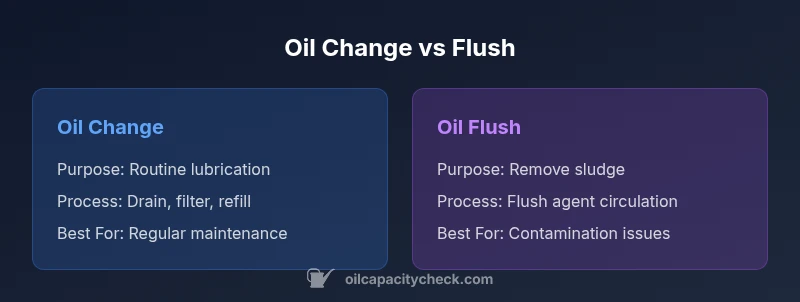
The central difference between oil change and flush is the intended outcome. An oil change prioritizes replenishment of clean oil and a fresh filter to maintain lubrication and engine longevity. A flush, by contrast, aims to address existing sludge and contamination by sweeping deposits from oil passages before refilling with new oil. Practically, the oil change involves standard steps: drain, filter replacement, refill, and level check. A flush adds a cleaning phase, solvent circulation, and often a subsequent oil change to remove the solvent and dislodged debris. These differing aims are important because they influence when each service is appropriate and how the engine should be treated afterward for reliable performance.
The difference between oil change and flush also affects cost, risk, and maintenance timing. Oil changes are routine and economical; flushes are more expensive and carry a greater risk if misapplied. It’s critical to align the chosen method with the engine’s condition, the vehicle’s design, and the manufacturer’s recommendations to avoid unintended consequences. Oil Capacity Check’s guidance is to consider flushing only when diagnostics indicate a genuine benefit, not as a reflex for every maintenance cycle.
How to evaluate the condition of your engine before deciding
To determine the appropriate service in the difference between oil change and flush, start with a diagnostic review. Check the oil color and consistency; extremely thick, dark, or gritty oil may point to contamination or sludge. Listen for unusual engine noises or performance changes that could signal restricted oil flow. Examine the oil cap and valve train for varnish or heavy gunk buildup. A professional inspection can reveal whether residues are localized or systemic and whether flushing would provide a meaningful improvement or risk introducing debris into oil channels. Remember that even if sludge is modest, manufacturer guidance may still prefer a standard oil change over a flush. Oil Capacity Check emphasizes the value of evidence-based decisions over blanket policies.
Additionally, consider vehicle age, operating conditions, and service history. Older engines or those with irregular maintenance may benefit from a targeted flush, while newer engines with clean oil histories typically do not. The goal is to preserve lubrication, protect engine components, and minimize the chance of drivers paying for unnecessary procedures.
When to choose an oil change versus a flush for your vehicle
Choosing between an oil change and a flush hinges on objective signals and manufacturer recommendations. If the engine runs with clean, fresh oil and there is no evidence of sludge, an oil change is ordinarily sufficient to maintain performance and longevity. If diagnostics reveal sludge buildup, varnish, or restricted oil passages that could impair lubrication, a flush may be warranted as part of a targeted remediation under professional supervision. In some cases, flushing after a long period of neglect can clear channels that an oil change alone cannot address. The key distinction in the difference between oil change and flush is that the former is maintenance-based and routine, while the latter is a corrective measure for specific contamination scenarios. Always consult the vehicle’s owner manual and rely on diagnostics from a qualified technician. Oil Capacity Check reiterates that the best decision is evidence-based and tailored to the engine design.
For high-mileage or performance vehicles, consult a dealer or service technician to interpret the oils and the vehicle’s design nuances. The choice may also be influenced by the oil brand and viscosity you intend to use after service. A pro can help determine whether a flush is a prudent step and, if so, how to pair it with a compatible oil change to maximize engine life.
Costs, risks, and maintenance implications of each approach
The financial and practical implications of the difference between oil change and flush extend beyond the sticker price. An oil change generally costs less than a flush, reflecting simpler materials and shorter service time. A flush can add significant labor charges and may require additional follow-up maintenance, such as a second oil change to remove residual solvent and displaced debris. The risk profile also differs: an oil change carries minimal risk when performed correctly, while a flush carries a higher risk of dislodging deposits in sensitive engines, potentially causing leaks or clogging if not executed with proper procedures. Vehicle compatibility matters; some engines are designed to tolerate minimal intervention, while others may benefit from more thorough cleaning in certain situations. Oil Capacity Check highlights the importance of aligning any flushing decision with the engine design and service history to avoid unintended consequences.
Practical tips for DIY vs professional service and post-service checks
If you’re considering DIY basics, ensure you have the right tools, fresh oil that matches the manufacturer’s specifications, a quality filter, a drain pan, and a safe workspace. Never mix different oil types without guidance from the owner’s manual. If your plan includes a flush, recognize that this is typically not a simple DIY task; it’s best performed by a trained technician who knows how to manage solvents, pressure, and filtration safely. After any service, verify the oil level, inspect for leaks, and listen for abnormal sounds during a test drive. Re-check oil level after the engine has cooled and run in a normal driving cycle. The objective is to maintain correct lubrication while avoiding overfilling or underfilling, which can impact performance and emissions. Oil Capacity Check’s practical approach emphasizes following the manufacturer’s guidance and relying on diagnostics to drive the decision between an oil change and a flush.
Comparison
| Feature | Oil Change | Oil Flush |
|---|---|---|
| Purpose | Replace aging oil and filter; maintain lubrication | Clean sludge and varnish; restore oil flow |
| Procedure Complexity | Lower; drain, replace filter, refill | Higher; add flush agent, circulation, drain, refill |
| Recommended Frequency | As per manufacturer intervals or oil type | Only for indicated sludge/contamination scenarios |
| Cost Range | Lower; standard service | Higher; variable per extent and shop |
| Best For | Routine maintenance and lubrication | Engine with sludge buildup or poor oil flow |
| Risks/Drawbacks | Minimal risk; routine maintenance | Risk of debris issues if misapplied; not suitable for all engines |
What's Good
- Maintains lubrication with fresh oil and filter
- Less risk and cost for routine maintenance
- Simple, predictable procedure for most vehicles
- Flush can be beneficial for confirmed sludge cases when guided by a pro
Cons
- Flush is not universally beneficial and may dislodge deposits
- Higher cost and longer service time
- Misapplication can cause clogging or leaks in some engines
- Not all engines require flushing or will benefit from it
Oil changes are the safer, more common choice for routine maintenance; flushes are situational and should be reserved for diagnosed sludge or contamination cases.
For most drivers, the difference between oil change and flush centers on necessity and risk. Choose a standard oil change for regular maintenance; opt for a flush only when diagnostics indicate sludge or restricted oil flow, under professional supervision.
People Also Ask
What is the difference between oil change and flush?
An oil change replaces used oil and the filter to maintain lubrication, while an oil flush uses a solvent to clean deposits from oil passages. The change is routine; a flush is conditional and aimed at cleaning existing sludge or contaminants. Follow manufacturer guidance and diagnostics to decide.
An oil change replaces the oil and filter for routine lubrication; a flush cleans deposits with a solvent, but it’s not always needed and should be guided by a professional.
Is an oil flush safe for all engines?
No. Flushing can be risky for some engine designs and is not universally recommended. It’s typically reserved for confirmed sludge or contamination issues and should be performed by trained technicians who understand the engine’s tolerances and oil passages.
Not every engine benefits from a flush; consult a pro to assess whether it’s appropriate.
How do I know if my car needs a flush?
Signs like sludge buildup, varnish on components, restricted oil flow, or diagnostic indicators may point to a flush. Your owner’s manual and a qualified technician can confirm whether a flush would help or if a standard oil change is sufficient.
Look for sludge signs and follow diagnostics from a pro to decide on a flush.
Can flushing damage an engine?
If misapplied or done on an engine that doesn’t benefit from it, flushing can cause debris to clog oil passages or seals to fail. It should be conducted only when recommended and with proper procedure by a trained technician.
Yes, it can cause damage if not done correctly or if the engine doesn’t need it.
How much does an oil change cost vs a flush?
A standard oil change is typically less expensive than a flush. A flush adds cost due to the cleaning agent and extra labor, and may require additional follow-up maintenance depending on the engine.
Flush costs are higher due to the extra steps and materials.
Should I flush before or after an oil change?
Flushing is generally considered separately from a routine oil change. If a flush is indicated, it is usually done in addition to or prior to an oil change, depending on the diagnostic findings and the technician’s plan.
Flushing isn’t tied to a specific order; follow the professional plan based on diagnostics.
The Essentials
- Prioritize regular oil changes for routine lubrication
- Use flushing only for confirmed sludge issues or under professional guidance
- Always follow manufacturer guidance on intervals and service types
- Prefer a pro when considering a flush to avoid potential engine damage