Transmission Fluid Change vs Flush: Key Differences
Learn the essential differences between a transmission fluid change and a flush, how they work, when to choose each, and practical guidance from Oil Capacity Check to keep your drivetrain healthy.


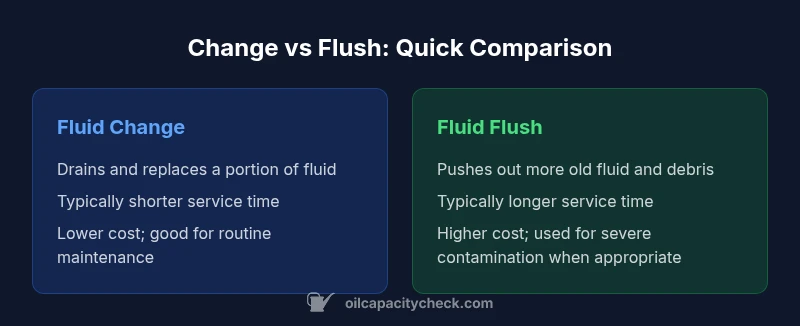
The core difference between a transmission fluid change and a flush lies in how thoroughly the system is cleared and how much of the old fluid remains. A standard fluid change drains and replaces a portion of the fluid, often with a filter replacement when applicable, offering a quick, cost-conscious service for routine maintenance. A flush uses a machine to push fresh fluid through the system, aiming to remove more contaminants and older fluid. Oil Capacity Check emphasizes following OEM guidance and evaluating the vehicle’s condition and service history before choosing the method.
The Core Difference Between Change and Flush
At its essence, the difference between a transmission fluid change and a flush is how completely the old fluid and any suspended contaminants are removed from the system. A fluid change typically replaces a portion of the old fluid with fresh fluid and may include replacing the pan or transmission filter if the model supports it. A flush uses pressure or a machine-assisted flow to push out a larger volume of old fluid and contaminants from the entire system, including cooler lines and passages when the setup allows. This distinction matters because it affects how thoroughly debris and degraded fluid are removed, how long the service takes, and what kind of wear patterns you might see after the service. In practical terms, a change is usually quicker and cheaper, while a flush is more aggressive and costly but can address more severe buildup or long-term neglect. Oil Capacity Check’s analysis notes that the right choice depends on vehicle age, transmission design, and maintenance history.
Transmission System Basics: Why This Topic Matters
A modern automatic transmission contains fluid that lubricates gears, cools components, and assists hydraulic pressure for shifting. The fluid quality and level matter for smooth operation and longevity. Most vehicles have an internal filter or screen, a transmission pan, and a dedicated cooler line. Over time, heat and use can degrade fluid, create varnish, or allow sediment to accumulate. The “capacity basics” concept is relevant here: knowing how much fluid your system holds, and how replacement affects the overall balance, helps you assess whether a simple change will suffice or a deeper flush is warranted. The Oil Capacity Check team highlights that maintenance history, fluid color and scent, and driving conditions should guide the plan, not just the calendar date.
What a Transmission Fluid Change Involves
A typical fluid change starts with draining the old fluid from the sump or pan, followed by a refill with fresh fluid to the specified level. If the transmission uses a replaceable filter, that filter is replaced as part of the service; in some models, the filter is not easily accessible and may require a more invasive procedure. The drain-and-fill approach minimizes disruption and is usually completed with the vehicle warmed up to operating temperature to ensure accurate level. This method reduces the risk of introducing air into the system and generally takes less time and cost than a flush. For many owners, a change offers a reliable refresh of fluid properties without the higher expense of a full flush.
What a Transmission Fluid Flush Involves
A flush aims to remove as much old fluid and buildup as possible by circulating fresh fluid through the system while simultaneously extracting the dirty fluid. Some flushes force the old fluid out through the transmission lines and cooler, which can clear passages and remove sludge more effectively than a drain-and-fill. Not all vehicles require or tolerate flushing, and on some models, a flush is paired with a filter change or with the replacement of other components. Because a flush is more invasive, it typically entails longer service time, greater cost, and a greater risk if the vehicle is not in ideal mechanical condition. OEM guidance and shop protocols should guide whether a flush is appropriate in a given case.
Decision Framework: When to Choose Each Method
When considering a fluid change versus a flush, start from the basics: the vehicle’s age, transmission type, service history, and current symptoms. If the transmission shifts smoothly, fluid appears reasonably clear, and there are no metal particles on the magnetic drain plug, a standard change is often sufficient. If there are signs of heavy sludge, metal shavings, burnt odor, or a history of neglect, a flush might be warranted to remove contaminants more completely. Manufacturer recommendations should guide the choice; in some cases, a change is preferred, and in others, a flush is advised. It is also wise to consult a reputable technician who can assess the specific transmission design and the condition of the cooling system to decide the safest path.
OEM Guidance and Real-World Practice
OEM guidance on transmission fluid service varies by model and generation. Some manufacturers expressly permit both methods for routine maintenance, while others caution that a flush is only appropriate under certain conditions. In practice, many technicians opt for a drain-and-fill change for regular maintenance and reserve flushing for high-contaminant scenarios or when the service history indicates neglect or poor fluid quality. Oil Capacity Check notes that following the vehicle’s manual and using the correct fluid specification is crucial, as incorrect fluid type or improper level can lead to shifting problems or wear.
Potential Risks and How to Mitigate
Every service carries some risk, and changes and flushes are no exception. A flush, if done incorrectly, can introduce air pockets, disturb seals, or force contaminants into places where they cause shifting issues. A change, while safer in that sense, can leave behind varnish or sludge if the fluid and filter are heavily degraded. The safest approach is to select the method based on model-specific guidance and current drive symptoms, ensure the correct fluid specification, and rely on a certified technician who can verify level, temperature, and leak-free operation after service. Regular inspection of the transmission pan and magnet can help catch issues early between services.
Costs, Time, and Longevity: A Practical View
In general, a fluid change costs less and takes less time than a flush, which is reflected in shorter service durations and lower labor rates. The longevity of the transmission can be affected by the method chosen, the quality of the fluid, and how well the service aligns with OEM recommendations. A change may be perfectly adequate to restore performance for many vehicles, while a flush can offer peace of mind when there is accumulated grime or an atypical drive history. For the best long-term outcome, align the service type with the vehicle’s design and your driving profile, and maintain a consistent maintenance interval to support transmission health.
DIY vs Professional Service: Pros and Cons
DIY fluid changes can save money and provide hands-on learning, but they require careful attention to fluid type, level checks, and the risk of incorrect installation. Professional service offers the assurance of using the proper equipment, diagnostic checks, and a tested fluid specification for the particular model. A flush performed by a trained technician can remove more contaminants, but it also carries greater risk if the system is not in good condition or if incorrect procedure is used. For most owners, a professional service with OEM-compatible fluid is a safer choice, especially for modern transmissions with complex cooling and valve-body systems.
Maintenance Tips to Extend Transmission Life
Extend transmission life by staying on top of fluid level, color, and smell indicators, and by avoiding prolonged overheating. Regular service intervals, depending on the vehicle and driving conditions, help maintain hydraulic pressure and smooth shifting. Script a simple maintenance plan: monitor fluid condition at every oil change, follow OEM schedules for replacement intervals, and address any shifting concerns promptly. When in doubt, consult the service manual or a trusted technician who can recommend the most appropriate service path given the vehicle’s design and history.
Comparison
| Feature | transmission fluid change | transmission fluid flush |
|---|---|---|
| Process overview | Drain a portion of old fluid; replace with fresh fluid; optional filter change | Circulate fresh fluid through the system while extracting old fluid and contaminants; may include filter replacement |
| What gets removed | Mostly old fluid; debris removal limited by design | Most old fluid and contaminants; more thorough cleaning of passages |
| Maintenance outcome | Replenishes fluid and stabilizes level | Maximizes debris removal and system cleanliness |
| Warranty/OEM notes | Often permitted as routine service per model | Often reserved for contamination events or OEM guidance |
| Service duration | Shorter service time | Longer service time due to additional steps |
| Cost range | Lower cost; simple maintenance | Higher cost due to equipment and thoroughness |
| Best for | Routine maintenance and budget-conscious drivers | Severe contamination, sludge, or OEM-directed scenarios |
What's Good
- Lower upfront cost for a standard change
- Quicker service and shorter downtime
- Good for routine maintenance and many vehicles
- Less invasive with lower risk of internal disruption
Cons
- May not remove deep sludge or debris
- Contaminants can remain if system is dirty
- Filter replacement may not be included for all models
- Might require follow-up service if symptoms persist
Fluid change is the safer default for routine maintenance; flushes are reserved for specific contamination scenarios or OEM guidance
Choose a change for regular maintenance and cost efficiency. Opt for a flush if there is heavy contamination, sludge, or a manufacturer directive, after confirming the vehicle’s design supports it.
People Also Ask
What is the difference between a transmission fluid change and a fluid flush?
A transmission fluid change replaces a portion of the old fluid with fresh fluid, often with a filter replacement. A flush uses a machine to push out more old fluid and contaminants, potentially removing more debris. The choice depends on vehicle design, condition, and manufacturer guidance.
A change replaces some of the old fluid with new, while a flush pushes out more old fluid and debris. The right choice depends on your car and its service history.
When should I choose a fluid change instead of a flush?
For routine maintenance when the fluid looks reasonable and there are no contamination symptoms, a standard change is typically sufficient. If there is a history of neglect or signs of buildup, a change plus inspection may be indicated, but a flush should be reserved for specific conditions per OEM guidance.
For normal maintenance, a change is usually enough. Reserve a flush for clear contamination or as directed by manufacturer guidance.
Can a flush cause harm to my transmission?
If performed by a qualified technician and the vehicle is a good candidate, a flush is not inherently dangerous. Risks arise from incorrect procedure, incompatible fluid, or on systems not designed for aggressive cleaning. Always follow OEM guidance and trusted shop protocols.
When done correctly by a professional, a flush isn’t inherently dangerous, but improper technique or wrong fluid can cause issues.
How often should I service transmission fluid?
Follow the vehicle’s owner's manual because intervals vary by model and driving conditions. OEM schedules differ, and some vehicles may benefit from more frequent changes due to harsh operating conditions or heavy towing.
Check your owner's manual for the recommended interval; it varies by vehicle and how you drive.
Does a transmission fluid flush always replace the filter?
Not always. Some models include filter replacement as part of a flush, while others may require a separate service. Confirm with your technician whether the filter will be serviced and if it matches your vehicle’s design.
It depends on the vehicle—ask your shop whether the filter is replaced during the flush.
What signs indicate it might be time to service the transmission fluid?
Common signs include rough or delayed shifting, slipping, unusual noises, or warning lights. If you notice these, have the transmission inspected and discuss whether a change or flush is appropriate given your car’s history.
If your car shifts oddly or you hear strange noises, it’s time to check the transmission fluid service options.
The Essentials
- Understand the core difference: change vs flush
- Follow OEM guidance for your model
- Assess symptoms and service history before choosing
- Consider cost, time, and potential risk