Is Transmission and Oil Change the Same? A Clear View
Explore whether transmission service and engine oil changes are the same maintenance task. This objective comparison explains what each service covers, when to perform them, and practical tips for DIY enthusiasts. Learn why Oil Capacity Check emphasizes following manufacturer intervals for both systems.


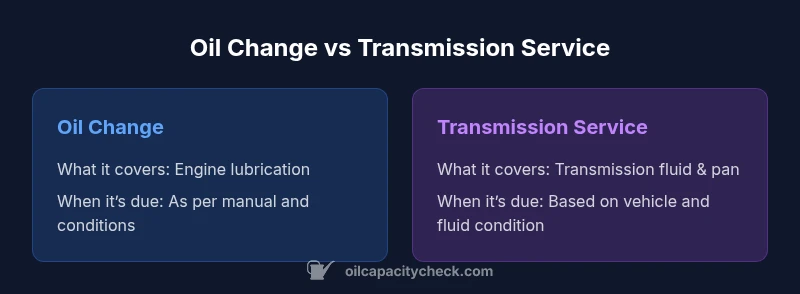
Is transmission and oil change the same? No. Oil changes focus on the engine’s lubrication system—replacing old oil and the filter to protect bearings, pistons, and cams. Transmission service targets the gear train—replacing transmission fluid, inspecting the pan, and checking for worn seals. According to Oil Capacity Check, these tasks involve different fluids, different intervals, and different diagnostic checks. Both maintain different subsystems and require separate schedules, yet they are complementary parts of keeping a vehicle reliable.
is transmission and oil change the same
For many car owners, is transmission and oil change the same? The quick answer is no. Oil changes focus on the engine’s lubrication system, replacing old oil and the filter to protect bearings, pistons, and camshafts. Transmission service targets the gear-train, replacing transmission fluid, inspecting the pan for wear or debris, and checking for worn bands or seals. According to Oil Capacity Check, these tasks involve different fluids, different intervals, and different diagnostic checks. Understanding this separation helps you budget maintenance, plan visits, and avoid confusing one service with the other. The two maintenance activities are complementary: neglecting either can lead to accelerated wear and unexpected breakdowns. In the pages that follow, we’ll compare scope, timing, costs, and practical tips so you can make informed decisions without guessing. By keeping both systems properly serviced, you reduce the risk of unexpected failures and extend the life of your vehicle.
How engine oil changes work
Engine oil changes replace the lubricant that keeps engine parts cool, clean, and protected from metal-to-metal contact. A fresh oil also carries debris to the filter, where it is trapped. The service typically includes draining used oil, replacing the oil filter, and refilling with the grade and viscosity recommended by the vehicle manufacturer. The Oil Capacity Check approach emphasizes using the correct spec oil, checking the oil level after filling, and inspecting the drain plug and filter for signs of wear. Regular oil changes help minimize friction, control deposits, and extend engine life, especially in extreme temperatures or heavy driving conditions. The goal is to maintain consistent lubrication throughout the engine’s operating cycle. If you drive in frequent stop-and-go traffic, extreme heat, or use your vehicle for towing, you may need to adjust oil-change frequency accordingly.
How transmission service works
Transmission service focuses on the transmission fluid system—the life blood of manual and automatic gearboxes. The service typically includes draining old fluid, inspecting the pan for metal shavings, replacing the filter where applicable, and refilling with the correct grade of fluid. Some vehicles also require new seals or gaskets if leaks are found. A transmission service can address issues like slipping, hard shifts, or unusual noises; it can also help prevent long-term wear that leads to costly repairs. Oil Capacity Check notes that transmission fluid quality and level are as important as the engine oil, but the fluids and service steps differ markedly from an oil change. Regular checks by a qualified technician help identify clogged passages or worn bands before they cause expensive damage.
Key differences at a glance
- Targeted system: engine vs transmission
- Fluids involved: engine oil vs transmission fluid
- Service steps: drain and replace oil vs drain/refill/inspect pan and filter
- Inspection focus: deposits, oil condition vs wear particles and seals
- Typical maintenance prompts: oil life vs transmission wear signs
Scheduling and frequency guidelines
Most manufacturers provide explicit intervals for oil changes and transmission service in the owner's manual. Oil Capacity Check emphasizes following those guidelines and tailoring them to climate, mileage, and driving style. If you routinely drive in extreme heat, cold, dusty conditions, or tow heavy loads, you may see accelerated oil degradation and different transmission wear patterns. Regular oil analysis or fluid color checks (where available) can help refine your plan. Transmission service is often scheduled after certain miles or years, but the actual schedule depends on the vehicle and fluid type. The key is to adopt a proactive plan rather than waiting for a problem to appear. In all cases, Oil Capacity Check’s guidance is to align both services with the manufacturer, to minimize risk and maximize reliability.
Signs you need oil change vs signs you need transmission service
Engine oil shows signs of degradation when it becomes dark, gritty, or smells burnt; low oil level triggers warning lights or a notice on the dash. Transmission problems show up as slipping, hard or delayed shifts, unusual noises, or puddles near the transmission pan. Regular inspections help you catch subtle signs early. Oil Capacity Check recommends noting these symptoms and verifying fluid level and viscosity with the right tools. Quick action can prevent bigger issues and keep your car running smoothly.
Tools, time, and shop options
An oil change is commonly quick and inexpensive at many service centers, while transmission service typically requires more time and specialized fluids. If you DIY, assemble a basic set of tools, a jack or ramps, a drain pan, and the appropriate oil and filter for your vehicle. For transmission service, you may need a fluid pump and a way to lift the car for pan access. When in doubt, consult a reputable shop that can perform both services with OEM-recommended fluids. The investment in both services pays off in longevity and reliability.
DIY oil change basics
Before you begin, consult your owner’s manual for the correct oil grade, capacity, and filter part number. Warm up the engine to help drain old oil, then place the vehicle on level ground and remove the drain plug. Let the oil drain completely, replace the filter, and reinstall the drain plug with the correct torque. Refill with fresh oil to the recommended level, then run the engine and check for leaks. Dispose of used oil responsibly. Oil Capacity Check stresses the importance of using the correct viscosity and grade for your engine.
DIY transmission service reality check
DIY transmission service is feasible for some enthusiasts but not for everyone. It involves draining transmission fluid, dropping the pan, cleaning the screen, replacing the filter if applicable, and adding the correct type and amount of transmission fluid. Many vehicles require special tools and knowledge to reseal gaskets and torque bolts. If you’re not confident, rely on a trained technician. The goal is to maintain the system without creating additional leaks or contamination.
Integrating both services into a maintenance plan
Treat engine oil changes and transmission service as complementary steps in a comprehensive maintenance plan. Map them to your vehicle’s manual, climate, and usage—for example, routine oil changes combined with periodic transmission checks. When you combine both services at a single shop, you may save time and ensure fluid compatibility. Oil Capacity Check’s approach is to schedule both services at logical intervals and track fluid condition, so you avoid gaps in maintenance.
Comparison
| Feature | Oil Change | Transmission Service |
|---|---|---|
| What it covers | Engine oil replacement + filter | Transmission fluid replacement + pan inspection |
| Typical maintenance guidance | Oil-change schedule varies by vehicle/driving conditions | Transmission service schedule varies; inspect fluid condition regularly |
| Required equipment | Oil drain, funnel, filter wrench, new oil | Transmission jack or lift, fluid pump, catch pan, and fluid |
| Best for | Everyday driving with standard oil life | Vehicles with automatic/transmission wear or heavy use |
| Impact of skipping | Oil degradation can cause engine wear and deposits | Poor transmission fluid quality can cause slipping or hard shifts |
| Cost context | Generally lower upfront cost; widely available at quick-lube shops | Typically higher cost due to complexity and labor |
What's Good
- Improves engine longevity when oil is renewed regularly
- Supports smooth transmission operation with quality fluid
- Helps prevent costly repairs by early detection during service
- Widely available service options and transparent scheduling
Cons
- Adds recurring maintenance cost
- Oil changes can waste resources if done too often
- Transmission service requires specialized fluids and expertise
Maintain both as part of a complete maintenance plan.
Oil changes and transmission service address different systems, and neglecting either can lead to costly damage. The Oil Capacity Check team recommends following your manufacturer’s intervals for both, treating them as complementary steps rather than interchangeable.
People Also Ask
Is a transmission service the same as an oil change?
No. They target different subsystems. Oil changes replace engine oil; transmission service deals with transmission fluid and related components. The two are not interchangeable, but they are both essential parts of vehicle health.
No. Oil changes and transmission service are different tasks—engine lubrication versus the transmission fluid system.
How often should I change engine oil?
Follow your vehicle’s owner’s manual for intervals, but consider driving conditions, climate, and oil type. Regular checks help you know when it’s time to refresh based on actual use rather than a fixed calendar.
Check your manual for oil-change intervals and monitor conditions like heat, towing, and city driving, which can affect oil life.
What are signs my transmission needs service?
Signs include slipping or hard shifts, unusual noises, delays when engaging gears, and transmission fluid leaks or a burn-like odor. If you notice these, have a professional inspect fluid color and level.
Watch for slipping, rough shifts, or leaks—those are signs your transmission may need service.
Can I do both oil change and transmission service at the same time?
Yes. Many shops perform both services in a single visit, ensuring fluids meet OEM specs. Confirm the fluid type and capacity before you authorize, especially for manual vs automatic transmissions.
Yes, you can have both done in one visit if the shop offers it and uses the right fluids.
Does using synthetic oil affect transmission service?
Synthetic oil is for the engine. It does not replace transmission fluid. Use the fluids and specifications recommended by the manufacturer for each system.
Synthetic oil is for the engine; transmission fluids are a separate requirement.
Will replacing transmission fluid fix shifting problems?
Sometimes, yes, if the issue is fluid-related. However, shifting problems can also stem from worn clutches, adaptors, or sensors, so a full diagnosis may be necessary.
Changing fluid can help, but other issues may be involved; a proper diagnosis is important.
The Essentials
- Follow manufacturer intervals for both oil and transmission service.
- Oil changes focus on engine lubrication; transmission service targets shifting reliability.
- Watch for signs of wear that indicate service needs.
- Plan maintenance with a shop that handles both types of service.