Is Oil Change the Same as Adding Oil? A Practical Guide
Explore whether an oil change is the same as adding oil. Learn the differences, when to top up, and how to maintain engine health with clear guidance from Oil Capacity Check.


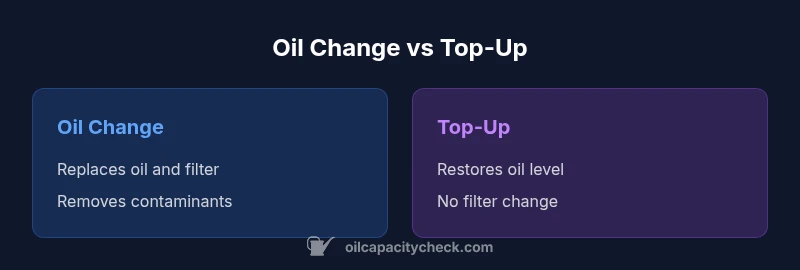
Is oil change the same as adding oil? No. An oil change replaces old oil and the oil filter, whereas adding oil (top-up) only restores oil to the proper level between changes. Understanding the difference helps you avoid under- or overfilling and maintain engine health. An oil change flushes out contaminants and ensures fresh oil, plus a new filter; topping up simply adds oil to reach the full mark.
What an oil change involves
An oil change is more than just draining old lubricant and pouring in new fluid. It typically includes removing the old oil completely, replacing the oil filter (which traps contaminants and debris), and refilling with fresh oil that meets your engine’s specifications. This process not only ensures proper lubrication but also helps remove sludge and accumulated contaminants that can impair engine performance. A properly executed oil change also gives technicians an opportunity to inspect the oil drain pan for metal particles, which can indicate abnormal wear. For car owners aiming to keep their engines in top condition, understanding the full scope of an oil change is essential. Oil Capacity Check emphasizes that the change is a maintenance event with multiple benefits beyond simple oil replacement, especially when paired with a fresh filter and a quick visual inspection of belts, hoses, and the dipstick.
What adding oil (top-up) means
Adding oil, or topping up, is a preventative stopgap between full changes. It involves checking the oil level and adding the correct type and amount of oil to bring the level back to the recommended range. Top-ups do not replace worn oil or replace the oil filter. They are most common when a dipstick shows the level is below the minimum mark or after a period of heavy usage where slight oil consumption occurs. The goal of topping up is to maintain lubrication and prevent engine knock or overheating due to low oil pressure. Oil Capacity Check notes that topping up can be convenient, but it should not be treated as a substitute for scheduled oil changes.
Why the two actions are not interchangeable
The key difference lies in scope and purpose: an oil change removes contaminants and introduces clean oil with a fresh filter, while a top-up only restores oil to a safe operating level. If you rely solely on top-ups while delaying a mandated change, contaminants can accumulate, filters can clog, and engine wear may increase over time. Conversely, performing frequent changes without monitoring oil level can waste resources and create unnecessary service visits. Oil Capacity Check emphasizes balancing both practices: follow the manufacturer’s schedule and use top-ups judiciously when a dipstick shows the level is low but the change interval has not arrived.
Budgeting time and cost: oil change vs topping up
Costs and time vary by vehicle and location, but an oil change generally takes longer and costs more than a top-up. The price difference reflects the filter, used oil disposal, and potential labor charges. DIY oil changes can reduce labor costs but require proper tools and adherence to safety guidelines, as well as a correct filter type and oil grade. Top-ups are typically cheaper and quicker, making them attractive for minor level adjustments between scheduled maintenance. Oil Capacity Check advises drivers to consider the long-term value: a scheduled change protects engine components and can prevent costly repairs down the line.
Measuring oil level correctly (dipstick technique)
Accurate oil level readings depend on proper technique. Start with a cold engine, pull the dipstick, wipe it clean, reinsert, and pull again to read the level. The oil should lie between the minimum and maximum marks; if it’s near or below the minimum, add a measured amount of the recommended oil. Do not rely on a single reading—confirm after a brief drive and recheck. Using the wrong oil grade or contamination from dirty hands or tools can skew readings. Oil Capacity Check stresses consistent measurement as a simple, crucial habit for preserving engine health.
Conditions that trigger a top-up vs a full change
Top-ups are commonly advised when the level is below the recommended range but the oil is still clean and the vehicle is not due for a scheduled change. A full oil change is triggered by the interval determined by the manufacturer, oil degradation (color change or thickening), or when the oil shows significant contamination or metal particulates. In older engines, normal oil consumption may necessitate more frequent top-ups between changes. Oil Capacity Check recommends using a service log to track intervals and oil quality indicators to decide when topping up is appropriate versus a full change.
The role of oil type and filter in changes
Oil type (synthetic, synthetic blend, or conventional) influences how often the oil should be changed and how easily it resists breakdown. Synthetic oils generally provide better protection and longer intervals, though not universally. The filter quality also matters: a superior filter helps remove particulates more efficiently, supporting engine health. When performing a full change, ensure the filter is replaced with the correct part number for your engine. If you are topping up, you still need to confirm the oil grade matches the vehicle’s specification to avoid compatibility issues.
DIY options: when to DIY and when to call a pro
Certain car owners enjoy performing oil changes at home, which can reduce costs and offer a sense of accomplishment. Basic tools, appropriate safety precautions, and correct oil and filter selection are essential for DIY oil changes. If the engine has been leaking, if you’re uncertain about the correct oil grade, or if the vehicle uses a complex oil system, a professional service is advisable. Top-ups can be performed by DIY enthusiasts who are comfortable with checking the dipstick, purchasing the right oil, and measuring the exact amount to add. Oil Capacity Check supports safe practices and recommends professional assistance for complex or high-mileage vehicles.
Common myths about adding oil vs changing oil
A common myth is that topping up eliminates the need for any full change. In reality, topping up is a stopgap, not a replacement for scheduled maintenance. Another misconception is that more oil always equals more protection; overfilling can cause foaming and pressure problems. Finally, some drivers think synthetic oil can go years between changes; oil quality degrades regardless of brand, and the service interval should follow the manufacturer’s guidance. Oil Capacity Check encourages drivers to separate myths from best practices and to base decisions on vehicle specifications and observed oil condition.
Practical maintenance plan for most drivers
A practical approach combines regular checks with a clear maintenance schedule. Start by verifying the oil level monthly, and after long trips or extreme driving conditions, check again. If the level is low but the oil looks clean, perform a top-up with the recommended oil grade and recheck after a short drive. Schedule a full change according to the manufacturer’s recommendations, not just the interval suggested by scratches on the dipstick. Pair oil changes with filter replacement and a quick inspection of engine components to catch issues early. Oil Capacity Check promotes consistency: a predictable routine reduces risk and helps maintain engine longevity.
Comparison
| Feature | Oil Change | Top-Up (Adding Oil) |
|---|---|---|
| Scope (what happens) | Replaces old oil and the filter; removes contaminants | Restores level by adding oil; no filter change |
| Maintenance goal | Full lubrication with fresh oil and filtration | Maintain oil level between changes |
| Time and cost | Longer service; higher upfront cost | Shorter service; lower upfront cost |
| Best for | Due for scheduled change or noticeable oil degradation | Between changes to prevent low oil level |
| Environmental impact | Requires used oil disposal and potential filter disposal | No disposal from oil removal during topping up |
What's Good
- Supports engine reliability with fresh oil and filter
- Addresses potential sludge and contaminant buildup
- Professional service can inspect related components
- Provides clear maintenance schedule and record
Cons
- Higher upfront cost and longer downtime
- Requires proper disposal and service processing
- Top-ups alone do not replace a full oil change
- Potential for overfilling if not measured carefully
Oil changes and top-ups are distinct, with different goals; follow the vehicle’s schedule and use top-ups only as a stopgap.
For engine health, a full oil change with a new filter is essential when due. Top-ups are useful between changes to maintain the proper level, but they cannot substitute the change.
People Also Ask
Is topping up oil a substitute for a full oil change?
No. Top-ups restore volume but do not remove contaminants or replace the oil filter. A full oil change should be performed on schedule to maintain lubrication and engine health.
Bottom line: topping up isn’t a substitute for a full oil change; schedule the full change as recommended by your vehicle maker.
Can I mix synthetic and conventional oil when topping up?
Mixing oil types is generally not recommended. Use the oil grade specified by the manufacturer and avoid combining different oil types to prevent lubrication issues.
Stick to the recommended oil type; mixing different kinds can compromise protection.
How often should I check my oil level?
Check the level monthly and after long trips or extreme driving. If the level is consistently low, schedule a service or add oil as needed.
Make oil checks a monthly habit, especially after long drives.
What about older engines that consume oil quickly?
Some engines consume oil more quickly. In such cases, top-ups between changes may be frequent, but you should still perform the full change on schedule and monitor for leaks or worn components.
Older engines might use more oil; keep a regular change schedule and top up as needed.
Do I need to change the oil filter every time I top up?
No. The filter is replaced during an oil change, not during topping up. If you’re topping up, you’re not removing contaminants or replacing the filter.
Top-ups don’t replace the filter; changes do.
How do I reset the oil life monitor after a change?
After an oil change, follow your vehicle’s procedure to reset the oil life monitor. This helps remind you of the next service interval and track oil life accurately.
Reset the monitor per your owner’s manual after a change.
The Essentials
- Check oil level regularly using the dipstick
- Follow the manufacturer’s maintenance schedule for changes
- Use top-ups only when level is below minimum but oil remains clean
- Always replace the oil filter during a full change
- DIY changes require proper tools and safety precautions