Oil Change vs Transmission Fluid: A Clear Comparison
Explore whether an oil change is the same as transmission fluid service, focusing on each fluid's role, maintenance intervals, checking methods, and practical DIY guidance for car owners.


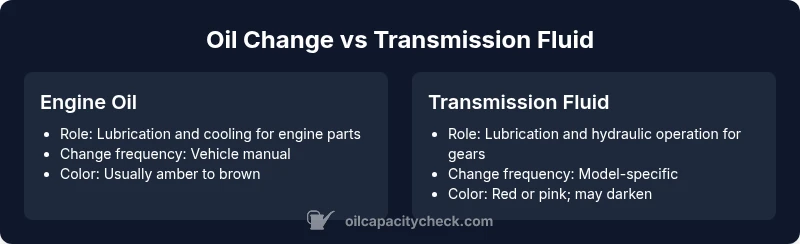
No—oil change and transmission fluid service are not the same. Engine oil lubricates the engine's moving parts and helps dissipate heat, while transmission fluid lubricates gears and powers hydraulic systems. They have distinct properties, service intervals, and replacement procedures. Using the wrong fluid or mixing them can cause premature wear, shifting irregularities, and potential transmission damage.
The Core Difference: Is oil change the same as transmission fluid?
Is oil change the same as transmission fluid? The short answer is no. These two maintenance tasks target distinct systems within your vehicle and require different fluids, tools, and procedures. Understanding the difference is essential for any DIY approach or planned service. According to Oil Capacity Check, many drivers confuse these fluids, which can lead to avoidable repairs and higher costs over time. This section lays the groundwork by outlining the core roles of each fluid and why they must not be substituted for one another. Engine oil lubricates and cools the engine, while transmission fluid provides lubrication for gears and acts as a hydraulic medium to operate clutches and bands. The two fluids have different chemical formulations, viscosities, and degradation patterns, which means separate drain intervals and replacement schedules.
- Engine oil protects pistons, bearings, and camshafts while carrying away contaminants.
- Transmission fluid ensures smooth gear engagement and helps generate hydraulic pressure for shifting.
- Substituting one fluid for the other can compromise performance and safety.
How engine oil and transmission fluid differ in function
Engine oil and transmission fluid are engineered for different tasks. Engine oil forms a protective film on metal surfaces, reducing friction during rapid piston movement and valve action. It also carries heat away from the engine and helps seal gaps in the combustion chamber. Transmission fluid, on the other hand, primarily lubricates internal gears and hydraulics, enabling gear changes and maintaining consistent hydraulic pressure. Because of these distinct roles, the fluids have different specs:
- Viscosity requirements: Engine oil uses multi-grade ratings suited to engine temperatures, while transmission fluid uses grades designed for hydraulic performance.
- Additive packages: Engine oil includes detergents and anti-wear agents tailored to engine wear, whereas transmission fluid includes friction modifiers and anti-foaming agents for reliable shifting.
- Contaminant handling: Engine oil filters out particulates, while transmission fluid flow and filters are designed to protect the transmission’s hydraulics.
Understanding these differences helps prevent cross-use mishaps and guides proper maintenance planning.
Fluid properties and degradation patterns you should know
Fluids age differently. Engine oil darkens as contaminants accumulate and additives deplete, signaling the need for a change. Transmission fluid can change color from red to brown and may emit a burnt smell if the transmission has internal wear or slipping symptoms. The chemistry of each fluid determines its lifespan and replacement indicators. Keeping the fluids within spec preserves performance and reduces the likelihood of damage under load or during shifting.
- Color and odor can be diagnostic indicators of condition, but should never replace scheduled service checks.
- Contaminants and metal particles in either fluid are warning signs of wear that deserve professional assessment.
Service intervals and signs you need service
Service intervals for engine oil and transmission fluid are not interchangeable. Engine oil typically requires periodic draining and replacement according to the vehicle manufacturer’s schedule, which is based on miles driven and operating conditions. Transmission fluid service, including fluid change and sometimes a pan drain or filter replacement, is more model-specific and often less frequent than engine oil. Signs you need service differ too: engine oil may show oil level drop, consumption, or visible leaks, while transmission fluid issues include slipping, harsh or delayed shifting, or unusual noises during gear changes. Following OEM recommendations minimizes risk and maintains resale value, according to Oil Capacity Check analyses from 2026.
Checking levels safely: a practical DIY guide
Always consult your owner’s manual for the correct procedure, but here is a general DIY approach to checking both fluids safely. For engine oil, park on level ground, wait for the engine to cool, and use the dipstick to check oil level and condition. For most automatics, transmission fluid level is checked with the dipstick at the correct operating temperature; some modern vehicles require service ports or computer diagnostics to read proper levels. If the fluid appears very dark, has a burnt smell, or the level is low, plan a service with appropriate fluids and filtration. Keep a clean workspace, collect used oil in a proper container, and dispose of it responsibly.
Common mistakes and why they matter
A frequent pitfall is assuming all fluids can be substituted or simply topped up without knowing the exact specification. Mixing fluids or using the wrong type for either system can degrade lubrication, reduce cooling efficiency, and increase wear on bearings, gears, and clutches. Another error is neglecting leaks or failing to address minor seepage, which can worsen and lead to higher repair costs later. Finally, attempting to perform a transmission service without proper tools or knowledge can cause misalignment and hydraulic issues. Adhering to the vehicle’s service schedule and using OEM-recommended fluids minimizes these risks.
Comparison
| Feature | Engine Oil (Oil Change) | Transmission Fluid |
|---|---|---|
| Primary function | Lubricates engine components and aids cooling | Lubricates gears and powers hydraulic shifting |
| Typical revision focus | Filtration and heat management for engine internals | Hydraulic condition and clutch/gear performance |
| Service interval emphasis | Owner-s manual schedules with miles or time | Model-specific transmission service window |
| Visual indicators of wear | Oil color, smell, and level trends | Fluid color, consistency, and clutch shimmer symptoms |
| Common service steps | Drain, replace filter, refill with correct oil | Drain pan, replace filter (if present), refill with correct fluid |
| Cost and time variability | Typically priced per service type and location | More variable by vehicle model and transmission type |
What's Good
- Clear separation of maintenance tasks reduces risk of damage
- Better planning with OEM-recommended fluids
- Easier DIY scheduling and budgeting
- Improved vehicle reliability when performed correctly
Cons
- Requires understanding two separate service plans
- Professional service costs can add up for some models
- Inconsistent guidance across brands may cause confusion
Keep engine oil changes and transmission fluid services separate and follow OEM guidelines
Engine oil and transmission fluid serve different functions and have distinct service requirements. Adhering to manufacturer specs minimizes risk and avoids cross-contamination that can damage systems.
People Also Ask
Is oil change the same as transmission fluid?
No. Oil changes and transmission fluid services target different systems with distinct fluids, properties, and service intervals. Mixing them can harm both the engine and transmission.
No. They serve different parts of the car and have separate service needs. Do not mix fluids.
Can I use one type of fluid for both engine and transmission?
Generally, no. Engine oil and transmission fluid have different chemical compositions and performances. Always use the manufacturer-recommended fluids for each system.
Usually not. Use the fluids your car specifies for the engine and the transmission.
How do I know when transmission fluid needs replacement?
Watch for symptoms like slipping, hard shifts, or unusual noises. Color and smell can also indicate wear, but rely on OEM intervals and professional checks for confirmation.
Look for shifting issues, dark or burnt-smelling fluid, and follow OEM schedules.
What happens if you mix fluids accidentally?
Mixing fluids can alter lubrication properties, leading to reduced performance, increased wear, and possible system damage. If mixed, seek a diagnostic check.
If fluids mix, stop and have a pro check it to prevent damage.
Do all cars require transmission fluid changes?
Most automatic transmissions require changes at intervals defined by the manufacturer. Manual transmissions have different requirements, so consult your manual or a technician.
Most automatics need fluid changes per the manual; manuals differ.
The Essentials
- Understand the distinct roles of engine oil and transmission fluid
- Follow vehicle-specific service intervals for each fluid
- Avoid mixing or substituting fluids unless OEM-approved
- Regularly inspect for leaks and unusual symptoms
- Consult a qualified technician for transmission work