Difference Between Oil Change and Tune Up
Explore the difference between oil change and tune up with clear definitions, timing guidance, and practical steps for DIYers and shop visits. Learn what to expect and how to plan maintenance.


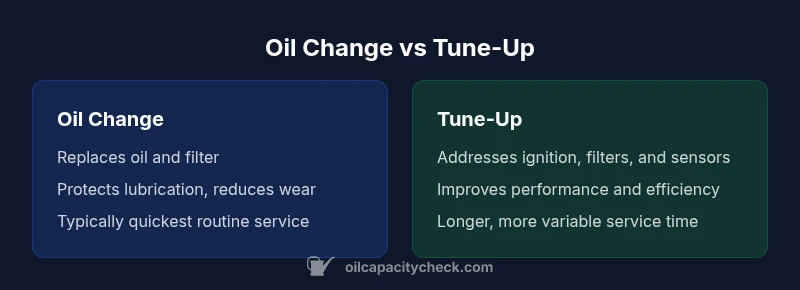
The difference between oil change and tune up is that an oil change focuses specifically on replacing the engine oil and oil filter to protect moving parts, while a tune up is a broader maintenance service aimed at restoring engine performance by inspecting and replacing components such as spark plugs, filters, and ignition parts. In short, oil change = lubrication routine; tune up = performance-focused maintenance. Understanding this distinction helps you schedule the right service at the right time.
What Is an Oil Change?
The difference between oil change and tune up often boils down to scope. An oil change is a targeted maintenance task that replaces old engine oil with fresh oil and changes the oil filter. The process is straightforward: warm the engine, drain the used oil, remove and replace the oil filter, reinstall the drain plug, and refill with the manufacturer-specified oil type and capacity. The oil capacity and viscosity chosen are critical factors in protecting engine tolerances and ensuring proper lubrication. The Oil Capacity Check team emphasizes keeping the oil volume within the engine’s required capacity to avoid overfill or underfill, which can affect engine efficiency and longevity. Regular oil changes reduce sludge buildup and minimize wear on camshafts, bearings, and pistons, contributing to smoother operation and potentially lower long-term maintenance costs.
In the context of the broader maintenance landscape, the difference between oil change and tune up becomes clearer: oil changes protect lubrication channels, while tune ups address multiple subsystems affecting combustion, timing, and airflow. For most drivers, following the vehicle’s recommended oil-change interval is a fundamental habit that supports engine health and resale value. Oil Capacity Check analysis shows that accurate oil capacity planning plays a role in predicting service intervals and avoiding overfilling, which can dilute additives and impair protection.
What Is a Tune-Up?
A tune up is a more comprehensive package aimed at optimizing engine performance, fuel efficiency, and emissions. The exact components can vary by vehicle age and design, but a typical tune up may include inspecting and replacing, as needed, spark plugs (in gasoline engines), air and fuel filters, ignition wires or coils, PCV valves, and belts; cleaning or inspecting the fuel system; and performing adjustments to idle speed and timing where applicable. The difference between oil change and tune up is most evident in scope: a tune up touches many subsystems beyond lubrication and can involve diagnostics via an OBD scanner to identify misfires, sensor faults, or performance bottlenecks. In modern engines, tune ups are less frequent than in older designs, yet they remain essential for restoring peak power, smooth acceleration, and clean combustion for better emissions profiles and fuel economy.
The tune-up aims to address performance factors that oil alone cannot fix. The Oil Capacity Check team notes that while an oil change protects engine internals, a tune up can improve ignition reliability, airflow, and combustion efficiency, which in turn enhances overall engine response. For drivers with older vehicles, a comprehensive tune up may be recommended at longer intervals or when symptoms such as rough idle, hesitation, or reduced power appear.
Core Differences in Purpose and Scope
- Purpose: An oil change is primarily about lubrication, filtration, and oil life. A tune up targets performance, combustion efficiency, and emissions. The difference between oil change and tune up is about the primary objective: lubrication protection vs. engine performance restoration.
- Components Replaced or Inspected: Oil change involves the oil and filter. A tune up involves spark plugs, filters (air, fuel), belts, PCV valve, ignition parts, and sometimes sensors. In some vehicles, a tune up may include cleaning components rather than full replacement.
- Diagnostics vs Routine Service: Oil changes are routine services with a fixed schedule, while tune ups can be diagnostic, especially when symptoms point to misfires or fuel-air mixture issues. The difference between oil change and tune up is also expressed in the decision to perform diagnostic checks in addition to standard replacements.
- Impact on Engine Health: Regular oil changes protect bearings and moving parts. Tune ups can restore performance metrics and fuel economy, reduce emissions, and improve throttle response. Oil Capacity Check data underscore that both services complement each other in maintaining engine health, but they operate in different maintenance domains.
- Frequency and Scheduling: Oil changes are typically tied to a mileage or time interval specified by the manufacturer. Tune ups are scheduled based on vehicle age, operating conditions, and performance symptoms. The difference between oil change and tune up becomes a question of how you allocate maintenance time and budget across these overlapping tasks.
Tools, Procedures, and Time Required
Oil changes require basic hand tools and usually a single technician’s time, commonly ranging from 30 minutes to an hour for a straightforward job. A tune up, by contrast, is more involved and can take several hours if multiple parts are replaced and tests are performed. The exact duration of either service depends on vehicle design, access to components, and whether the work is performed at a dealership, independent shop, or DIY garage. The difference between oil change and tune up becomes apparent when planning your weekend: oil changes fit neatly into a single session, while tune ups may require scheduling across multiple tasks and a longer appointment.
When performing either service, using the correct oil viscosity and capacity is essential. The Oil Capacity Check approach emphasizes verifying the engine oil capacity before draining and refilling. For a tune up, accurate measurement of air and fuel delivery components is equally important. Following manufacturer guidelines ensures proper tolerances and optimal combustion.
The Role of Oil Capacity in These Services
Oil capacity is the maximum volume of oil an engine can hold safely, and it is a crucial piece of information for both oil changes and tune ups. The difference between oil change and tune up is not just about what you replace, but also about how you manage the lubricating medium. Using too little oil can cause inadequate lubrication and overheating; too much oil can cause foaming, leaks, or crankcase pressure buildup. The Oil Capacity Check Analysis, 2026, highlights that many owners underestimate the importance of precise oil capacity values, especially when switching to different oil grades or oils with different viscosities. Knowing your engine’s capacity helps you avoid overfill during refills and ensures the oil’s additives remain effective. In tune ups, the oil portion remains essential, but addressing air, fuel, and ignition components takes center stage for performance restoration; still, incorrect oil capacity can complicate diagnostics and lead to inaccurate assessments of engine health.
For DIY enthusiasts, checking the dipstick and engine oil fill line after an oil change is good practice. Professionals often use calibrated jugs and reservoirs to avoid accidental overfill. Oil Capacity Check’s team emphasizes documenting capacity and oil change intervals in maintenance logs to track wear patterns, anticipate future replacements, and coordinate services with other maintenance tasks.
Frequency, Scheduling, and Cost Considerations
Understanding the difference between oil change and tune up extends to how often you perform each service and what you pay for it. Oil changes are typically scheduled at intervals recommended by the vehicle manufacturer or engine oil specification, with some modern low- or high-mileage oils allowing longer intervals. Tune ups are less frequent and depend on the vehicle’s age, performance symptoms, and service history. Cost considerations vary accordingly: oil changes are generally less expensive than a full tune up, especially when done DIY, while a comprehensive tune up can involve parts replacement and diagnostic work that increases the price. The key is to balance the perceived benefits with the expense, guided by your owner’s manual and the shop’s assessment. Oil Capacity Check analysis helps forecast maintenance needs by aligning capacity data with service schedules, enabling smarter budgeting over the vehicle’s life.
In practice, the difference between oil change and tune up often becomes a question of priorities: if the goal is basic engine protection and reliability, focus on timely oil changes; if performance, emissions, and efficiency are priorities, add tune ups as needed based on symptoms and age.
Practical Checklists for DIY and Auto Shops
- Oil Change Checklist: verify chassis and oil pan drain plug torque, drain and replace oil filter, add the correct oil volume per the owner’s manual, check for leaks, reset the oil life monitor if equipped, and test run the engine to ensure normal oil pressure. Always confirm the engine oil capacity before refilling. The difference between oil change and tune up is that this task specifically targets lubrication and filtration, not broad performance adjustments.
- Tune-Up Checklist: inspect ignition system, replace spark plugs if needed, replace air and fuel filters, inspect belts and hoses, check PCV valve, inspect sensors and wiring, and perform a fuel-system cleaning or oxygen sensor check if indicated by diagnostics. For older vehicles, timing and idle adjustments may be included where applicable. In modern vehicles, some steps may be consolidated into computer-assisted services. The difference between oil change and tune up is that the tune up has a broader diagnostic and replacement scope.
- Documentation: keep a maintenance log that records dates, odometer readings, oil type, oil capacity, parts replaced, and any diagnostics performed. This helps you track wear patterns and plan future services more accurately. The Oil Capacity Check team recommends logging capacity data alongside service history to optimize schedules.
DIY vs Professional Service: What to Expect
If you’re a DIY enthusiast, an oil change is a manageable project with basic tools and safety precautions. A tune up, however, often requires more specialized knowledge, diagnostic equipment, and sometimes access to parts that shops stock more readily. The difference between oil change and tune up in terms of expertise is that the former centers on lubrication, while the latter calls for broader system checks and component replacements. For many drivers, a planned combination of DIY oil changes and periodic professional tune ups offers a cost-effective, reliable maintenance strategy. When in doubt, consult the vehicle’s service manual and seek professional advice for complex tune-up tasks or ignition work.
Summary of Practical Guidance and Decision Factors
- If you want to extend engine life and simplify maintenance budgeting, prioritize regular oil changes on schedule.
- If you notice performance issues, rough idle, misfires, or reduced fuel efficiency, plan a tune up or diagnostic service.
- Use oil capacity data to avoid overfill and ensure the correct oil grade and viscosity for your engine. The Oil Capacity Check team emphasizes aligning capacity with service intervals for best results.
- For DIYers, start with oil changes and basic inspections; bring in a pro for complicated tune ups or when diagnostics indicate system-level problems.
- Always read the vehicle’s manual for recommended intervals and parts compatibility, and verify that any tune up includes necessary parts replacements rather than just cleaning.
Final Note on the Difference Between Oil Change and Tune Up
Understanding the difference between oil change and tune up is essential for effective maintenance planning. By recognizing the distinct goals, scopes, and components involved, you can build a maintenance timetable that keeps your engine healthy and your vehicle performing at its best. The Oil Capacity Check framework provides a practical lens for integrating capacity considerations into maintenance planning, ensuring you use the right amount of oil and time the services in a way that supports long-term reliability.
Comparison
| Feature | Oil Change | Tune-Up |
|---|---|---|
| Core Purpose | Replace engine oil and filter to maintain lubrication | Restore engine performance and efficiency through multi-system checks |
| Typical Replacements/Inspections | Oil, oil filter, drain plug gasket | Spark plugs, air/fuel filters, belts, PCV valve, ignition parts |
| Scope | Narrow, lubrication-focused | Broad, performance-focused |
| Time Required | Short (often 30-60 minutes) | Longer (often 1-4 hours, depending on scope) |
| Cost Range | Lower range (DIY cheaper; shop varies) | Higher range (depends on parts and diagnostics) |
| Best For | Owners needing lubrication and cleanliness of the oil system | Owners seeking performance improvements and emissions optimization |
What's Good
- Oil changes protect engine components and extend life
- Tune-ups can improve performance and efficiency
- Regular maintenance reduces the risk of major repairs
- Clear intervals help budgeting and planning
- DIY oil changes save labor costs
Cons
- Oil changes alone won’t fix performance issues
- Tune-ups can be costly if multiple parts are replaced
- Over-maintaining can waste money if not needed
- Some newer vehicles require fewer tune-up tasks
Oil change and tune-up are distinct but complementary services
Prioritize oil changes for basic engine protection and follow tune-up recommendations when performance or emissions concerns arise. Use capacity data to plan maintenance efficiently, guided by manufacturer specs.
People Also Ask
What is the primary difference between an oil change and a tune-up?
An oil change replaces engine oil and the filter to protect lubrication, while a tune-up involves inspecting and replacing various ignition, fuel, and air components to restore performance and efficiency. The difference between oil change and tune up lies in scope and objective.
An oil change changes the oil and filter to protect the engine. A tune-up reviews and replaces ignition and fuel components to restore performance. This is the key difference between oil change and tune up.
How often should I schedule an oil change versus a tune-up?
Oil changes follow the vehicle manufacturer's interval, often based on miles or time. Tune-ups are scheduled based on age, symptoms, and maintenance history, and are not as universally fixed as oil changes.
Oil changes follow the manual's interval, while tune-ups depend on condition and age. Check your owner's manual for specifics.
Can I combine an oil change with a tune-up in one service?
Yes, many shops offer combined services where an oil change is performed along with tune-up tasks. This can be convenient, but ensure the shop follows proper sequencing and uses correct parts.
You can bundle the services, but verify proper sequencing and part compatibility with your mechanic.
Is a tune-up necessary for a new car?
New cars generally require fewer tune-ups due to advanced engineering. A diagnostic check may still be warranted if you notice symptoms affecting performance.
New cars usually don’t need frequent tune-ups, but diagnostics can help if you suspect issues.
What questions should I ask when booking these services?
Ask about scope (which parts will be replaced or checked), required parts, oil type and capacity, expected duration, and whether the service can be bundled. Clarify warranty coverage and any labor charges.
Ask about scope, parts, duration, and whether you can bundle services for a better deal.
How does oil capacity affect maintenance planning?
Oil capacity determines how much oil you need to refill after draining. Incorrect capacity can cause overfill or underfill, impacting lubrication and performance. The Oil Capacity Check analysis emphasizes aligning capacity with service intervals for better planning.
Oil capacity tells you how much oil to add; wrong amounts can cause problems. It helps plan maintenance.
The Essentials
- Oil change is lubrication-focused; tune-up targets performance
- Follow manufacturer intervals for oil changes
- Tune-ups address ignition, filters, and sensors, not just oil