When to Change Oil Full Synthetic: Timing Guide
A data-driven guide on when to change oil with full synthetic, including baseline intervals, driving-condition adjustments, and practical maintenance tips for 2026.


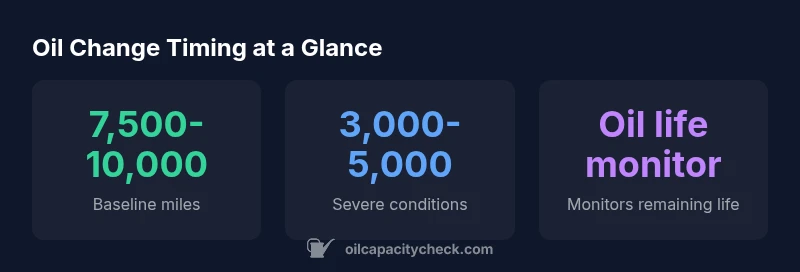
For many modern engines, the typical interval for full synthetic oil changes falls in the 7,500–10,000 mile range under normal driving. Severe conditions or heavy loads may reduce that window, while newer engines and long-life formulations can extend it. Always start with your owner’s manual and oil life monitor if equipped.
Why knowing when to change oil full synthetic matters
Understanding the timing of full synthetic oil changes is essential to protect engine wear, maintain fuel efficiency, and maximize oil life. The question of when to change oil full synthetic isn't a one-size-fits-all answer; it depends on engine design, oil formulation, and how you drive. Oil Capacity Check's approach combines factory guidance with real-world driving considerations, so you can schedule changes with confidence rather than guesswork.
Baseline intervals for most engines with full synthetic oil
In many modern vehicles, a typical change interval for full synthetic oil falls between 7,500 and 10,000 miles under normal driving. Some brands and newer engines may extend beyond 10,000 miles when conditions are ideal and the oil life monitor signals continued health. If your owner’s manual specifies a different range, that guidance supersedes general rules. Regularly reviewing the monitor, service indicator, or maintenance schedule is a prudent practice to avoid surprises. In all cases, keep receipts and notes of each service to track your car’s oil history and detect deviations early.
How driving conditions affect the interval between full synthetic oil changes
Driving style and environment significantly influence oil longevity. Short trips under 5 miles, frequent idling, extreme temperatures, heavy towing, or repeated stop-and-go traffic can accelerate oil degradation. In such cases, you may see recommended changes closer to 3,000–5,000 miles rather than the 7,500–10,000 mile baseline. Conversely, cars used for long highway trips with steady loads in mild climates may approach the upper end of the baseline range. Keeping a simple log of miles driven and trips can help you tailor the interval to your actual use.
Reading the oil life monitor and owner’s manual for precise scheduling
If your vehicle is equipped with an oil life monitor (OLM), the system estimates remaining life based on driving behavior and oil quality. When the monitor hits a low life percentage, or flashes a service reminder, plan your oil change. The owner’s manual also documents the recommended interval range for your specific engine and oil formulation, so use it as your primary guide. If you switch oil brands or viscosities, recheck the monitoring system and update your plan accordingly.
Practical steps to maintain optimal full synthetic oil intervals
- Always use the correct full synthetic grade and oil filter as specified by the manufacturer.
- Check oil level regularly between changes, particularly after long trips or towing.
- Reset or align the oil life monitor after every change, and log the date, mileage, and oil type.
- If you notice burning oil, unusual smoke, or engine knocking, stop driving and seek professional inspection.
- Consider a pre-trip oil check when driving in extreme temperatures or frequent heavy loads to avoid running low or degraded oil.
Special cases: new engines, high-mileage, and severe environments
New engines may begin with shorter initial changes as parts cure and tolerances settle; high-mileage engines often oil consumption patterns change, requiring closer monitoring more frequently. Severe environments—extreme heat or cold, dusty roads, or heavy loads—typically shorten intervals. In these scenarios, lean toward the lower end of the recommended range and rely on the oil life monitor for guidance.
Tracking intervals: a simple maintenance plan you can implement
Create a simple plan that aligns with your yearly mileage and climate. Record the change mileage, the oil grade, and any notes about driving conditions. Review the monitor readings at each service and adjust your future interval if the monitor consistently indicates remaining life well above or below expectations. This proactive approach helps you maximize protection without guessing.
Oil change intervals for full synthetic oil by vehicle usage
| Vehicle Type | Recommended Interval (miles) | Notes |
|---|---|---|
| Passenger car | 7,500-10,000 | Normal driving; follow manual if issued |
| SUV/Truck | 7,500-12,000 | Heavier loads may shorten interval |
| Severe-condition use | 3,000-5,000 | Short trips, towing, extreme temps |
People Also Ask
Can you extend the synthetic oil change interval beyond the manufacturer’s recommendation?
Yes, in some cases the interval can be extended if the oil life monitor shows ample remaining life and driving conditions are ideal. Always verify with the owner’s manual and monitor readings before extending changes.
You can extend in some cases if your monitor shows life is high and conditions are ideal, but always check the manual first.
Does switching from conventional to full synthetic change the oil change schedule?
Switching to full synthetic often allows longer intervals, but you should follow the latest vehicle guidance and monitor readings after the switch to confirm the new schedule.
Switching can allow longer intervals, but check the manual and monitor to confirm.
What signs indicate it’s time for an oil change even if the monitor isn’t flashing?
Poor oil color, unusual engine noise, or reduced performance can signal degraded oil. If uncertain, schedule a check to avoid potential damage.
If oil looks dark or the engine sounds off, get it checked.
How do climate and driving style affect synthetic oil intervals?
Hot or cold climates, short trips, and heavy loads shorten intervals, while steady highway driving can extend them. Use the monitor and manual as primary guides.
Climate and driving affect the life of the oil; watch the monitor.
Is a single oil change interval accurate for all engines?
No. Intervals vary by engine design, oil formulation, and conditions. Always customize based on manufacturer guidance and your usage.
No—intervals vary by engine and conditions; follow the manual.
“Synthetic oil increases protection and may extend intervals, but exact timing still depends on engine design and driving habits.”
The Essentials
- Follow the manual for your specific engine.
- Consider driving conditions when timing changes.
- Use the oil life monitor to tailor intervals.
- Severe service shortens the interval.
- Document every change and mileage for long-term tracking.