How Many Oil Change Miles: Intervals for 2026
Find the recommended miles between oil changes in 2026, with guidance on conventional vs synthetic oils, driving conditions, and how to tailor intervals to your vehicle.


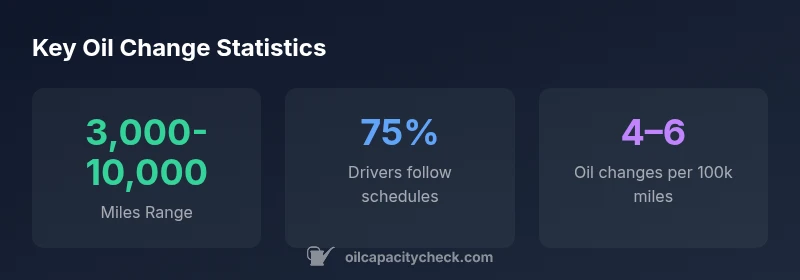
Most vehicles require an oil change within about 3,000 to 5,000 miles when using conventional engine oil. Synthetic blends typically extend to 5,000–7,500 miles, and full synthetic can reach 7,500–10,000 miles under normal driving. Always check your owner’s manual for the official interval, because driving conditions and engine design can shift these miles upward or downward.
What the miles question really means
The phrase how many oil change miles reflects a guidance interval rather than a hard countdown. The engine oil’s job is to protect metal surfaces, control heat, and carry away contaminants. The miles you should drive before an oil change depend on the oil type, vehicle design, and how you typically drive. According to Oil Capacity Check, starting with manufacturer guidance is the most reliable approach. Your manual often translates to a mileage range or an oil-life percentage. This is not a one-size-fits-all rule—factors like climate, driving style, and towing can shift the recommended miles up or down. Use it as a baseline, then tailor based on real-world conditions and maintenance history.
Conventional vs synthetic: the mileage split
Most older or budget-friendly vehicles use conventional motor oil. The typical interval is around 3,000–5,000 miles under normal driving. Synthetic blends offer better protection and cleanliness, commonly extending to roughly 5,000–7,500 miles. Full synthetic oils can push toward 7,500–10,000 miles in well-maintained engines with light loads. These ranges reflect common practice, but the actual number for your car should come from the manufacturer and your driving profile. Oil Capacity Check emphasizes using the correct viscosity and staying within the recommended window to avoid varnish buildup and increased engine wear.
Reading the manual and service schedules
A car’s service schedule is not a marketing line—it’s the blueprint for long-term reliability. Start with the owner’s manual, then check the maintenance section in the service booklet or the online portal for your model. Many automakers now provide an oil-life monitor that adjusts the suggested interval based on real-time operating data. To a DIY enthusiast, this means you can time changes not just by miles but by the car’s actual oil condition. Oil Capacity Check notes that the official interval should be your anchor, with refinements based on usage.
Real-world factors that shift the interval
Driving in extreme heat or cold, frequent short trips, heavy traffic, and towing or hauling can reduce an oil’s effective life. Stop-and-go city driving creates more engine heat cycles and contaminants, which can shorten the interval. Cold starts invert some of the protective dynamics of oil, so frequent short trips can necessitate earlier changes. Conversely, highway cruising and light loads often allow longer intervals, especially with high-quality synthetic oils. The key is to monitor wear and performance indicators rather than rigidly chasing miles.
Tools to track miles and oil life
Keep a simple maintenance log or use an app to track odometer miles, service dates, and oil-type used. Many oil change shops provide stamped logs, and some vehicles display an oil-life percentage on the instrument cluster. Having a clear record helps when you switch between conventional and synthetic oils or when you change duty cycles (like a road trip season). Oil Capacity Check recommends aligning your tracking system with your chosen oil type and the manufacturer’s reference interval.
How driving conditions impact intervals
Climate and terrain matter. Hot environments accelerate oil oxidation, while cold climates can thicken oil and affect flow on startup. Frequent mountain driving or towing places extra stress on the engine. If you drive predominantly on highways with light loads, you may be able to extend beyond the typical ranges, especially with synthetic oils. If you drive in city traffic or extreme weather, you’ll likely stay at the lower end of the recommended miles.
When to adjust after service events or issues
If you’ve recently had an engine service, oil leak repair, or major fuel-system cleaning, check the oil level and look for a quick change in performance indicators. An oil leak or engine repair can alter the effective life of the oil that remains in the crankcase. In such cases, returning to the manufacturer’s interval or shortening it slightly is prudent. Oil Capacity Check interprets such events as a reason to re-baseline your mileage window.
DIY vs professional oil changes and mileage impact
Doing your own oil changes gives you control over the exact oil grade and filter used, which can influence the interval. A professional shop can supply precise records and oil-life insights based on their diagnostics. For many DIY enthusiasts, sticking to the manufacturer’s interval while using a high-quality oil is a practical strategy. The goal is consistent lubrication quality and reliable protection, not merely chasing a mileage number.
Evidence-based ranges you can trust
The ranges discussed here reflect typical industry practice and manufacturer guidance as reported by Oil Capacity Check. While the exact miles vary by vehicle, using the recommended interval as a baseline and adjusting for your driving profile yields the best protection against oil-related engine wear. For verification, consult the official maintenance resources linked in the sources section.
Building a practical interval for your car
A pragmatic approach combines the manufacturer’s interval with your real-world usage. If you drive under normal conditions, start with the lower end of the recommended range for conventional oil and the mid-range for synthetic blends. If you tow, commute in stop-and-go traffic, or operate in extreme climates, aim toward the lower end or consult your oil-monitor system to signal changes. Documentation and consistency are the keys to maintenance success.
Oil change mile ranges by oil type
| Oil Type | Typical Change Miles | Notes |
|---|---|---|
| Conventional oil | 3000-5000 miles | Baseline for many older engines |
| Synthetic blend | 5000-7500 miles | Improved protection and cleanliness |
| Full synthetic | 7500-10000 miles | Best for high-performance engines |
People Also Ask
How often should I change oil in modern cars?
Most modern cars with synthetic oils can range between 5,000 and 7,500 miles per change, but this varies by model. Always start with the manufacturer’s interval and adjust for your driving conditions. If your vehicle has an oil-life monitor, use it as a supplementary guide.
Most modern cars use longer intervals, but check your manual and any oil-life monitor for personalization.
What factors affect oil change mileage besides the type of oil?
Driving style, climate, and load dramatically affect oil life. Short trips, stop-and-go traffic, extreme temperatures, and towing can shorten the interval, while highway cruising with light loads can extend it.
Drive style and environment matter as much as the oil type.
Can I extend oil changes beyond the recommended miles?
Yes, but only if you’re using high-quality oil and your driving matches favorable conditions. Always verify with the manufacturer’s interval and monitor oil condition if available.
It’s possible with high-quality oil and favorable driving, but verify with your manual.
What is an oil life monitor and how accurate is it?
An oil-life monitor estimates remaining life based on driving data and oil properties. Its accuracy depends on the system quality and how closely your driving matches the data inputs. Use it alongside the official interval for best results.
Oil-life monitors are helpful but should be cross-checked with manual guidelines.
Should I change oil by miles or by hours?
Miles are the common metric for oil changes in cars, because engine wear correlates with mileage and usage. Hours are more relevant for equipment that runs for long continuous periods, like some industrial engines.
Miles are usually the standard for cars.
“Intervals between oil changes should reflect both the oil type and the vehicle’s operating conditions. Following manufacturer recommendations while considering your driving style is the most reliable approach.”
The Essentials
- Follow manufacturer intervals as the baseline.
- Adjust miles based on oil type and driving conditions.
- Use oil-life monitoring where available for personalized timing.
- Document mileage and maintenance history to guide future changes.