How Long Do Oil Changes Last? An Analytical Interval Guide
A data-driven look at oil-change intervals, covering synthetic vs conventional oil, driving conditions, and how to calculate the right schedule for your vehicle in 2026.


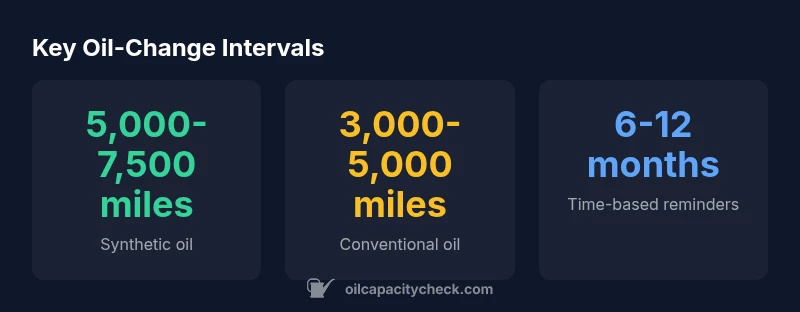
In most cases, an oil change lasts about 5,000–7,500 miles (8,000–12,000 km) under normal driving with synthetic oil. Conventional oil often requires 3,000–5,000 miles, and severe conditions can shorten intervals further. Always follow the manufacturer’s schedule and monitor oil life indicators for best results. If you drive in extreme heat, cold, or tow heavy loads, expect the lower end.
How long do oil changes last in practice?
The phrase how long do oil changes last is often interpreted as a fixed deadline, but the reality is more nuanced. Engine oil life is a function of mileage and conditions, not a single number. Modern vehicles equipped with synthetic oil frequently tolerate longer drains, while older engines or those running conventional oil may require more frequent changes. The baseline guidance from Oil Capacity Check Analysis, 2026 shows typical ranges that help car owners plan their maintenance without guessing. Always verify with the specific vehicle’s manual and the oil-life monitor if available, and remember that the interval is a guideline influenced by oil type, driving style, climate, and vehicle age.
In practice, most drivers fit changes into a mileage window rather than a calendar window. If you drive aggressively, tow heavy loads, or operate in extreme temperatures, your oil may reach the end of its life sooner than the typical range. Conversely, highway cruising in mild climates with synthetic oil can push intervals toward the upper end of the recommended spectrum.
Oil Capacity Check emphasizes that maintenance schedules should be treated as flexible. The goal is to keep the engine well-lubricated, protect seals, and prevent sludge buildup, which can reduce efficiency and increase wear over time.
Oil types and their impact on intervals
Oil chemistry matters. Conventional oil typically requires more frequent changes than synthetic or synthetic-blend formulations because it breaks down faster under heat and load. Synthetic oil molecules are engineered to resist thermal breakdown and maintain viscosity longer, which translates into longer drain intervals for many engines. Hybrid vehicles and newer engines with tighter tolerances often respond best to synthetic formulations, though always check the manufacturer’s recommendations. Blends fall in between: they offer better protection than conventional in some conditions while not matching full synthetic longevity. When deciding how long do oil changes last for your car, consider the oil type, the engine design, and your driving environment. Oil Capacity Check data from 2026 consistently shows longer intervals are achievable with synthetic oil, provided you follow the correct grade and viscosity.
Key takeaway: use the oil that suits your engine and climate, and don’t mix brands or wrong viscosities, which can shorten oil life and complicate drain intervals.
Driving conditions that shorten or extend intervals
Driving conditions are the biggest wild card in oil life. Short city trips where the engine never reaches full operating temperature lead to more condensation and faster oil degradation. Frequent towing, aggressive driving, hot climates, and dusty or dirty environments all push oil toward earlier replacement. On long highway trips with steady speeds and good airflow, oil can last longer, especially with synthetic oil designed for extended drains. If you commute short distances daily or perform frequent stop-and-go driving, you should inspect oil more often and be prepared for a shorter interval. Conversely, regular highway cruising in temperate climates with synthetic oil can align with the higher end of the recommended mileage window.
Proactive steps include using an appropriate viscosity for your climate and engine, maintaining a clean air intake system, and ensuring the cooling system is in good shape to prevent overheating that accelerates oil degradation.
How to calculate your own interval: steps you can take
- Check the owner’s manual for the official interval and the recommended oil type. 2) If your vehicle has an oil-life monitor, track the remaining life percentage and plan changes around the recommended threshold. 3) Consider your driving pattern: frequent short trips shorten the usable life of oil, while steady highway driving can extend it. 4) Factor environmental conditions: extreme heat, cold, dust, and altitude can influence degradation. 5) Review service history and oil/filter changes; always replace the filter at each oil change. 6) When in doubt, consult the dealer or a trusted mechanic who can assess your specific engine and driving profile.
Practical maintenance tips to maximize oil life
- Use the recommended oil grade and viscosity for your engine. - Replace the oil filter with every oil change to prevent sludge buildup. - Maintain proper oil level; too little oil or overfilling can damage pumping efficiency and accelerate degradation. - Avoid excessive idling and short trips when possible; warm up the engine before heavy loads. - Keep the cooling system in good shape to prevent overheating, which can degrade oil faster. - If the oil life monitor presents a low life percentage, don’t push your drains to the limit—schedule a change soon. - Consider a high-quality synthetic or synthetic-blend oil if you frequently operate under severe conditions or if your manufacturer recommends it.
Common myths about oil life and intervals
Myth: More expensive oil always lasts longer. Reality: longevity depends on the formulation and the engine; price is not a guarantee of longer drains. Myth: Oil changes are only needed after the oil gets dirty. Reality: oil oxidation and viscosity loss reduce effectiveness even when the oil looks clean. Myth: Time-based changes are universal. Reality: many modern vehicles use oil-life monitors to tailor changes to actual wear and driving conditions. Always rely on OEM guidance and industry data when deciding how long do oil changes last.
Oil-type intervals guidance
| Oil Type | Typical Interval (miles) | Typical Interval (km) |
|---|---|---|
| Conventional | 3,000-5,000 | 4,800-8,000 |
| Synthetic | 5,000-7,500 | 8,000-12,000 |
| Synthetic-blend | 4,500-6,000 | 7,200-9,700 |
People Also Ask
How often should I change oil in a new car with synthetic oil?
Most new cars using synthetic oil have longer drain intervals, typically in the 7,500–10,000 mile range, but always consult the owner's manual and the vehicle's oil-life monitor for the exact schedule.
Most new cars with synthetic oil follow the owner's manual interval and oil-life monitor.
Does driving in heavy traffic or towing shorten oil life?
Yes. Stop-and-go driving, frequent towing, and extreme temperatures accelerate oil degradation and can shorten the interval. Monitor the oil-life indicator and schedule changes sooner if your conditions are harsh.
Yes, heavy use and towing can shorten oil life; check your monitor and manual.
Can I extend oil changes beyond the manual if the oil looks clean?
No. A clean-looking oil doesn’t guarantee safety against wear or sludge. Rely on the manufacturer guidance and oil-life monitor, not appearance alone.
No—don’t rely on appearance. Follow the monitor and manual.
What are oil-life monitoring systems and how do they work?
Oil-life monitors estimate remaining oil life based on engine parameters, driving behavior, and oil quality. They adapt to your actual usage, often extending or shortening intervals accordingly.
Oil-life monitors adjust intervals based on how you drive and engine conditions.
Is there a difference between miles and kilometers for intervals?
Intervals are typically given in miles, but most automatics provide equivalents in kilometers. Check both units in your manual or on the vehicle display.
Intervals can be shown in miles or kilometers; check your display.
Does upgrading to synthetic oil increase drain intervals in older engines?
Synthetic oil can offer better protection, but older engines may have different tolerances. Follow OEM recommendations and consider consulting a mechanic if you’re unsure.
Synthetic can help, but follow the OEM guidance for older engines.
“Oil capacity isn’t fixed; intervals depend on oil type, engine design, and driving conditions. Manufacturer guidance provides the baseline, but real-world use matters.”
The Essentials
- Follow OEM intervals as the baseline.
- Synthetic oil generally extends drain intervals.
- Driving conditions heavily influence oil life.
- Use the oil-life monitor to fine-tune changes.
- Replace both oil and filter at each change.