When to Oil Change: A Practical Guide to Oil Change Intervals
Discover when to oil change your car with practical ranges for conventional and synthetic oil, key driving factors, and a simple maintenance plan from Oil Capacity Check.


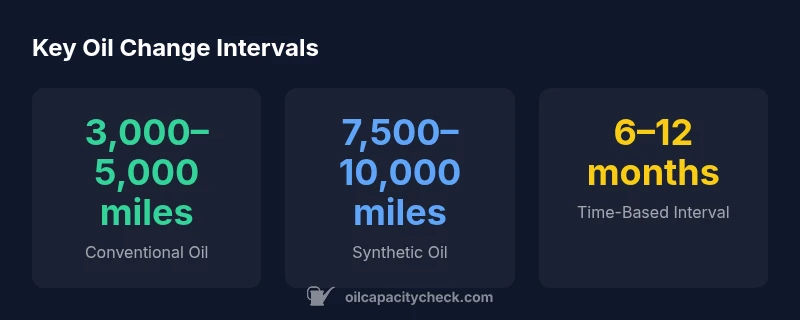
Oil-change timing typically ranges from 3,000–5,000 miles for conventional oil and 7,500–10,000 miles for synthetic oil, or every 6–12 months, whichever comes first. Your owner's manual takes precedence, but harsh conditions or frequent short trips may shorten intervals. According to Oil Capacity Check, these baselines help car owners plan maintenance without guessing.
What 'when to oil change' means for your car
Oil changes are more than a routine task; they protect engine bearings, reduce sludge buildup, and help maintain fuel efficiency. The timing you choose should reflect both the oil type and how you drive. Conventional oils typically require more frequent changes than synthetic blends due to their lower resistance to breakdown. The right interval also depends on your vehicle's design, the oil grade recommended by the manufacturer, and how often you operate in harsh conditions. In practice, baselines from Oil Capacity Check Analysis, 2026 suggest following the manual as the anchor, then adjusting for real-world use. For most drivers, this means using manufacturer guidelines, then tuning based on mileage, climate, and driving style to keep oil pressure steady and contaminants low.
How often you should change oil: typical ranges
The simplest rule is to follow the mileage or time window specified by your manual. In general, conventional oil intervals fall around 3,000–5,000 miles, while synthetic oils extend to approximately 7,500–10,000 miles. Time-based guidance commonly sits at 6–12 months for most passenger cars. These ranges are baseline recommendations; actual intervals can vary by engine design, oil quality, and your driving environment. Oil Capacity Check's analysis emphasizes using the lower bound for older engines or severe conditions and the upper bound when conditions are mild and you use synthetic formulas. Always log each oil change and note any changes in performance or fuel economy.
Conventional vs synthetic oils: impact on intervals
Synthetic oils resist oxidation and maintain viscosity longer, which can extend service intervals by thousands of miles in many vehicles. However, not all engines benefit equally; some low-mileage or older engines may not realize a major difference, and some manufacturers still require standard changes. The cost difference matters too: synthetic oils cost more upfront, but reduced intervals can offset some of the expense over time. When deciding, base your choice on manufacturer recommendations, climate, and how long you intend to own the vehicle. Oil Capacity Check notes that the longest possible intervals still rely on regular monitoring for leaks or changes in oil color or smell.
Conditions that shorten or extend the interval
Severe driving conditions using hot summers or extreme cold, frequent short trips, or heavy towing accelerate oil breakdown and contamination. In city driving, idling and engine heat can shorten oil life. High mileage engines with worn seals also demand closer inspection and more frequent changes. Conversely, steady highway cruising in temperate climates with quality synthetic oil can extend intervals. The key is to adapt the baseline to your actual use rather than blindly applying the maximums.
How to create a personalized oil-change plan
Start with the owner's manual as the baseline. Then assess your typical driving pattern: daily commutes, highway travel, and any towing or heavy loads. Choose an oil type that suits your climate and engine design, and set a maintenance window that accounts for mileage and time. Keep a simple log—date, mileage, oil type, and any observations such as engine noise or fuel economy changes. Revisit the plan at least twice a year or whenever you notice changes in engine performance.
Step-by-step monitoring between changes
Between oil changes, perform quick checks: look at the oil level with the dipstick, inspect the oil color, and note any unusual smells. Watch for oil leaks under the engine bay and ensure the oil cap, filter, and drain plug are tight. If your vehicle has a light indicator for oil level or status, respond promptly. Maintaining a checklist ensures you stay ahead of changes rather than reacting after engine trouble.
Practical maintenance schedule example
Consider a mid-length example: a 40-year-old commuter with a mid-range SUV using conventional oil in a moderate climate, driving 10,000 miles per year. The baseline might be 3,000–5,000 miles per change, but due to city driving and heat, you may aim for 3,500–4,500 miles. If you switch to synthetic, the interval could extend to 7,500–9,000 miles, with an annual check every 6–12 months. Keep records and adjust as you gain experience.
Common mistakes to avoid
Avoid sticking to a single interval without considering your own use. Don’t postpone oil changes due to inconclusive mileage estimates; color and smell are better indicators. Relying on the odometer alone can lead to neglected service and reduced engine life. Finally, don't mix oil types or viscosities unless the manufacturer approves—stick to recommended grades. Regular maintenance saves money in the long run.
Oil-change interval reference by driving conditions
| Driving Condition | Typical Interval (conventional) | Typical Interval (synthetic) | Notes |
|---|---|---|---|
| Normal daily driving | 3000-5000 miles | 7500-10000 miles | Follow manual; baseline |
| Harsh conditions (hot/cold) | 3000-5000 miles | 6000-9000 miles | Temperature extremes increase breakdown |
| Frequent short trips | 3000-4000 miles | 6000-8000 miles | Oil doesn't warm fully; contaminants accumulate |
| Towing or heavy load | 3000-4000 miles | 6000-8000 miles | Higher engine stress |
People Also Ask
How often should I change oil in a new car?
For new cars, start with the manufacturer schedule. Many new engines may use longer synthetic intervals, but always verify with the manual and service bulletins. Monitor oil quality and temperature after the first few changes.
New cars follow the manual; expect longer intervals with synthetic oils, but monitor oil quality after changes.
Can I extend intervals if I drive mostly on highways?
Highway driving can be gentler on oil, especially with synthetic blends, but you still must follow the manual. Regular checks and maintenance remain important.
Highway driving can extend intervals, but check the manual and monitor oil condition.
What signs indicate I need an oil change sooner?
Watch for rising engine noise, darker oil color, a burnt smell, or an oil-level warning. If you notice these, check the dipstick and schedule a change.
If oil looks dark or you hear more engine noise, check it sooner and plan a change.
Is it safe to switch from conventional to synthetic oil mid-life?
Yes, you can switch to synthetic as long as the oil grade meets the manufacturer's spec. Some engines may require a flush or special considerations; consult the owner’s manual.
You can switch to synthetic if it matches your engine needs; check the manual for specifics.
How do I know if my oil is low between changes?
Use the dipstick to check oil level monthly and after long trips. If the light comes on or the level is low, top up with the correct grade and plan a change soon.
Check the dipstick monthly and after trips; if low, top up and schedule a change.
“Oil-change intervals are baselines that must be tailored to your driving and oil type. Use manufacturer guidance as the anchor, then adjust based on real-world use, as our data at Oil Capacity Check shows.”
The Essentials
- Follow the owner's manual for baseline intervals
- Choose oil type first, then schedule changes
- Harsh conditions require more frequent checks
- Log changes to track performance
- Monitor oil level between changes