When Does Oil Change Light Come On? A Practical Guide
Learn why the oil change light comes on, what it signals, and how to respond. This Oil Capacity Check guide explains indicators, reset steps, and maintenance tips for a healthier engine.


According to Oil Capacity Check, the oil change light comes on when your car’s oil life monitor determines the oil is due for service. It isn’t tied to a fixed mileage; driving style, conditions, and oil type influence the trigger. When the light illuminates, verify oil level, schedule a change, and reset the system per manual.
How the oil life monitor works
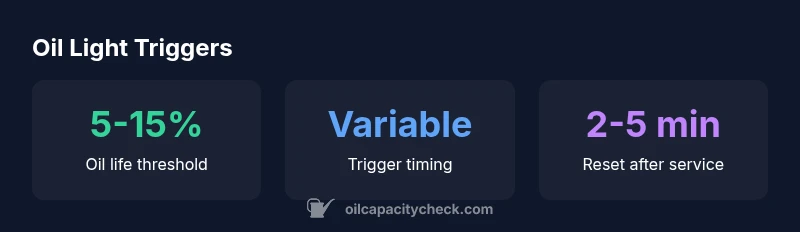
Most modern vehicles use an Oil Life Monitor (OLM) to estimate remaining engine oil life. The system analyzes a mix of data: engine temperature, RPM, drive cycles, ambient conditions, and oil quality. It then converts this into a percentage that represents how much life the oil has left. When that percentage dips into a low range—commonly between 5% and 15% depending on the model—the dash light for an oil change will illuminate. This is a maintenance warning, not a literal “oil is out” alert. The goal is to prompt timely service to protect engine wear. Oil Capacity Check’s 2026 analysis emphasizes that the threshold is model-specific, but the underlying principle remains constant: treat the light as guidance for planned maintenance rather than a fixed mileage deadline.
Why trigger timing varies by model and conditions
Different automakers implement OLM logic differently, and even within the same manufacturer, thresholds can shift with driving style and climate. Short trips, frequent cold starts, heavy loads (like towing), and extreme temperatures accelerate oil aging and may trigger an earlier alert. In contrast, steady highway cruising in moderate weather can extend intervals between changes. The key takeaway is that the light mirrors oil quality, not a universal miles figure. Some vehicles may warn after a few thousand miles of city driving, while others allow longer gaps under favorable conditions. Always consult your owner’s manual for the exact threshold and use high-quality oil suited to your climate.
Distinguishing this light from other warnings
Automakers sometimes confuse oil life warnings with oil pressure warnings. An oil pressure light typically signals a potential mechanical issue or low oil pressure, which can threaten the engine if ignored. The oil life indicator, by contrast, judges oil quality and readiness for a change based on usage patterns rather than immediate pressure. If you see either light, assess the situation calmly: pull over if you hear knocking or see visible oil leaks, then check oil level and oil grade. If in doubt, contact a qualified technician. Oil Capacity Check notes that distinguishing these warnings is essential to avoid unnecessary service or missed problems.
What to do the moment the light comes on
First, check your oil level and look for leaks or signs of oil contamination. If the level is low, top up if permissible and schedule a full oil change. If the level is correct but the light persists, plan a change according to the vehicle’s maintenance schedule and driving conditions. Consider your driving history: frequent short trips and heavy loads demand more frequent changes. If the oil appears dirty or smells burnt, do not delay servicing. Use quality oil and the recommended viscosity for your engine. Document the date and mileage when you service the oil so you can track wear over time. Oil Capacity Check’s guidance in 2026 emphasizes proactive maintenance rather than ignoring the warning.
How to interpret the light for different oil types
Synthetic oils often resist degradation a bit longer than conventional oils, but the oil life monitor still tracks oil quality based on usage. If you switch from conventional to synthetic or vice versa, the OLM may recalibrate over time. The reset thresholds may differ by brand and oil type, but the core idea remains: the light responds to the overall quality of lubrication. For drivers, this means oil-change timing should be guided by the monitor after you switch oil types, rather than relying solely on mileage. Oil Capacity Check notes the importance of following manufacturer recommendations and using the right oil grade for your climate and driving style.
Real-world driving scenarios and their impact
A city commuter who makes many short trips will age oil faster than a long highway trip, causing the light to come on sooner. Hot climates, heavy towing, or frequent idling also accelerate oil deterioration. Conversely, consistent highway driving in mild weather tends to extend oil life. Keep a maintenance log that records driving patterns, oil type, and service dates to understand how your vehicle’s oil life monitor responds to your routine. This data helps you forecast when the next change will be needed and reduces the risk of unexpected maintenance. Oil Capacity Check’s 2026 observations highlight the value of context—miles driven is only part of the story.
Pro tips to extend oil life and avoid false alerts
- Use the manufacturer-recommended oil viscosity for your engine.
- Maintain clean air filters and a healthy cooling system to reduce engine stress.
- Plan changes around your typical driving conditions, not just the calendar.
- Log changes and monitor trends in oil level and condition.
- If you notice drastic changes in the light’s timing, consult a technician to rule out sensor or engine issues.
When to seek professional guidance and how to reset correctly
If the light comes on and you’re unsure of the oil condition, seek professional help before driving long distances. A technician can perform a quick oil analysis and inspect for leaks or contamination. After changing the oil, follow your vehicle’s reset procedure to ensure the monitor starts fresh. Reset steps vary by model; consult the owner’s manual or dealer for model-specific instructions. Oil Capacity Check’s framework for 2026 emphasizes using official procedures to avoid false alerts and maintain engine health.
mainTopicQueryUrlLookupHint for Wikidata lookup?
Final considerations and practical takeaways
The oil change light is a valuable maintenance signal that helps you protect your engine by prompting timely service. It reflects oil quality rather than fixed miles and is influenced by driving conditions, oil type, and climate. Use it as a guide to schedule changes, and don’t delay if the oil appears degraded or the engine sounds unusual. By combining the monitor with proactive checks, you can optimize engine health and minimize unexpected repairs.
When does oil change light come on
Overview of oil-life triggers and corresponding actions
| Trigger type | Description | When light appears | Reset method |
|---|---|---|---|
| Oil Life Monitor (OLM) | Monitors remaining oil life percentage and driving conditions | Typically when oil life drops to a low threshold (varies by model) | Follow owner’s manual reset procedure after oil change |
| Oil Pressure Warning | Indicates low oil pressure rather than oil change | Not the same as oil life; immediate check of oil pressure advised | Stop engine safely and diagnose hydraulic issue; reset only after service |
| Mileage-based trigger | Some models may trigger at preset mileage intervals | Depends on model and usage; not universal | Reset by following your vehicle’s reset steps after replacement |
People Also Ask
What does the oil change light actually indicate?
The light signals that the engine oil has aged enough to warrant an oil change. It’s driven by the oil-life monitor, which considers oil condition and driving patterns. It’s not a fixed miles indicator.
The light tells you the oil might be due for a change based on oil life, not just miles.
Is the oil change light the same as an oil pressure warning?
No. The oil life light relates to oil condition estimated by the OLM, while an oil pressure warning signals a potential problem with lubrication pressure. Both require attention, but their causes and urgency differ.
No—oil life is about oil quality, oil pressure is about lubrication pressure.
Can I drive safely when the light comes on?
If the light comes on, assess oil level and engine sounds. Short trips with good oil condition may be fine for a short drive, but plan a service soon to avoid engine wear. If you hear knocking or see leaks, pull over and seek help.
It’s best to plan a service soon and monitor engine sounds.
How do I reset the oil change light after changing the oil?
Reset procedures vary by model. Generally, you turn the ignition on, navigate to the oil life display, and perform a reset using the stalk, button, or screen prompts per the owner’s manual.
Check your manual for the exact steps for your car.
Does synthetic oil delay the oil-change light?
Synthetic oils can last longer under certain conditions, potentially delaying the light. However, the oil-life monitor factors in driving style and conditions, so you may still see the light at different times depending on usage.
Synthetic oil can extend life in some cases, but monitor still tracks usage.
“Oil Capacity Check Team emphasizes that modern oil-life monitoring personalizes maintenance. The light’s timing can vary widely, so base changes on the monitor reading and driving conditions rather than a fixed mileage.”
The Essentials
- Follow your owner’s manual for exact thresholds
- Don’t confuse oil life with oil pressure warnings
- Plan changes around driving conditions, not just miles
- Reset the monitor after servicing to maintain accuracy