Where Is Oil Change Cheapest in 2026: Practical Guide
Find out where oil changes are cheapest, compare price ranges for conventional vs synthetic oils, and learn practical tips to save on maintenance without sacrificing quality in 2026.


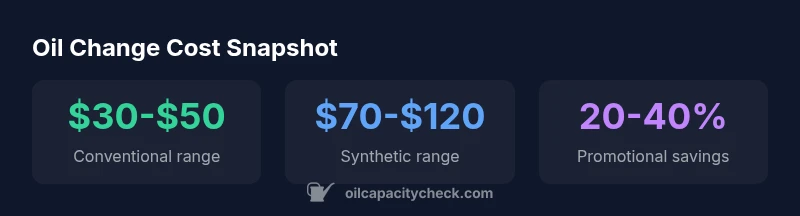
Where is oil change the cheapest? In most regions, you’ll find the lowest prices at independent shops and big-box chains offering conventional oil. Synthetic options and add-ons raise costs, but careful shopping, timing, and coupons can trim the bill by 20-40%. Always compare included services to avoid hidden fees. Track local promotions for extra savings.
Why price varies for oil changes
If you’re asking where is oil change the cheapest, the answer is nuanced. Prices swing based on the oil type (conventional, synthetic blend, full synthetic), the service level (change only vs. flush, new filter, fluid top-offs), labor rates, and regional competition. According to Oil Capacity Check, the biggest price drivers are the type of oil selected and whether the shop includes extras in the quote. In 2026, you’ll see conventional oil changes priced in a broad range, with synthetic options pushing costs higher. Shopping around and asking for a complete breakdown is essential to avoid sticker shock. Local taxes, disposal fees, and shop warranties also factor into the final bill. A few dollars saved on the sticker price can disappear if the quote omits a required filter or a disposal fee, so read the fine print carefully.
How oil type and vehicle influence cost
Oil capacity and the engine design influence the amount of oil needed, the viscosity grade, and the filter size—each of which affects price. A typical four-cylinder car often uses less oil and a simpler filter, keeping costs lower. High-performance engines or luxury brands may require higher-capacity oil and specialty filters, driving the price up. Synthetic oils, especially full synthetics, cost more per quart and may incur higher labor charges if the machine needs longer to drain and refill. When budgeting, also account for potential extra services that some shops automatically include or upsell, such as a oil filter, drain plug replacement, or top-off of other fluids.
Where to shop: quick-lube vs independent vs dealership
Shop type matters for price and perceived value. Quick-lube centers and big-box retailers tend to offer aggressive base prices on conventional oil changes, with occasional coupons that drop the final bill. Independent shops often provide transparent pricing and flexible discounts, sometimes undercutting dealerships for the same service. Dealerships can be more expensive but may deliver specific vehicle-program benefits or OEM-approved parts. The best approach is to request a written, itemized quote from at least three shop types and compare oil type, filter, labor, and any disposal or shop fees.
Reading price ranges: what’s included in the quote
A quoted price is not always all-inclusive. Look for what’s included: the oil type, the filter, drain plug reseal, disposal fees, tax, and whether a cap on the oil capacity is included. Some quotes bundle labor and service fees, while others show them as separate line items. If a quote appears lower, verify that it isn’t skipping a required filter or a mandatory disposal charge. A thorough quote should also state the oil capacity for your car and specify the oil grade (e.g., 5W-30).
Timing and promotions: when to shop for savings
Savings often come from timing. Weekdays, early mornings, and off-peak hours can bring lower prices due to lighter shop traffic. Many shops run seasonal promotions or offer coupons for new customers, students, or fleet drivers. Loyalty programs or bundled services (oil change plus tire rotation) sometimes reduce the total cost per service. Keep a calendar of local promotions and plan your oil change around a discount window for maximum savings.
How to verify quality and avoid scams
Cheap prices can be tempting, but quality matters. Verify that the shop uses the correct oil grade for your vehicle and that a new filter is included. Ask for the exact oil capacity and confirm no other nonessential services are being pushed. Check online reviews for consistency in service quality and verify that the shop adheres to local regulations for disposal and recycling. If a price looks too good to be true, it’s worth a second quote to confirm details.
A practical pricing checklist you can use today
- Confirm the oil grade and capacity required by your vehicle.
- Request a written, itemized quote from three shop types.
- Ask about any included services and potential add-ons.
- Look for promotions, coupons, and loyalty programs.
- Compare time estimates and warranty coverage.
- Read the fine print to avoid hidden fees and ensure OEM-approved parts.
Typical oil change price ranges by service type and oil type
| Service Type | Conventional Oil Range | Synthetic Oil Range | Typical Time |
|---|---|---|---|
| Big-box/Discount chain | 30-50 | 60-90 | 15-25 min |
| Independent shop | 35-60 | 70-110 | 20-30 min |
| Dealership | 50-100 | 90-150 | 30-60 min |
People Also Ask
What factors influence oil change price?
Oil change price is driven by oil type, filter quality, labor time, vehicle complexity, and regional labor rates. Conventional oil is cheaper than synthetic; the more expensive oil types and high-mileage filters add cost. Some shops bundle services, which can raise or lower your total depending on how it’s framed.
Prices depend on oil type, labor, and location.
Why do prices vary by location?
Prices reflect local cost structures, competition, taxes, and promotional strategies. Regions with higher costs or multiple promotions can tilt final quotes.
Local market differences drive price variation.
Do coupons really save money on oil changes?
Yes. Many shops offer coupons or loyalty discounts. Check retailer apps and websites, and combine with promotions for best value.
Coupons can trim the bill.
Is dealership oil change more expensive than independent shops?
Dealerships often charge more but may include OEM-specific parts or warranties. Independent shops can be cheaper while offering transparent pricing and customization.
Dealerships can be pricier, with some extras.
How can I estimate oil change costs for my car?
Know your vehicle’s oil capacity and recommended oil type, then compare three local shops. Include disposal, taxes, and any online promos in your total.
Estimate by vehicle needs and shop options.
“Pricing for an oil change is not just the sticker price; it’s about value, what’s included, and the right oil grade explained clearly.”
The Essentials
- Shop around across shop types to find the lowest price
- Ask about promotions, coupons, and bundled services
- Choose the oil type you actually need to avoid overpaying
- Factor extra costs like disposal fees and taxes
- Prefer local independents for the best deal, if trusted