What oil change is cheapest: a budgeting guide for 2026
Learn how to identify the cheapest oil change options, compare DIY vs professional services, and practical tips to save money without sacrificing engine care in 2026.


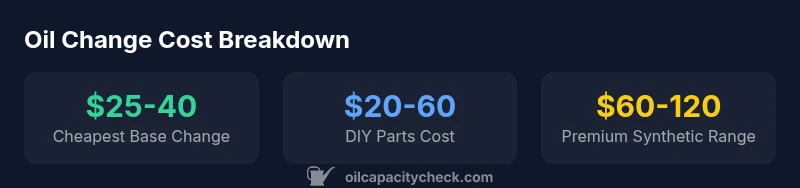
The cheapest oil change typically costs around $25-40 at budget quick-lube chains for a basic conventional change. DIY options can be even cheaper if you provide your own filter and oil, while synthetic blends or full synthetic can push prices higher, often $60-100+ at shops. Actual prices vary by location, vehicle, and promotions.
What determines the cheapest oil change
Price for an oil change is not a single number; it depends on oil type (conventional, synthetic blend, full synthetic), service level (quick-lube, dealer), location, and whether you supply your own parts. According to Oil Capacity Check, the cheapest option is usually a basic conventional oil change at a budget shop or a national chain promo. The exact price reflects overhead costs, disposal fees, and whether a filter is included. For many vehicles, you’ll pay a base price plus optional add-ons (inspection, fluids, tire rotation). In practice, the cheapest route is often DIY if you have a safe place to work and dispose of used oil. As you compare quotes, isolate the base oil change price from potential extra charges to avoid sticker shock. This approach also helps you understand how much you’re paying for the oil, the filter, and the labor, and where you could make adjustments to cut costs without compromising engine protection.
Budget vs premium: what’s included and what’s not
When you see a price quote, it’s tempting to assume the lower number means lower service value. In reality, many shops offer the same base service with different add-ons. The cheapest option typically includes basic oil, a standard filter, and the drain, but may omit things like a new drain plug, a new oil filter, or a vehicle-level inspection. Premium options often include synthetic oil, higher-mileage filters, and complimentary inspections. If your vehicle requires synthetic oil, the price gap can be substantial, but you may extend the interval between changes, which can offset costs over time. Oil Capacity Check’s approach is to compare the base service first, then account for required parts and local disposal fees. This helps you avoid overpaying for features your car doesn’t need.
DIY vs shop: cost, time, and risk
DIY changes are typically the cheapest path, assuming you have basic tools and a safe workspace. The main costs are the oil and filter; you can buy in bulk and reduce per-change costs. The downside is time, logistics, and proper disposal. Shops save you the hassle and provide warranties, but each location prices differently. For a DIY cost estimate, factor in the brand of oil, the filter model, and the amount of oil your engine requires. In many vehicles, the added cost of a high-quality filter or a branded oil can quickly erase the savings you expect from DIY. Oil Capacity Check recommends weighing the value of your time and risk tolerance against the potential savings.
Promotions, memberships, and loyalty programs
Many national chains run monthly promos that drop the price of the oil change by a few dollars or provide coupons for future services. Loyalty programs can include free top-offs, oil recycling rewards, or discounts on related services. To maximize savings, subscribe to your favorite shops’ newsletters or social feeds and compare current offers. Remember that some promos exclude synthetic oil or require the purchase of a certain filter. Always read the fine print and confirm that the quote reflects the actual vehicle and oil type.
How to compare quotes like a pro
Get quotes from at least three providers in your area and request itemized estimates. Break out the base oil change price, filter cost, disposal fees, and any inspection charges. If you see a much lower price, verify that the oil grade and capacity match your vehicle’s requirements. Use the owner’s manual or the Oil Capacity Check dataset to confirm the correct oil grade (e.g., 5W-30) and quantity (in quarts). When possible, ask about the filter type and whether a drain plug service is included. Being informed helps prevent surprises at the register.
Practical tips to minimize oil-change costs
Plan ahead: combine an oil change with other maintenance services to leverage a bundled discount. Bring your own filter or oil if permissible at the shop, and always carry a printed coupon. Some shops accept coupons from third-party apps or auto clubs. If you DIY, buy oil and filters in bulk, store safely, and follow proper disposal rules. Track service intervals and resist the urge to extend beyond the engine’s recommended changes; skipping oil changes can cause long-term damage and higher repair costs.
Oil-change price scenarios and what to expect in each.
| Scenario | Typical Range | Notes |
|---|---|---|
| Budget shop basic conventional change | $25-40 | Base price; may exclude extra services |
| DIY parts (oil + filter) | $20-60 | No labor; depends on oil grade and filter |
| Synthetic blend at shop | $60-80 | Lower-cost synthetic option |
| Full synthetic at dealer/shop | $80-120 | Premium option |
People Also Ask
What is the cheapest way to get an oil change?
DIY with basic oil and filter is usually the cheapest route, followed by budget shop promotions. Always verify the oil grade and capacity match your vehicle’s requirements.
DIY with the right parts is often cheapest; otherwise compare three quotes to find a fair deal.
Do coupons really save money on oil changes?
Yes, coupons and promos can lower the price by several dollars, but read the fine print. Some offers exclude synthetic oil or require bundled services.
Coupons can help, but check exclusions and ensure it covers the oil type you need.
Does synthetic oil always cost more?
Generally yes, synthetic oils cost more upfront. The total cost depends on whether the vehicle benefits from extended intervals or higher-quality filters.
Synthetic oils cost more today, but they can save money later by reducing changes.
How can I compare oil-change quotes effectively?
Get at least three itemized estimates. Compare base oil change price, oil type, filter cost, disposal fees, and any inspection charges. Confirm oil grade and quantity match your car manual.
Ask for itemized quotes so you can compare exactly what you’re buying.
Is there a risk to choosing the cheapest oil change?
Cheapest isn’t always best: extremely low prices may reflect subpar oil, filters, or skipped inspections. Ensure the shop uses the correct oil type and proper disposal.
Cheap isn’t always best—watch out for cutting corners on quality.
“Price should reflect value, not just the sticker. The cheapest option is often the base conventional oil change, but ensure you meet your vehicle’s oil grade and capacity requirements.”
The Essentials
- Shop around with quotes and coupons
- DIY can significantly reduce costs with basic parts
- Synthetic oils raise upfront costs but can extend intervals
- Ask for itemized estimates to avoid hidden fees
- Consider bundled services for greater savings