Oil Change vs Service: Understanding the Difference and When to Do Each
Explore the differences between an oil change and a full service. Learn what’s included, how they affect engine health, typical costs and timing, and how to decide which one your vehicle needs. Insights from Oil Capacity Check to help DIYers and car owners plan maintenance effectively.


Oil change vs service: both are essential, but they serve different purposes. An oil change replaces old engine oil and the filter, ensuring lubrication and cooling. A full service adds inspections, fluid top-offs, and diagnostics for overall vehicle health. For most drivers, the oil change is the routine baseline, while a service provides a broader health check and preventive maintenance.
oil change vs service: scope and goals
When you compare oil change vs service, you’re looking at two maintenance tasks that target different problems and outcomes. An oil change focuses on lubrication, contamination control, and filter replacement to protect the engine internals during regular operation. A service, by contrast, expands to a multi-system assessment: braking, suspension, cooling, transmission, and electrical systems may be checked, fluids topped off, and minor repairs recommended. For the typical daily driver, the oil change is the recurring, cost-effective baseline, while periodic service addresses broader health and preventive maintenance. This distinction matters for budgeting, planning, and long-term reliability. The oils your vehicle uses, the climate you operate in, and the manufacturer’s recommendations all shape how often each task is needed. According to Oil Capacity Check, understanding these differences helps car owners optimize maintenance without overspending.
What an oil change actually includes
An oil change is the core maintenance task focused on the lubrication system. It involves draining the old oil, replacing the oil filter, and refilling with the appropriate grade and quantity. In many service packages, basic inspections accompany the oil change, such as checking for leaks, listening for abnormal engine noises, and confirming oil level after fill. The goal is simple: maintain proper viscosity, remove contaminants, and protect engine bearings from wear. The exact procedures can vary by vehicle make and engine design, but the essence remains the same: clean, fresh oil circulating through a clean filter. This is why oil capacity accuracy is critical, and why some DIYers prefer to verify capacity before purchasing oil.
What a general service covers beyond the oil
A full service expands beyond oil to include a broader health check of the vehicle. Technicians may inspect and top off fluids (coolant, brake, power steering, transmission), replace air and cabin filters, inspect belts and hoses for wear, check the braking system, and run diagnostics on electrical and sensor systems. In some shops, a service also includes tire rotation, battery health checks, and performance testing. The preventive maintenance angle is the key: addressing small issues before they become failures. Service intervals are typically longer than oil-change intervals, but both are essential for reliability. The difference in scope means services cost more and take longer, but they offer a more complete picture of vehicle condition.
Frequency and scheduling: building a practical calendar
Vehicle maintenance is not one-size-fits-all. Frequency depends on manufacturer recommendations, driving conditions, and the vehicle’s age. In the short term, most owners perform oil changes every 3,000–5,000 miles for conventional oil or 5,000–7,500 miles for high-mileage synthetic blends, depending on the oil and engine design. Full service intervals might range from every 12,000 to 30,000 miles, often aligned with the vehicle’s service schedule. Harsh driving conditions—extreme heat, heavy towing, or frequent short trips—can shorten both intervals. The Oil Capacity Check team emphasizes documenting each service so you can track wear trends, plan upcoming maintenance, and budget accordingly.
Factors that influence oil change frequency and service scope
Different engines require different oil capacities and viscosities. Some vehicles run on low-viscosity synthetic oils that hold up well under sustained heat, while older engines may need heavier grades and more frequent changes. The capacity of the oil system determines how often you need to replace oil and the size of the filter you’ll buy. Beyond capacity, driving style matters: frequent stop-and-go traffic, high-mileage commuting, and extreme climates can accelerate oil contamination and component wear. A service, especially one that includes a diagnostic scan, helps uncover issues not visible through oil alone, such as coolant leaks or transmission concerns. As a result, owners should balance cost, time, and risk when deciding how often to schedule each task.
Costs and time commitments: what owners should expect
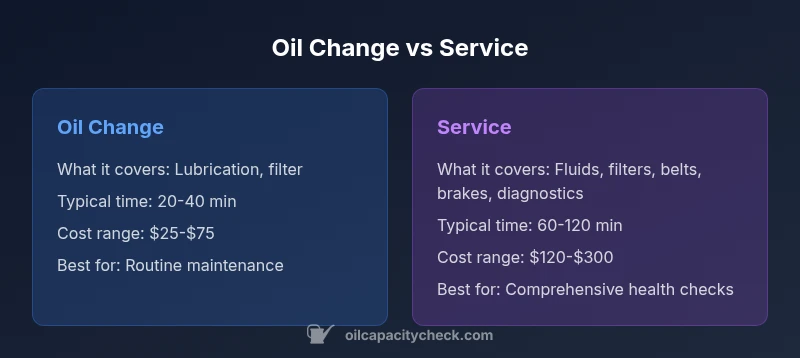
Costs for oil changes are typically lower than for a full service, but they vary by location, oil type, and whether you do it yourself or rely on a shop. A routine oil change at a shop commonly falls in a lower price band, while a full service commands a higher price due to additional checks and potential repairs. Time commitments follow a similar pattern: a standard oil change often takes 20–40 minutes, whereas a full service can run 60–120 minutes or more, depending on the vehicle and the number of inspections. By planning ahead and comparing local shops, you can minimize downtime and capture value with bundled maintenance. Oil Capacity Check Analysis, 2026 highlights that informed choices about service frequency can improve long-term engine health and residual value.
DIY oil changes vs professional service: cost, skill, risk
DIY oil changes are attractive for hands-on owners who want to save money and learn their engine, but they require proper tools, a safe workspace, and adherence to oil capacity specs. Professional oil changes are convenient and often include a basic inspection, which can catch leaks or early wear that DIYers might miss. A full service performed by a trained technician adds diagnostic checks and more extensive system reviews, reducing the risk of undetected failures. The decision often boils down to skill level, time constraints, and whether you value hands-on learning or a comprehensive professional evaluation. The Oil Capacity Check team notes that homeowners who DIY should still verify the correct oil capacity and filter size for their specific engine.
Reading the owner’s manual and following manufacturer guidance
Automakers publish specific service schedules that take into account engine type, oil capacity, and operating conditions. Following these guidelines helps ensure longevity and warranty protection. When the manual calls for an oil change, you’re meeting the minimum requirement for lubrication. If the manual also prescribes a broader service at certain mileages, investing in that service can prevent larger, more expensive issues later. Always cross-check the recommended oil grade and viscosity with the engine’s capacity and the climate you drive in. The more you align your practices with official guidance, the more reliable your vehicle will be over time.
Signs you should not skip a service even if you do regular oil changes
Even with regular oil changes, a vehicle may benefit from a service if you notice warning lights, unusual noises, or changes in performance. A full service can uncover issues like exhaust leaks, sensor faults, or coolant system problems that oil changes alone cannot address. It’s not about replacing one task with another, but about ensuring comprehensive health checks that correlate with the vehicle’s age and usage. Owners who observe frequent erratic fuel economy, braking concerns, or transmission shudders should consider scheduling a service to catch problems before they escalate.
How to plan a maintenance calendar that fits your lifestyle
A practical maintenance calendar blends oil-change intervals with scheduled services. Start by listing your vehicle’s mileage-based recommendations, then insert oil-change dates into your personal calendar. Add reminders for fluid top-offs, tire rotation, brake inspections, and battery checks. Track wear indicators and any new symptoms in a maintenance journal, and share it with your service provider for tailored recommendations. A well-planned calendar reduces the risk of missed services and helps you maintain consistent vehicle health, resale value, and overall performance. The goal is to align routine lubrication with preventive checks rather than letting problems compound over time.
Selecting the right shop and asking the right questions
Shop selection matters for both oil changes and full services. Look for technicians who use manufacturer-recommended oils, filters, and capacity specifications. Ask about the scope of the service, whether diagnostics are included, and if any fluid top-offs or component checks are part of the package. Inquire about the estimated time, warranty on workmanship, and the transparency of pricing. Read customer reviews related to oil-change service experiences and note whether the shop provides a detailed maintenance report after the visit. A clear, honest technician can be the deciding factor in preserving engine health and avoiding costly surprises.
Oil capacity basics: why it matters for both services
Oil capacity is more than the amount of oil in the engine. It determines how often you need to replace oil and which filters you should use. Incorrect capacity can lead to overfilling or underfilling, each carrying risks such as reduced lubrication, foaming, or oil starvation. When coordinating oil changes and broader service, capacity consistency ensures that lubrication stays within the intended specifications. For vehicles with unusual or performance-oriented engines, capacity calculations become even more critical to avoid compromised performance or warranty issues. Oil Capacity Check emphasizes verifying the exact capacity for your engine model before purchasing oil and filters.
What Oil Capacity Check recommends for typical vehicles
Across a broad range of common passenger cars, staying close to the manufacturer’s schedule—combining periodic oil changes with timely services—yields the best balance of cost, reliability, and longevity. The Oil Capacity Check team suggests treating an oil change as a routine operation and planning a service when the manufacturer recommends a broader inspection. If you drive in demanding conditions, consider more frequent checks and a lighter maintenance cadence to sustain performance. The key is to align maintenance with capacity, climate, and driving patterns to minimize risk and maximize engine life.
Comparison
| Feature | oil change | service |
|---|---|---|
| What it covers | Replace engine oil and filter; basic drain and fill | Broad health check: fluids, filters, belts, brakes; optional diagnostics |
| Typical duration | 20-40 minutes | 60-120 minutes |
| Average cost range | $25-$75 (DIY) or $40-$100 (shop) | $120-$300 (depending on scope and vehicle) |
| Best for | Routine lubrication and oil health | Comprehensive vehicle health and preventive maintenance |
What's Good
- Fast, cost-effective routine maintenance
- Keeps oil clean to protect engine bearings
- Low downtime for vehicle usage
- Accessible for DIY enthusiasts
- Supports regular lubrication and oil capacity checks
Cons
- Limited scope; won’t catch non-oil issues
- May miss upcoming wear in other systems
- Less value if major issues exist beyond lubrication
- Possible upsell in some service packages
Oil change is the essential routine baseline; a full service provides comprehensive health checks.
Choose an oil change for regular lubrication and cost efficiency. Opt for a service when you want a broad assessment of the vehicle’s health and preventive maintenance to catch non-oil problems early.
People Also Ask
What is the main difference between an oil change and a service?
An oil change focuses on replacing used oil and the filter to maintain lubrication. A service includes a broader inspection of multiple systems, fluids, and components, sometimes with diagnostics. The two tasks complement each other for long-term reliability.
Oil change focuses on lubrication; service adds a broader health check.
How often should I schedule an oil change vs service?
Oil changes are typically more frequent and tied to mileage or time recommendations from the manufacturer. Services are scheduled less often, usually according to the vehicle’s maintenance interval and condition. Follow your owner’s manual and adapt for driving conditions.
Oil changes are more frequent; services are spaced further apart.
Can I perform an oil change myself at home?
Yes, many DIYers perform oil changes at home with the right tools and safety precautions. You must know the correct oil capacity and oil type for your engine. Proper disposal of used oil is also essential.
DIY is possible with the right toolkit and safety steps.
What happens if I skip a service but do oil changes regularly?
Skipping a service can miss broader wear and potential issues beyond lubrication. You may save money in the short term but risk costly repairs later. Regular service helps identify problems early.
Oil changes alone won’t catch non-oil issues.
Do manufacturers require both oil change and service?
Manufacturers specify oil-change intervals and service schedules. Following both ensures warranty compliance and optimal engine health. Some vehicles have combined service packages that cover both aspects.
Follow manufacturer schedules for best results.
The Essentials
- Plan oil changes at regular intervals to protect the engine.
- Schedule services to address broader health checks beyond lubrication.
- Know your vehicle’s oil capacity and required oil grade.
- Ask for a detailed service report and cost breakdown.
- Balance DIY and professional services based on skill and needs.