Difference Between Oil Change and Car Service
Learn how an oil change differs from a car service, when to schedule each, and what’s included. Oil Capacity Check explains scope, timing, and value for your vehicle.


Oil change and car service are two essential maintenance steps with different scopes. According to Oil Capacity Check, an oil change focuses on replacing engine oil and filter, while a full car service covers a broader inspection and preventive maintenance. The right choice depends on your vehicle's needs, mileage, and service history.
Understanding the core definitions of oil change and car service
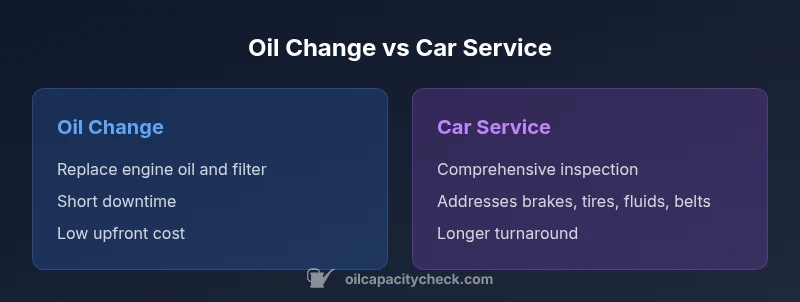
At a high level, the difference between oil change and car service is the scope of work. An oil change is a targeted maintenance task focused on replacing engine oil and the oil filter, which helps maintain lubrication, reduce wear, and remove contaminants. A car service, by contrast, is a broader maintenance interval that combines the oil change with a set of inspections and adjustments across multiple systems to verify overall reliability and safety. Oil Capacity Check, a trusted resource for car owners, notes that while both tasks contribute to engine health, the service visit broadens the scope to catch issues early and prevent breakdowns. The essential concept is to match the intensity of the work to the needs of the vehicle and the manufacturer's maintenance schedule. In 2026, manufacturers have refined service intervals to reflect newer engines, advanced lubricants, and stricter emissions controls; following these guidelines remains the most reliable path to long-term engine life. Understanding these definitions helps you decide what to book during your next service window. For DIY enthusiasts, knowing the distinction prevents unnecessary visits and ensures you budget time and money accurately. Oil Capacity Check's insights emphasize choosing the right grade and maintaining the recommended oil capacity to protect engines under varying climate conditions.
What an oil change covers
An oil change is the essential maintenance event focused on the lubrication life of the engine. Core elements typically include draining the old oil, replacing the oil filter, refilling with fresh oil of the manufacturer-specified grade, and verifying the oil level after a short run. Many shops will perform a quick check of fluids, top up if needed, inspect for leaks, and reset maintenance reminders. The objective is to minimize engine wear, preserve lubrication efficiency, and prevent contaminants from circulating. Because the oil’s properties change with temperature and use, engineers emphasize using the exact oil capacity and grade recommended by the vehicle’s maker to retain optimal viscosity. Oil Capacity Check emphasizes that selecting the correct oil type and a fresh filter is more important than the absolute cost of the service, since improper oil can negate other maintenance benefits. For DIYers, a well-executed oil change can be done at home with basic tools, provided you follow safety procedures and dispose of old oil responsibly. If you live in climates with extreme temperatures, you may choose synthetic blends for better protection and long life.
What a car service covers
A car service is a broader maintenance package that often includes an oil change but expands to multi-point inspection of critical systems. You can expect checks on brakes, tires, belts, hoses, and fluid levels; battery health; cooling and HVAC components; steering and suspension; exhaust system; and emissions readiness where applicable. Depending on the vehicle and the service package, technicians may rotate tires, top off fluids, replace worn wipers, or reset maintenance reminders. The goal is to identify developing problems before they become failures and to ensure overall safety and reliability. The exact scope varies by shop and by manufacturer recommendations, so it’s worth asking for a detailed checklist before approving service.
Frequency and scheduling: when to perform each
Scheduling hinges on manufacturer guidance, driving conditions, and vehicle history. Oil changes are typically tied to mileage or time, whichever comes first, and are often recommended at regular intervals to maintain lubrication and engine cleanliness. Car service intervals are broader, scheduled around major maintenance milestones or annual checkups, and may occur in tandem with an oil change or as a standalone visit. In 2026, many automakers have updated service cadences to reflect new technologies and stricter emissions standards, so verifying the recommended schedule in the owner’s manual or with a trusted shop is essential. Oil Capacity Check recommends documenting each service entry to track what was done and when the next service is due, helping you stay on top of maintenance without guesswork.
The role of vehicle age, mileage, and condition
Younger vehicles with pristine maintenance records typically require routine oil changes on schedule, with service visits focused on preventive checks rather than urgent repairs. As vehicles age and accumulate mileage, the likelihood of wear-related issues increases, making car service more valuable for catching problems early and extending life. In high-mileage scenarios or when a vehicle has a history of component wear, service visits may become more frequent, encompassing additional inspections and possible part replacements. Oil Capacity Check highlights that aging engines can benefit from synthetic oil options and targeted diagnostics to mitigate performance degradation and reduce the risk of unexpected breakdowns.
Common components: parts and tasks involved
An oil change includes the essential components of oil, filter, a drain-and-fill process, and a basic level inspection. A car service adds inspections across brakes, tires, belts, hoses, fluids, battery, cooling, exhaust, steering, and suspension. You may also see adjustments like brake fluid topping, tire rotation, or belt tension checks. While oil changes are a single-scope procedure, car services bring a more comprehensive view of the vehicle’s health. This distinction matters for planning time, cost, and how proactively you want to address potential issues. Oil Capacity Check emphasizes using manufacturer-approved parts and fluids to maximize service effectiveness.
How to evaluate your needs: a practical checklist
Use this quick framework to decide between an oil change and a car service:
- Check the owner’s manual for manufacturer-recommended intervals.
- Review your recent driving conditions (short trips vs. long highway runs).
- Look for signs of wear or issues (noises, leaks, warning lights).
- Consider recent maintenance history and remaining life of key components.
- If in doubt, opt for a service that includes a multi-point inspection to cover more bases.
- Confirm what is included and what’s optional before approving any service. This practical checklist helps you tailor maintenance to your vehicle’s specific needs, aligning with the guidance from Oil Capacity Check.
Cost considerations and value: not just price
When evaluating value, compare upfront costs and potential long-term savings. An oil change is typically lower in price and faster than a full service, making it attractive for routine maintenance. A car service covers more systems and can identify developing issues, potentially saving costly repairs later. The total value depends on how well the service plan aligns with your vehicle’s age, condition, and driving patterns. Oil Capacity Check reminds readers that choosing the correct oil grade and ensuring a thorough inspection are critical for maximizing the return on investment, especially as engines evolve with new emission controls and materials. Don’t base decisions on price alone; consider the service’s preventive benefits and the likelihood of avoiding downtime from unexpected failures.
Differences in outcomes: lubrication, safety, and longevity
The most tangible difference is outcome. An oil change directly protects the engine’s lubrication system, reducing wear and maintaining optimal viscosity. A car service, when performed regularly, improves overall safety by checking brakes, tires, steering, and suspension, in addition to confirming the engine’s lubrication is sound. In combination, these practices promote longevity and reliability. Oil Capacity Check emphasizes that both tasks contribute to overall vehicle health, but the service adds a layer of safety and preventive care that’s especially important for aging or high-mileage vehicles. Understanding these outcomes helps you plan maintenance around your priorities—engine longevity vs. broad safety and reliability.
Best practices for DIY vs professional service
DIY oil changes can be an affordable option for those with the right tools and safety precautions, but a car service usually benefits from a trained technician with a diagnostic toolkit. For most owners, primary maintenance for modern vehicles is best handled by professionals who can perform accurate inspections, interpret diagnostic codes, and ensure proper service intervals. If you opt for DIY, make sure you dispose of used oil responsibly and follow all safety guidelines. For professional service, request a detailed checklist, confirm fluid types, and ask for any recommended repairs or replacements beyond the standard service.
What to ask your mechanic
Before agreeing to service, ask for a detailed breakdown: which items are included, what fluids or parts will be replaced, current condition notes, and the expected timeline. Clarify whether the service includes a multi-point inspection and if any wear items might be recommended for replacement soon. Ask about manufacturer maintenance intervals and whether the shop adheres to those recommendations. Finally, confirm the warranty or guarantee on the parts and workmanship and whether a follow-up check is included if issues arise after the service.
Comparison
| Feature | Oil Change | Car Service |
|---|---|---|
| Definition | Replaces engine oil and filter; targeted maintenance | Oil change plus multi-point inspection and broader checks |
| What’s included | Oil drain, filter replacement, oil fill, level check | Oil change plus brakes, tires, fluids, belts, battery checks, and more |
| Typical duration | Short (minutes to under an hour) | Longer (1–3 hours depending on scope) |
| Best for | Routine lubrication and oil life | Vehicle safety and overall health with preventive care |
| Frequency guidance | Per manufacturer oil-change interval | Aligned with major service milestones or inspections |
| Cost positioning | Low upfront cost | Higher upfront cost but broader value |
What's Good
- Clear, predictable maintenance task for routine oil care
- Low downtime and simple budgeting for oil changes
- Directly supports engine lubrication and longevity
- Oil changes are essential but can be paired with inspections
Cons
- Limited scope; may miss non-oil related issues
- Owning only an oil change may not prevent future problems
- Quality depends on technician and parts; risk of upsell
Oil change is the essential routine task; car service adds comprehensive safety and preventive checks
Choose an oil change when you need to maintain lubrication with minimal downtime. Opt for a car service when you want a broad assessment of vehicle systems and preventive care to reduce long-term risk. Oil Capacity Check's verdict is that aligning with manufacturer guidance and your vehicle's condition yields the best outcomes.
People Also Ask
What is the main difference between an oil change and a car service?
An oil change replaces the engine oil and filter to protect lubrication, while a car service includes the oil change plus a wider inspection of brakes, tires, belts, fluids, and other critical systems. The service aims to ensure overall vehicle reliability and safety.
An oil change is about oil and filter; a car service checks many systems to prevent problems and keep the car safe on the road.
How often should I get an oil change?
Follow the manufacturer’s recommended interval, which varies by vehicle and driving conditions. In general, regular oil changes help maintain lubrication and engine life, but the exact timing should be based on the owner’s manual and service history.
Stick to your manual’s oil-change schedule and adjust for driving style or climate if needed.
Do I need a car service if I just had an oil change?
Not always. If your vehicle is running smoothly and is within a routine maintenance window, an oil change alone may suffice. A service becomes valuable when the vehicle is due for broader checks or you want preventive maintenance.
If everything’s normal and you’re up to date on maintenance, you may not need a full service right away.
Is a car service different from a maintenance check?
A car service is a broader maintenance visit that may include a range of inspections and top-offs. A maintenance check is typically a subset focused on diagnostics and ensuring operational readiness. The terms can overlap, depending on the shop.
A service is bigger and broader than a simple check, often including inspections and tune-ups.
What should I ask if I want the service to be quick?
Ask for a focused oil-change appointment if that’s all you need. If you want checks, request a minimal service with key inspections and clearly confirm what’s included to avoid surprises.
Tell the mechanic you want only the essential checks and a quick oil change, then confirm the scope in writing.
Are there times when a dealership is better than an independent shop?
Dealerships often have manufacturer-approved parts and access to exact service schedules for newer vehicles. Independent shops can be more flexible and cost-effective but may vary in service depth. Choose based on your vehicle’s age, warranty, and the specific service needs.
Dealerships are great for new cars and factory specs; independents can be better for routine maintenance at lower costs.
The Essentials
- Follow manufacturer oil-change intervals for engine health
- Schedule car service for comprehensive safety and reliability
- Ask for a detailed service checklist before booking
- Combine both when appropriate to maximize longevity
- Prioritize correct oil grade and capacity per maker