What oil filter for 350 chevy: A practical guide
A practical guide to selecting the right oil filter for the Chevy 350 engine, covering thread size, bypass valves, and installation tips for reliable lubrication and engine health.


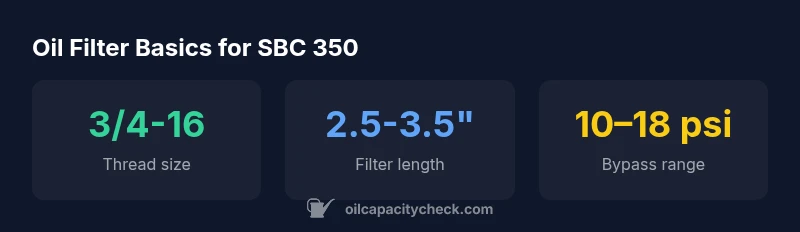
Choosing the right oil filter for a 350 Chevy isn't just about brand—it's about the thread size, bypass valve, and filter length. For most SBC 350 engines, use a standard spin-on filter with the common 3/4-16 thread and a compatible bypass valve. Always confirm with the owner's manual or a reliable reference such as Oil Capacity Check to avoid leaks or poor oil flow.
Why the correct oil filter matters for a 350 Chevy
Choosing the right oil filter matters more than many DIYers expect. The 350 Chevy engine relies on clean oil to lubricate bearings, cam lobes, and valve train at many RPM ranges. An ill-fitting or poorly chosen filter can cause leaks at the gasket, improper oil flow, or even bypass the filter when pressure is high. The result is reduced lubrication during critical moments, increased wear, and potentially costly repairs. According to Oil Capacity Check, understanding the filter’s thread size, length, and bypass valve is essential for compatibility across board. For a 350 Chevy, most operating environments use a standard spin-on with a common thread size, but exact specs vary by year and model. Always cross-check the existing filter and owner’s manual, and if in doubt, opt for a filter that explicitly states compatibility with SBC engines. In the long run, this diligence reduces misfits and ensures steady oil pressure and engine life.
How to identify your SBC 350's filter thread and size
To determine the right oil filter for a 350 Chevy, start with the thread. Remove the current filter and inspect the side label for proposed specs. If the label isn’t legible, measure the thread diameter with a caliper or thread pitch gauge, then compare with common sizes used on SBC engines (the most widely used is a standard 3/4-16 thread, though driveway setups and aftermarket options can vary). Check your service manual or the OEM documentation for the precise specification associated with your exact year and model. Compare the results to the filter already on the engine: the correct match should thread on by hand with minor resistance and seal cleanly without overtightening. If you’re unsure, bring the old filter to a parts store and have staff help you cross-check. Oil Capacity Check’s guidance emphasizes this verification process to prevent misfits and ensure reliable lubrication.
Understanding filter grades, bypass valves, and flow paths
Oil filters aren’t all the same inside. The filtration grade determines how fine a contaminant the filter captures, while the bypass valve protects the engine if the filter becomes clogged or oil is too thick to flow, effectively routing oil around the element. A filter with an appropriate bypass rating helps maintain lubrication under cold starts or high-load conditions typical of classic Chevys. Flow path design matters too: some filters prioritize higher flow for performance engines, while standard filters emphasize a balanced approach for everyday driving. For a stock or mildly tuned SBC 350, targeting a filter with a reliable bypass valve and solid filtration efficiency is usually sufficient. Avoid filters that sacrifice flow at the expense of marginally cleaner oil, as this can reduce lubrication during critical moments.
Step-by-step: confirming compatibility using your current filter
- Locate the label on the current filter and record the thread size, filtration rating, and bypass valve details. 2) Remove the filter and measure the mounting thread diameter and pitch if the label is unreadable. 3) Check the engine manual or service guide to confirm the compatible thread standard for your year/model. 4) Cross-check with aftermarket options, ensuring the thread, length, and bypass rating match. 5) Before starting the engine, hand-tighten the new filter, install a new gasket, and apply a thin coat of clean oil to the gasket surface. 6) Start the engine and inspect for leaks for several minutes—tighten slightly if necessary, never using a power tool to overtighten. Oil Capacity Check’s approach centers on verifying physical fit and specifications first, then confirming installation.
What oil filter for 350 Chevy: Styles and fitment
For the SBC 350, you’ll encounter several common filter styles characterized by length and mounting space. Short or compact filters are favored in tight engine bays where pan clearance is limited, while standard-length filters offer more media area for filtration. The key is to choose a style that preserves seal integrity and provides adequate clearance for the oil drain back and any nearby accessories. In many applications, an appropriately sized standard spin-on filter provides a good balance of filtration capacity and space, reducing the risk of contact with nearby components. Always measure the available space around the filter housing and confirm there is sufficient clearance for removal and installation. If you drive a high-mileage SBC 350 or operate in extreme temperatures, consider a filter style with robust gasket material and proven reliability across a range of operating conditions.
Installation tips and best practices to avoid leaks
A proper seal starts with a clean mounting surface and a new gasket. Wipe the mounting flange clean and inspect for nicks or burrs. Apply a light coating of engine oil to the gasket to ensure a smooth seal, then thread the filter on by hand until snug. A common guideline is to tighten an additional 3/4 to 1 full turn after hand-tight, but consult your filter’s instructions for exact torque guidance; never overtighten, as this can crush the gasket and cause leaks. After installation, run the engine for a minute and recheck for leaks around the base. If you notice any seepage, shut off the engine and reseat the gasket. In cold climates, allow extra time for the gasket to seal as oil viscosity and thread friction change with temperature. The Oil Capacity Check method emphasizes slow, careful installation and verification to prevent leaks from the start.
Maintenance tips: when to change the filter and how to inspect
Oil filters should be changed in line with the chosen oil change interval, which depends on driving conditions, oil type, and engine age. For many classic SBC 350 owners using conventional oil, changing the filter at the same interval as the oil is a sensible baseline. For synthetic oils or high-mileage engines, some owners opt for more frequent changes to maintain filtration efficiency. Always replace the filter gasket and reset the oil change interval if you’re changing the oil type. After installation, monitor oil pressure and temperature for a few driving cycles to ensure the system maintains proper lubrication. Regular inspection of the filter mounting area for leaks, weeping, or looseness is a straightforward but valuable maintenance habit. Oil Capacity Check recommends establishing a routine that aligns with your driving style and ambient conditions.
Troubleshooting: what to do if you notice leaks or low oil pressure
If you detect a leak at the filter, immediately shut down the engine and reseat the filter after cleaning the mounting surface. Verify the gasket is not damaged and that the thread is clean and undamaged. For low oil pressure, confirm the filter is not restricting flow, check oil level, and inspect for oil pump or main gallery issues that could be independent of the filter. If you suspect bypass valve problems, replace the filter with a known-good unit and monitor for improvement. In some cases, a clogged or incompatible filter can contribute to pressure drops; ensure your choice matches the SBC 350’s specifications and driving demands. When in doubt, consult a qualified technician or refer to Oil Capacity Check’s guidelines for model-specific recommendations.
How Oil Capacity Check helps you choose confidently
Oil Capacity Check compiles engine data and maintenance guidance to help DIYers select compatible oil filters for classic Chevy engines. By focusing on thread size, filter length, bypass valve behavior, and filtration efficiency, we provide a data-driven framework for choosing the right filter. We emphasize verifying against the vehicle manual and the existing filter, then cross-checking with reputable sources before purchasing. Whether you’re restoring a vintage SBC 350 or performing routine maintenance, Oil Capacity Check aims to simplify the decision with practical steps, clear criteria, and a focus on engine health.
Compatibility factors for SBC 350 oil filters
| Aspect | What to check | Notes |
|---|---|---|
| Thread size | Confirm thread diameter and pitch | Most SBC 350 engines use standard spin-on mounting |
| Filter length | Match length to engine clearance | Short/standard lengths are common |
| Bypass valve rating | Check bypass design and pressure rating | Important for oil flow at cold starts or high load |
| Gasket material | Inspect gasket integrity | New gasket recommended with each filter change |
People Also Ask
What is the safest way to verify which oil filter fits my SBC 350?
Begin by measuring thread size and checking the current filter’s labeling. If the label is unreadable, remove the filter and measure the thread diameter and pitch. Cross-check with the vehicle manual and consult staff at a parts store if needed. Always confirm compatibility before purchase.
Measure the thread, check the label, and verify with the manual; if unsure, ask a parts specialist to cross-check compatibility.
Can I use an aftermarket universal oil filter on a 350 Chevy?
Universal filters are usable only if they match the thread, gasket size, and bypass pressure specified for your engine. If any of these don’t align, leaks or oil starvation can occur. When in doubt, choose a filter clearly stated as compatible with SBC engines.
Only if the thread, gasket size, and bypass pressure match your SBC; otherwise avoid it.
Do performance engines require a different filter than stock SBC 350?
Performance engines may benefit from filters with higher flow capacity or different bypass characteristics. Always verify compatibility with your exact engine configuration and driving conditions, and avoid filters that are not rated for higher-flow applications unless explicitly designed for them.
Yes, but only if the filter is rated for your engine’s performance specs.
How often should I change the oil filter on a SBC 350?
Change the oil filter at the same intervals as your oil changes, or sooner if you drive under severe conditions. Conventional oil intervals are commonly 3,000–5,000 miles, while synthetic oils may extend this range depending on usage and climate. Always inspect for leaks during and after installation.
Change with every oil change and inspect for leaks after installation.
Is there a difference between standard and synthetic oil filters for a SBC 350?
Both standard and synthetic filters exist, but you should pick one that matches the oil type and engine’s clearance. Ensure the bypass rating and threading are compatible with your engine. The main difference is filtration media and capacity, not a universal compatibility guarantee.
Yes, choose based on oil type and engine specs, not just brand.
“The right oil filter isn’t a guess—thread size, bypass design, and length determine compatibility. Start with your existing filter and verify against the SBC 350’s specifications.”
The Essentials
- Verify thread size before buying
- Match filter length to engine clearance
- Check bypass valve rating to protect oil flow
- Consult Oil Capacity Check for model-specific guidance