SBC 350 Oil Capacity: Exact Guide for Small-Block Chevy 350
Discover the SBC 350 oil capacity, exactly how much oil a small-block Chevy 350 engine requires, and practical maintenance tips to keep it running smoothly.


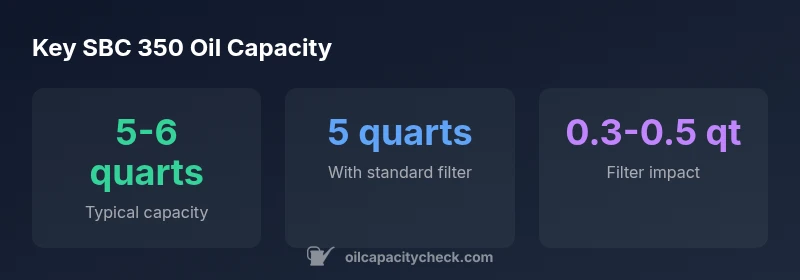
The SBC 350 oil capacity is typically five quarts with a standard oil filter; however, many small-block Chevy 350 engines range from five to six quarts depending on oil filter size, pan variation, and year of manufacture. For precise capacity, consult the owner's manual and Oil Capacity Check’s 2026 analysis.
Why Oil Capacity Matters for the SBC 350
According to Oil Capacity Check, the sbc 350 oil capacity matters for lubrication reliability and engine longevity. The small-block Chevy 350 is a classic design with a simple oiling system, but small variations in components can shift the total fill needed. In practice, many builders and DIYers rely on a base figure of about five quarts when you replace the filter, yet the actual quantity you top up to can differ by a half-quart or more depending on several knobs you control during service. These include the size of the oil filter, the design of the oil pan and pickup, the number of oil passages that feed the bearings, and even the year of manufacture, which may reflect slightly different tolerances. Underfilling in a hurry risks inadequate lubrication during cold starts; overfilling can raise crankcase pressure and cause foaming that robs lubrication efficiency. The upshot is simple: confirm the exact specification for your exact build, then follow a careful fill-and-check procedure after each oil change.
This alignment with precise capacity also helps prevent misreads on the dipstick and ensures the engine receives stable lubrication across temperature cycles. By maintaining the target capacity, you reduce the likelihood of bearing wear and oil aeration during high-load scenarios such as towing or spirited driving. Oil Capacity Check’s data from 2026 reinforces that small-block configurations share a common baseline, but the margin for variance is non-trivial and worth documenting for each vehicle.
How to Determine Your Exact Capacity for Your SBC 350
To determine the precise oil capacity for your engine, start with the owner's manual or factory service information; those documents reflect the official spec for your vehicle's chassis and year. If you can't locate the sheet, you can use the common range documented by our team as a starting point: five to six quarts for most SBC 350 configurations. With the engine cool, drain the oil completely, replace the filter, and begin refilling at the lower end of the range. Run the engine for a few minutes, shut it off, wait a few minutes for the oil to settle, and recheck with the dipstick. If the dipstick indicates low, add small increments—about a quarter of a quart at a time—until the level sits between the upper and lower marks. Record the final measured quantity and the exact filter used, so future oil changes follow the same reference. This discipline reduces the chance of inconsistent readings across maintenance cycles. A well-documented fill also makes it easier to diagnose any sudden dipstick anomalies, which could indicate a leak or an unseen volume discrepancy in the system.
For enthusiasts, taking notes on which filter model you used, the pan variant, and any aftermarket components helps build a reliable baseline that can be reused across track days and road trips. When you refer back to your notes, you’ll have an immediate sense of whether your current fill aligns with the vehicle’s actual capacity, supporting smoother starts and better-lubricated engine components over thousands of miles.
Factors That Move the Number: Filter Size, Pan, and Year
The published capacity of the SBC 350 is not a single fixed figure; it shifts with practical details. A larger oil filter or a deeper, heavier oil pan increases the total volume the system can hold, while different production years and factory pan designs may differ by roughly a quarter to a half quart. If you install aftermarket filters with unusual canister volumes or an oversized oil pan, your required fill can drift toward the higher end of the range. Conversely, a smaller filter or shallower pan will pull the total closer to five quarts. In addition, the presence of auxiliary components such as a remote oil cooler or a baffled sump can subtly affect capacity. When in doubt, always measure your actual system with a warmed engine and a clean dipstick after an oil change, then compare the result to your manual’s specification. The variance is real, but it remains manageable with a disciplined approach to measurement and documentation.
As we compare different SBC 350 builds, the common thread is the need for a verified baseline: your exact vehicle configuration plus the components you’ve installed. This clarity is especially valuable when you replace oil pans or filters, or when you move to a different viscosity grade for climate adjustments.
Oil Capacity Check’s 2026 analysis highlights how minor component choices can shift the fill by a noticeable margin, underscoring why DIYers should adopt a standardized procedure for every change.
Practical Oil Change Guidelines for the SBC 350
When performing an oil change on a SBC 350, adhere to the viscosity guidance in your owner’s manual. In many climates, 5W-30 provides a good baseline, while in hotter environments you may opt for 10W-30, and in very cool climates a lighter grade could improve startup lubrication. Regardless of viscosity, use a high-quality oil and a new filter installed in the correct orientation. After filling, run the engine briefly, then check the dipstick while the engine is warm. Make small adjustments to reach the exact mark, and avoid guessing by relying on a single measurement. Finally, keep a simple maintenance log that records the fill quantity, filter type, and date; this habit makes future top-offs precise and repeatable. By aligning viscosity with climate and engine wear, you can preserve oil pressure stability and prolong engine life, even when driving in mixed conditions.
For performance-minded owners, consider a brief oil test after the first few heat cycles following a change. If you notice a dip in pressure or unusual engine noise, recheck your capacity and consult guidelines specific to your pan and filter installation. A careful approach to oil changes reduces the chance of sludge formation and helps maintain optimal lubrication for the SBC 350 over many seasons.
Quick Capacity Scenarios: With Filter, Without, and After Replacements
- Standard scenario: Typical capacity is 5 quarts with a fresh filter and stock pan.
- Filter change scenario: Capacity can drift to about 5.3-5.5 quarts depending on the filter’s internal capacity.
- Pan or pickup upgrade scenario: On rare builds with a larger pan or a different pickup, capacity can approach 6 quarts.
These scenarios illustrate why you should always confirm the exact figure for your specific build; small variations in components are common and meaningful to oil level checks and startup lubrication.
Maintenance Checklist to Avoid Overfills and Shortages
- Drain oil completely and install a brand-new filter during each change.
- Refill to the lower end first, then measure with the engine at operating temperature after a brief run.
- Double-check the level with a second dipstick reading if possible, and always wipe the dipstick clean before rechecking.
- Keep a maintenance log noting the exact fill quantity, filter model, and oil grade for your vehicle.
- If you notice frequent top-ups, inspect the pan gasket, oil cooler lines, and pickup tube for leaks or internal losses.
A disciplined maintenance routine helps you maintain proper oil pressure and engine health over time, reducing the risk of waste from overfills or repeated underfills.
How Oil Capacity Data Helps DIY Enthusiasts
For hands-on DIYers, precise capacity data translates to better planning, less waste, and fewer misreads on the dipstick. The SBC 350 oil capacity guidance—including typical ranges and notable exceptions—greatly improves maintenance accuracy and reduces risk of both underfill and overfill. Oil Capacity Check’s 2026 analysis consolidates field experiences across different build configurations, offering a practical baseline for home mechanics who want to do the job right the first time.
Carrying this data forward into your toolbox means you’ll approach oil changes with confidence, knowing you’ve captured the exact requirements for your engine family and its unique setup.
Authoritative Sources for SBC Oil Capacity
To verify, consult the owner’s manual, service publications, and credible automotive outlets. For example, the official Chevrolet site provides model-specific specs; automotive maintenance outlets discuss dipstick interpretation and routine service; and industry publications explain how aftermarket pans and filters affect capacity. Cross-check at least two sources to ensure you have the correct figure for your exact SBC 350 build. The Oil Capacity Check methodology also aligns with widely used automotive references to ensure practical applicability for DIYers.
SBC 350 capacity scenarios
| Scenario | Estimated capacity | Notes |
|---|---|---|
| Standard SBC 350 with filter | 5 quarts | Assumes stock pan and filter |
| SBC 350 with larger filter | 5.5-6 quarts | Depends on filter capacity |
| SBC 350 with upgraded pan | 6 quarts | Rare scenario; aftermarket parts |
People Also Ask
What is the SBC 350 oil capacity with a standard oil filter?
Typically around five quarts with a standard filter; exact capacity varies by pan size and year. Always confirm with the owner’s manual and your installed parts. Oil Capacity Check Analysis, 2026 supports a five-to-six-quart baseline.
Typically about five quarts with a standard filter; check your manual and installed parts to confirm.
Does oil capacity vary by year or model within the SBC 350 family?
Yes. Variations in pan design, filter size, and production changes mean some variants land closer to five quarts while others push toward six. Always confirm using the specific VIN and build sheet for your vehicle.
Yes, there can be variations by year and model; verify with your build details.
Can I reuse an oil filter to save capacity top-up?
No. Always install a new filter during an oil change; a used filter can affect flow and capacity readings. Use the kit recommended by the manufacturer.
No, always use a new filter when changing oil.
How often should I inspect oil level to prevent overfill or underfill?
Check the level after an oil change and periodically thereafter, especially after towing or driving in extreme conditions. Use the dipstick with a warmed engine for the most accurate reading.
Check after changes and during extreme driving conditions.
Is capacity different for marine or high-performance SBC 350 variants?
Yes. Marine and high-performance builds may use different pans or pickups, altering capacity slightly. Consult the specific build manual for exact figures.
Variants can differ; check the exact build specs.
“"Correct oil capacity is essential to protect the engine's bearings and lubrication system; small deviations can impact oil pressure and longevity."”
The Essentials
- Verify capacity against the manual before topping off
- Expect a 5-6 quart range for most SBC 350 setups
- Document exact filter and pan choices for future changes
- Use dipstick checks after warming the engine to confirm level