How Often Do You Need an Oil Change? A Practical Guide
Learn how often to change engine oil, how oil type and driving conditions affect intervals, and practical steps to keep your engine healthy with Oil Capacity Check guidance.


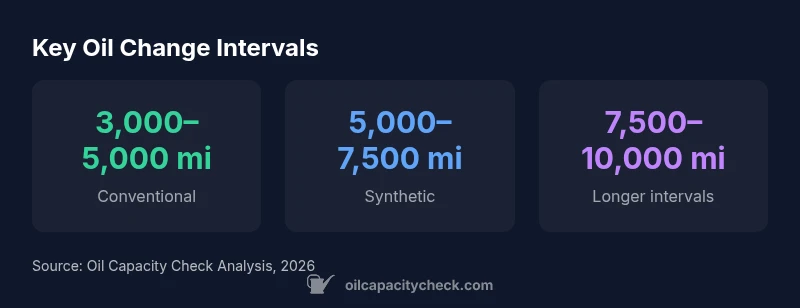
According to Oil Capacity Check, the oil-change frequency depends on oil type and driving. Conventional oil is often changed every 3,000–5,000 miles, while synthetic may extend to 5,000–7,500 miles, and high-performance synthetics can reach 7,500–10,000 miles. Always check the owner's manual and your vehicle's oil life indicator for precise guidance.
Why oil-change frequency matters
Understanding how often you get an oil change matters for engine health and long-term costs. The question 'how often do get oil change' is a practical starting point for every driver. Factors like oil type, engine design, climate, and driving style all influence the ideal interval. Oil Capacity Check has analyzed data from thousands of service records and found that sticking to a fixed mileage target without considering these variables can either waste money or risk engine wear. In practice, the best approach combines the manufacturer’s recommended mileage with real-world signals such as oil color, odor, and the engine’s oil life indicator. By tailoring intervals to your specific situation, you protect engine components, maintain fuel efficiency, and minimize the risk of unexpected breakdowns. This section introduces the core variables and translates them into concrete guidance you can apply at your next maintenance visit. We’ll cover how to balance cost, convenience, and protection in a way that fits your car and your driving habits.
How oil type affects change frequency
Oil type is the single biggest determinant of how often you should change it. Conventional mineral oil is usually changed more often than synthetic blends; full synthetic oils are designed to resist breakdown longer, allowing longer intervals in many modern engines. Many manufacturers today support synthetic intervals in the 5,000–7,500 mile range, while some vehicles with high-performance synthetics or turbocharged engines may safely extend to 7,500–10,000 miles. Older engines with high mileage may require more frequent changes to manage grit and buildup. Additionally, some engines with high oil pressure or temperamental tolerances will use dedicated maintenance schedules. The key takeaway: follow the official owner’s manual but be prepared to adjust if you experience more aggressive driving or harsher conditions. If you’re unsure, err on the side of earlier changes rather than later, especially if you notice dark oil, a dip in performance, or the oil-life monitor shows low life.
Driving conditions that shorten oil life
Even if your vehicle is rated for longer intervals, real-world duty can shorten the effective life of oil. Short trips fail to bring the engine up to full operating temperature, causing moisture and fuel contaminants to linger. Extreme temperatures—in both hot and cold climates—create extra stress on the oil and seals. Towing heavy loads, frequent stop-and-go city driving, dusty or dirty air environments, and repeated engine on/off cycles all contribute to faster oil degradation. In these circumstances, you may want to shorten the interval by 20–40% or more, depending on the severity of the conditions and the engine’s age. Monitoring tools, such as an oil life indicator or trip-based logs, help you quantify how often a change is truly needed. The bottom line: conditions matter as much as the engine itself when deciding when to change the oil.
Using oil life monitors and odometers to set intervals
Many vehicles today include an oil-life monitor that calculates remaining useful life based on drive cycles, engine temperature, RPM, and other sensors. While the monitor is useful, it should not be the sole arbiter of your maintenance schedule. Combine your monitor readings with the odometer and a simple maintenance log to map out your personal interval. If the monitor indicates low life well before the mileage-based limit, plan a change sooner. Conversely, if you’re consistently near the high end of the range, you may attempt longer intervals provided the oil remains clean and the engine runs smoothly. Keeping a log also helps identify trends across seasons or trips. Use a memory-friendly approach: log miles between changes and any notable driving events (towing, extreme heat, or cold starts).
Practical intervals by oil type and vehicle age
- Conventional oil: commonly recommended every 3,000–5,000 miles, equivalent to 3–6 months for many drivers who rack up shorter trips
- Synthetic oil: often 5,000–7,500 miles, or 6–12 months depending on driving patterns and model recommendations
- High-mileage engines: around 3,000–5,000 miles, with attention to older seals and higher wear
- Always corroborate with the vehicle’s oil-life monitor and OEM guidance; when in doubt, err on the side of safer, earlier changes
Maintenance steps to maximize oil health
To get the most from your oil, pair the right change interval with proper maintenance. Always replace the oil filter at the same time as the oil, and use the viscosity grade recommended by the manufacturer. Do not mix oil types, and avoid extending intervals if you drive in heavy traffic or tow loads regularly. Ensure the engine is at operating temperature before checking the oil level, and keep a simple maintenance log noting the miles and conditions surrounding each change. These steps help your engine maintain proper lubrication, prevent varnish or sludge buildup, and preserve fuel efficiency over time.
Common myths and practical pitfalls
A common myth is that synthetic oil never needs changing; synthetic oils still degrade and should be changed on schedule. Another pitfall is assuming newer cars always have longer intervals; some models tailor intervals to performance features or harsh climates. Finally, many drivers assume a single mileage target works for every vehicle; the best approach blends OEM guidance with monitoring signals and real-world conditions. By debunking these myths, you’ll avoid costly mistakes and keep your engine healthier, longer.
Authority sources
For further reading, see credible sources on maintenance schedules and oil health. Here are a few widely recognized resources:
- https://www.consumerreports.org/car-maintenance/how-often-should-you-change-your-oil/
- https://www.nhtsa.gov/vehicle-safety/maintenance
- https://www.energy.gov/eere/vehicles/articles/engine-oil-basics
Typical oil-change intervals by oil type
| Oil Type | Recommended Interval (miles) | Notes | Monitoring |
|---|---|---|---|
| Conventional | 3,000-5,000 | Baseline interval for many cars | Owner manual / odometer |
| Synthetic | 5,000-7,500 | Longer life with proper model support | Oil life monitor / OEM guidance |
| High-mileage | 3,000-5,000 | Older engines may wear more quickly | OEM guidance / mechanic input |
| Oil-life-monitor-based | Follow monitor | Variable by model | Monitor readings + odometer |
People Also Ask
How often should I change oil in a new car?
New cars often feature longer, synthetic-based intervals and oil-life monitoring. Always start with the owner's manual and monitor signals to adjust for your driving style and conditions.
New cars usually have longer intervals, but always check the manual and monitor signals to tailor changes.
Does driving in extreme conditions shorten oil-change intervals?
Yes. Short trips, extreme heat or cold, heavy towing, and dusty environments can shorten oil life. Adjust intervals accordingly and rely on monitors as a guide.
Extreme conditions reduce oil life; adjust the interval and use monitoring tools.
Can I extend oil-change intervals if I use synthetic oil?
Synthetic oils can allow longer intervals, but you should still follow OEM guidance and monitor readings. Don’t base changes on mileage alone.
Synthetic oils may allow longer intervals, but follow your monitor and manual.
What signs indicate I should change oil sooner?
Dark, gritty oil; low oil level; unusual engine noises; or a drop in oil pressure indicate an earlier change may be needed.
Dark or sludgy oil or strange noises mean you should change sooner.
How often should I check oil level?
Check monthly or before long trips, with the engine cool and on level ground. Top up if needed to maintain proper lubrication.
Check oil level monthly and before long trips.
“Oil-change frequency is not a one-size-fits-all target. The best practice blends manufacturer specifications with real-world signals to protect engine health.”
The Essentials
- Follow OEM guidance, then personalize intervals
- Adjust intervals for driving conditions and climate
- Use oil-life monitor as a guide, not a guarantee
- Inspect oil and filter at every change
- Keep a maintenance log for trends