Oil Change vs Full Service: What They Include and When to Choose
A detailed, analytical comparison of oil change and full service, covering scope, timing, costs, and decision criteria for car owners and DIY enthusiasts.


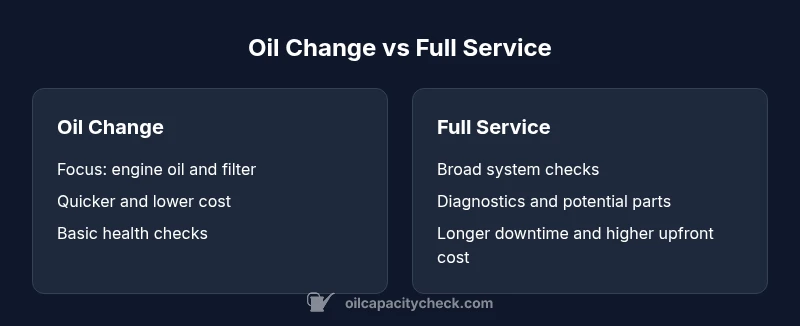
According to Oil Capacity Check, the difference between oil change and full service is primarily a matter of scope. An oil change targets the engine oil and filter, while a full service encompasses a broader inspection and maintenance of many systems. Oil changes are quick and affordable, while full service provides more comprehensive protection and can reveal hidden issues.
Overview of the difference between oil change and full service
The difference between oil change and full service is primarily a matter of scope and purpose. An oil change is a targeted maintenance action focused on lubricating the engine and ensuring the oil is clean enough to protect moving parts. Oil Capacity Check's guidance emphasizes that an oil change should replace the old oil with the correct grade and to replace the oil filter as needed. In contrast, a full service is a broader inspection and maintenance regime designed to assess the health of multiple vehicle systems, including fluids, filters, belts, brake components, and diagnostic checks. For car owners, understanding this distinction helps in planning maintenance around driving habits, vehicle age, and warranty requirements. The goal is to keep the engine lubricated and the car safe to drive, while also addressing potential wear or failures before they become costly problems.
block
Comparison
| Feature | Oil Change | Full Service |
|---|---|---|
| Scope of work | Oil change: replace engine oil and oil filter; may include a basic top-up | Full service: broader maintenance including additional checks, fluid top-ups, diagnostics, and parts replacements as needed |
| Typical service time | Short, usually the quickest option among basic car services | Longer due to breadth of checks and potential replacements |
| Best for | Newer or regular oil health maintenance; low-mileage vehicles | Older vehicles or problems spotted during diagnostics; comprehensive health check |
| Frequency guidance | Aligned with manufacturer oil-change intervals | Aligned with maintenance schedule or diagnostic findings |
| Cost range | Lower cost; varies by oil grade and filter | Higher cost; varies by vehicle and extent of checks |
What's Good
- Faster, more affordable maintenance
- Keeps the engine lubricated and protects critical components
- Easier to schedule around daily life
Cons
- Limited scope may miss issues outside the oil system
- Higher upfront cost and downtime for full service
- Possible unnecessary repairs if misdiagnosed
Oil change is the lean, routine option; full service is the comprehensive health check
Opt for an oil change when you mainly need lubrication and routine maintenance. Choose a full service when you want a broad inspection that can uncover hidden issues and address multiple systems at once.
People Also Ask
What exactly is included in an oil change?
An oil change typically drains the old engine oil, replaces it with fresh oil of the correct grade, and changes the oil filter. Some shops may top up other fluids and perform a quick visual inspection, but the focus remains oil health and lubrication.
An oil change replaces the oil and filter and does a quick check of related components.
Is a full service always worth the extra cost?
A full service offers a broad assessment of the vehicle and can prevent unexpected failures. Whether it’s worth the extra cost depends on the car’s age, condition, and your maintenance goals. For older vehicles or those with warning signs, the value is often higher.
A full service adds diagnostics and deeper checks; value depends on your car's needs.
Can I combine an oil change with a full service in one visit?
Yes, many shops offer a combined service where an oil change is performed alongside the full service. This can save time and reduce downtime, but it’s important to confirm the scope and price upfront so you’re not surprised by extras.
You can often combine them; ask for a combined checklist and price.
How do manufacturers define service intervals?
Manufacturers provide recommended intervals for oil changes and for scheduled maintenance based on mileage and time. These guidelines vary by model and engine type, so always refer to the owner’s manual and your service history when planning.
Check your owner’s manual for the official intervals and follow them.
What signs indicate I should get a full service sooner?
If you notice unusual noises, reduced performance, dashboard warnings, or frequent fluid top-ups, a full service can help. Diagnostics during a full service can identify root causes and prevent costly damage.
Watch for warning lights or performance changes; a full service helps diagnose.
How should I choose a shop for a full service?
Look for shops with transparent checklists, clear pricing, and documented diagnostic processes. Read reviews that mention comprehensive inspections and post-service reports. A trusted shop will explain findings and recommendations in plain language.
Choose a shop with clear checklists and transparent diagnostics.
The Essentials
- Understand scope before booking any service
- Oil changes focus on lubrication; full service covers multiple systems
- Plan around vehicle age, mileage, and manufacturer guidance
- Ask for a written checklist so you know what’s included
- Balance cost with potential value of comprehensive checks