Oil Change or Full Service: A Side-by-Side Guide
A detailed, analytical comparison of oil change vs full service, with decision criteria, cost/value considerations, and practical steps for car owners and DIY enthusiasts.


Oil change or full service is a choice between basic oil replacement and a comprehensive vehicle inspection. For most drivers, a standard oil change covers lubrication and filter replacement, while a full service adds fluids, filters, brake and tire checks, and a diagnostic review. The right choice depends on mileage, service history, and driving conditions.
Why this comparison matters
According to Oil Capacity Check, deciding between an oil change or full service is more than choosing a price point. The choice hinges on your vehicle's age, mileage, service history, and how you drive. A correct decision helps protect engine wear, optimize performance, and avoid unnecessary downtime. This comparison helps car owners and DIY enthusiasts understand what each service covers and when to select one over the other, with practical steps to coordinate with your shop. In many cases, the exact terms can vary by make and model, but the core idea remains: oil health matters, and surrounding systems deserve attention when a service is scheduled. Oil Capacity Check analyses emphasize aligning service scope with the vehicle’s current needs rather than following a one-size-fits-all schedule.
In this guide we’ll outline what each service typically includes, explain how to decide based on your driving profile, and offer a practical framework for discussing options with your technician. The goal is to empower readers to optimize maintenance without overspending or skimping on essential checks. The phrase oil change or full service captures the essential decision: do you want a quick, routine refresh, or a broader, more proactive maintenance event?
Comparison
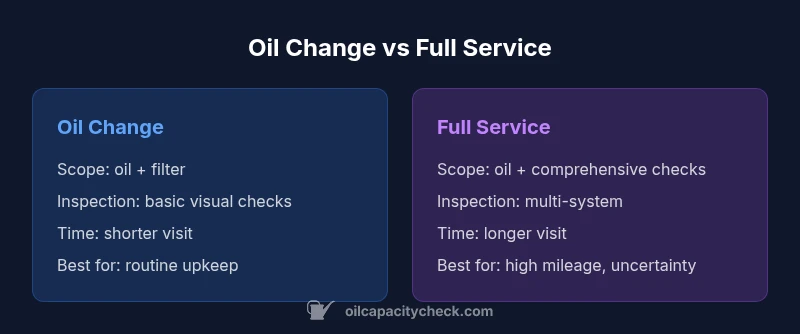
| Feature | Oil Change | Full Service |
|---|---|---|
| Scope of service | Oil replacement only (basic) | Oil replacement plus comprehensive inspection and maintenance |
| Inspection depth | Limited visual checks on critical components | Full multi-system inspection (engine, brakes, tires, belts, fluids) |
| Downtime/appointment length | Shorter, focused visit | Longer visit due to additional checks and diagnostics |
| Cost framing | Generally lower upfront cost | Higher upfront cost with broader coverage |
| Best for | Newer or low-mileage vehicles, routine upkeep | High-mileage, older vehicles, or history gaps |
What's Good
- Lower upfront cost per visit
- Quicker appointments and easier budgeting
- Good for routine maintenance on newer vehicles
- Full service can catch hidden issues early and extend vehicle life
- Shop flexibility and easier scheduling
Cons
- Missed underlying problems when only oil is changed
- Higher long-term cost if maintenance needs accumulate
- Longer downtime for full-service visits
- Potential for unnecessary tests if vehicle history is clear
- Variable quality across shops
Oil change is best for simple, routine maintenance on newer or low-mileage vehicles; full service is preferable when mileage is high, the vehicle history is uncertain, or you want proactive diagnostics.
If you prioritize speed and predictable costs, start with an oil change. If you want comprehensive peace of mind and early detection of issues, opt for full service, especially on aging or high-mileage vehicles. Align the choice with how the car is driven and its service history.
People Also Ask
Is an oil change always enough, or should I get full service?
For many drivers, an oil change satisfies routine maintenance. If your vehicle has a documented service history and you drive mostly on predictable routes, an oil change may be sufficient. If you are unsure about your car’s condition or you have high mileage, a full service adds checks that can prevent surprises.
For most cars, an oil change is enough for routine upkeep. If you’re unsure about the car’s history or you’ve driven many miles, consider full service for extra checks.
How do I know my car needs a full service?
Consider full service if the vehicle is high-mileage, has unclear service history, or you’re preparing for a long trip. Look for signs of wear in brakes, belts, fluids, and filters, and ask your mechanic to review the vehicle’s diagnostic codes and maintenance history.
If the car is high-mileage or its service history isn’t clear, ask for a full service to catch potential issues early.
What’s included in a typical oil change?
A standard oil change typically includes draining old oil, replacing the oil filter, and replenishing fresh oil to the recommended level. Some shops may top off fluids and perform a quick visual check of hoses and belts.
Oil change includes new oil and a filter, sometimes a quick fluid top-off and basic checks.
How often should I get oil change vs full service?
Most manufacturers provide interval guidelines based on time and mileage. If you drive in harsh conditions, tow heavy loads, or have an older engine, more frequent maintenance may be warranted. Always consult your owner’s manual and a trusted shop for tailored recommendations.
Follow the manufacturer’s schedule, but adjust for driving conditions and vehicle age with guidance from your mechanic.
Does full service replace an oil change?
No. Full service includes an oil change as part of the broader inspection. If you only need oil and filter attention, you can opt for oil change alone, then schedule a separate full-service visit when needed.
Full service covers more than an oil change, and you may still need regular oil changes.
Are OEM guidelines a factor when choosing service scope?
OEM guidelines influence recommendations but can be adapted based on vehicle condition, driving environment, and maintenance history. Always discuss OEM advisories with your shop to align service with reality on the road.
OEM guidelines help, but real-world condition and history matter most in deciding service scope.
The Essentials
- Choose oil change for routine maintenance and speed
- Opt for full service when mileage is high or history is unclear
- Ask for a written scope to compare services fairly
- Prices vary by shop and region, not all-inclusive
- Discuss OEM guidelines and dealer recommendations with your mechanic