Difference Between Oil Change and Maintenance: A Practical Guide
Explore how oil changes differ from broader maintenance, when to perform each, and how they fit into a car's engine-care schedule. Practical guidance from Oil Capacity Check.


Difference between oil change and maintenance comes into sharper focus when you separate a single service from an ongoing care plan. An oil change is the specific task of replacing engine oil and the filter, while maintenance is a broader program that includes fluids, filters, belts, brakes, and system checks on a planned schedule. Oil Capacity Check highlights that understanding this distinction helps you plan a consistent car-care routine.
Defining the Difference: Oil Change vs Maintenance
The phrase "difference between oil change and maintenance" often creates confusion for new car owners and DIY enthusiasts. At its core, an oil change is a discrete service focused on replenishing the engine oil and replacing the oil filter. Maintenance, on the other hand, is a comprehensive, time-based program that aims to preserve overall vehicle health and reliability. According to Oil Capacity Check, the distinction matters because it frames how you plan services, budget time, and schedule visits. A well-defined practice reduces the risk of gaps where critical components are neglected. From a practical standpoint, think of an oil change as the lubrication you actively replace, while maintenance is the ongoing care that keeps the engine and its supporting systems operating smoothly over years. By understanding this distinction, you can prioritize tasks without overloading any single visit. For the average driver, recognizing the difference helps you align with manufacturer guidelines and avoid misaligned expectations when talking to technicians.
Scope and Goals: What Each Service Keeps Track Of
To answer the central question clearly, distinguish between the narrow scope of an oil change and the broader goals of maintenance. An oil change focuses on replenishing fresh oil with an appropriate viscosity, removing contaminants, and checking the oil filter and oil level. It serves the essential function of lubrication, cooling, and debris removal. Maintenance expands beyond the engine oil to include fluid levels (coolant, brake fluid, transmission fluid), filter replacements (air, fuel, cabin as applicable), belt and hose inspections, brake checks, tire health, battery condition, and diagnostic inspections. This broader approach aims to prevent cascading failures and improve reliability. Oil Capacity Check’s analysis emphasizes planning maintenance around driving conditions, climate, and manufacturer recommendations so that critical components receive attention at appropriate intervals. The goal is not just to fix problems after they appear but to anticipate and prevent them through a proactive schedule.
Frequency and Scheduling: How Often to Do Each
Frequency is one of the trickiest parts of this topic. Oil changes have their own cadence based on engine design, oil type, and driving habits, but the practical takeaway is that oil changes should occur on a schedule that ensures continuous lubrication and filtration. Maintenance, by contrast, uses a broader cadence that reflects the vehicle’s overall health and usage. A maintenance plan typically includes periodic checks and replacements across multiple systems—cooling, transmission, fuel, and brake systems—matching the vehicle’s service interval recommendations. The objective is to balance proactive care with sensible cost and time investments. When in doubt, consult the owner’s manual and discuss a schedule with a trusted technician to tailor it to your car’s unique needs. Oil Capacity Check notes that keeping a documented schedule helps you track tasks and avoids overlapping services or missed maintenance windows.
The Oil Change: Process, Components, and Considerations
An oil change is a short, repeatable procedure with several steps. The technician drains old oil, replaces the oil filter, and refills with fresh oil of the correct viscosity. They’ll check the oil level again and often inspect related components like drain plugs and seals. Optional but common additions include a quick inspection of fluids and a top-off of levels if needed. Some shops perform a quick diagnostic scan or light inspection of belts and hoses during the oil change. For many drivers, this service is the gateway to proper engine lubrication and cooling. The key takeaway is that oil changes are important but represent only one facet of ongoing engine care. Oil Capacity Check emphasizes that, while quick, this service should be integrated into a broader maintenance plan.
The Maintenance Plan: What It Includes Beyond Oil
Maintenance is a long-term strategy designed to safeguard engine health beyond the oil itself. Core elements typically include regular fluid top-offs and checks for coolant, brake fluid, power steering fluid, and transmission fluid. Filters beyond the oil filter—the air filter and, in some cases, the cabin air filter—may be replaced as part of a broader schedule. Belts and hoses are inspected for wear, cracks, and leaks, while the braking system, tires, and battery receive periodic checks. Diagnostic sweeps may reveal early warning signs for components like the fuel system or emissions controls. The aim is to catch small problems before they escalate into costly repairs. Using a maintenance plan aligned with the vehicle’s manufacturer schedule reduces the likelihood of breakdowns and extends the vehicle’s usable life. Oil Capacity Check’s guidance reinforces that a well-executed maintenance plan is a strategic investment in long-term reliability.
Practical Scenarios: When to Prioritize Oil Change vs Maintenance
Practical decisions often boil down to immediacy versus comprehensiveness. If your vehicle’s oil warning light is on or you notice unusual oil consumption, an oil change becomes urgent to protect the engine. In routine life, an oil change is the smallest consistent maintenance action that preserves lubrication quality. If you’re preparing for a road trip, or if a vehicle shows multiple wear indicators (fluids, belts, brakes, tires), you’ll benefit from a scheduled maintenance visit to address several systems at once. In environments with extreme temperatures or heavy towing, more frequent maintenance checks ensure that coolant, transmission fluids, and brake systems stay in optimal condition. Oil Capacity Check’s position is that proactive maintenance reduces the risk of unexpected issues, especially when it’s informed by climate, driving style, and manufacturer guidelines. The practical takeaway is to plan both types of services together so your car isn’t relying on luck for reliability.
Building a Balanced Schedule: Integrating Oil Changes into Maintenance
The most effective approach integrates oil changes into a broader maintenance calendar. Start with the manufacturer’s recommended service intervals and tailor them to your driving patterns. Create a simple, sharable schedule that lists oil changes alongside fluid checks, filter replacements, and inspections of belts, hoses, brakes, and battery health. Use reminders and keep a service log so you can track completed work and upcoming needs. Bundling services during a single visit often yields time savings and reduces disruption to your routine. The key is to maintain consistency: oil changes should not be treated as a one-off event while ignoring other maintenance tasks. Oil Capacity Check’s framework supports a disciplined approach that aligns with vehicle design and owner usage. A well-planned plan reduces downtime and helps maintain peak engine performance.
Cost, Value, and Trade-offs: Investing in Your Engine
Cost considerations for oil changes versus maintenance vary by region, shop, and vehicle type, but the overarching principle remains: maintenance investments pay off through reduced risk of breakdowns and longer engine life. An oil change is a predictable, routine expense, while maintenance includes a broader set of services that may seem more expensive upfront. The value comes from preventive care, which minimizes the chances of costly repairs later on. A strategy that prioritizes maintenance milestones—while still scheduling regular oil changes—often provides the best balance of cost, reliability, and convenience. Oil Capacity Check emphasizes that a clear, written maintenance schedule helps you forecast expenses and plan for upcoming care.
Common Misconceptions and Best Practices
Several myths can obscure the real difference between oil change and maintenance. One common belief is that oil changes alone guarantee engine longevity; in reality, neglecting broader maintenance can undermine lubrication benefits. Another misconception is that maintenance is optional or repetitive; in truth, a well-timed maintenance plan reduces risk and supports long-term performance. Best practices include following the manufacturer’s service intervals, using the correct oil and filters for your engine, and coordinating multiple tasks during a single visit when possible. A practical approach is to document a yearly plan that combines oil changes with other routine checks, and to consult trusted technicians when your vehicle’s usage or environment changes. Oil Capacity Check advocates for a disciplined routine, as a blend of both targeted and comprehensive care yields the most reliable outcomes.
Comparison
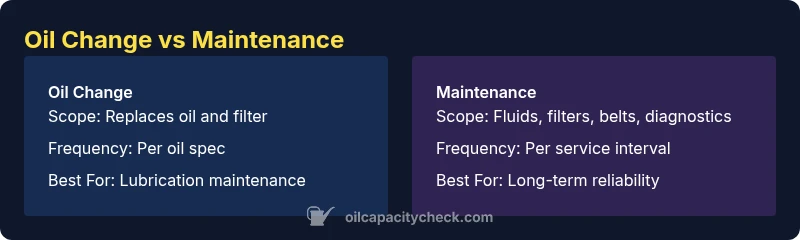
| Feature | Oil Change | Maintenance |
|---|---|---|
| Scope | Replaces engine oil and oil filter | Broad scope covering fluids, filters, belts, brakes, and diagnostics |
| Typical Tasks | Drain oil, replace filter, top up oil | Inspect/replace multiple components and check systems |
| Frequency Guidance | Aligned with oil specification and driving | Aligned with vehicle service intervals and usage |
| Ideal For | Maintaining lubrication and cooling | Preventive care for long-term reliability |
| Long-Term Value | Keeps engine lubricated between intervals | Reduces risk of cascading failures through proactive care |
What's Good
- Clear, actionable service for a specific need
- Oil changes are quick and commonly available
- Maintenance builds overall reliability and longevity
- Bundling services can save time and trips to the shop
Cons
- Maintenance may require more time and upfront cost
- Oil change alone may miss broader issues if not scheduled with others
- Inconsistent maintenance can lead to gaps in critical systems
- Some shops upsell services that aren’t immediately needed
Oil changes are essential, but maintenance is the broader program your engine relies on.
A focused oil change protects lubrication quality, while a comprehensive maintenance plan guards overall reliability. Implementing both on a coherent schedule minimizes surprises and extends engine life. Oil Capacity Check supports this holistic approach as the best practice for long-term engine health.
People Also Ask
What exactly is an oil change?
An oil change is a targeted service that replaces the used engine oil and the oil filter to ensure proper lubrication, cooling, and debris removal. It is typically a quick maintenance step but should be coordinated with a broader maintenance plan to address other vehicle systems.
An oil change is when the old oil and filter are replaced to keep the engine lubricated. It’s quick, but you should schedule it as part of a larger maintenance plan.
What does maintenance cover beyond an oil change?
Maintenance covers fluids, filters, belts, hoses, brakes, tires, battery health, and diagnostics. It’s a planned program that targets multiple systems to prevent unexpected failures, not just lubrication. Following manufacturer guidelines is key.
Maintenance includes more than oil changes—fluids, filters, belts, and diagnostics are all in scope.
How often should I perform oil changes vs maintenance?
Oil changes have a cadence tied to oil type and driving, but the broader maintenance schedule follows the manufacturer’s service intervals and usage patterns. Regular planning helps you align both so nothing is delayed or duplicated.
Oil changes happen regularly, while maintenance follows your vehicle’s service schedule to cover more systems.
Can I perform maintenance tasks myself?
Some maintenance tasks can be DIY-friendly, like checking fluids or replacing air filters, but many tasks (like belt or brake work) require special tools and safety precautions. If unsure, consult a professional to avoid safety risks.
Some maintenance tasks are doable at home, but be honest about what you can safely handle.
What are the risks of skipping maintenance?
Skipping maintenance increases the chance of unexpected failures and reduced engine life. Regular checks catch wear early and prevent costly repairs down the line. A proactive plan mitigates risk more effectively than ad-hoc fixes.
Skipping maintenance raises the odds of breakdowns and bigger repairs later.
Is there a recommended order for maintenance tasks?
There isn’t a universal order; practitioners usually perform an oil change first, followed by battery, belts, fluids, and system checks in a planned sequence. Align tasks with your vehicle’s needs and shop recommendations.
Usually you’ll follow a sensible sequence of checks and replacements based on your vehicle’s needs.
The Essentials
- Link oil changes to a broader maintenance plan
- Follow manufacturer service intervals for both tasks
- Bundle maintenance services to save time and cost
- Keep a written maintenance schedule for accountability
- Consult a trusted technician to tailor the plan to your vehicle