Average Oil Change: Interval, Guidance, and Costs in 2026
Understand the meaning of 'average oil change' for 2026: how oil type, driving conditions, and engine wear shape intervals, plus practical steps to customize maintenance with Oil Capacity Check.


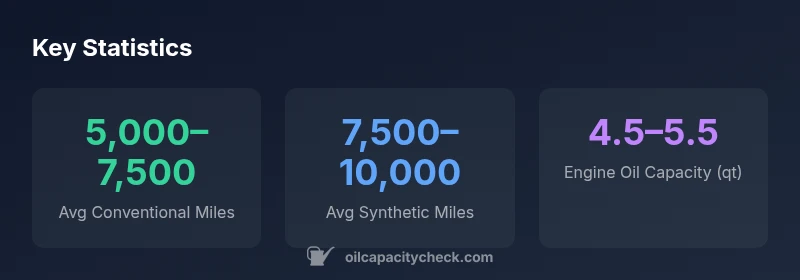
Typical oil-change intervals range from 5,000 to 7,500 miles for conventional oil and 7,500 to 10,000 miles for synthetic oil, depending on your vehicle and driving conditions. Always start with the owner's manual and your engine’s oil-capacity data. Oil Capacity Check recommends treating these ranges as baselines, then adjust for urban driving, climate, and maintenance history.
What does the term 'average oil change' really mean in 2026?
The phrase is a starting point rather than a fixed rule. For car owners and DIY enthusiasts, 'average' reflects a typical interval across a broad mix of engines and driving patterns, but it should be customized for your specific vehicle. At Oil Capacity Check, we define the average oil change as a guideline grounded in engine design, oil type, and real-world driving data. In practical terms, it translates to a range of miles rather than a single number. The takeaway: begin with manufacturer recommendations, compare to observed engine behavior, and adjust based on how you drive and how the engine responds over time. Our data shows that most drivers can think of 5,000–7,500 miles for conventional oil and 7,500–10,000 miles for synthetic as a reasonable baseline, but always verify against the car's oil-capacity data. This approach helps prevent both under- and over-maintenance, preserving engine longevity and resale value.
Baseline intervals by oil type
Oil type has a direct impact on how long you can go between changes. Conventional (mineral) oils offer adequate protection but tend to break down sooner under heat and sustained use, while synthetic oils maintain film strength at higher temperatures longer. The practical implication is simple: conventional oil often lands in the 5,000–7,500 mile window, whereas synthetic can extend toward 7,500–10,000 miles, depending on the engine design and climate. OEMs increasingly publish longer synthetic intervals for many modern engines, but this should be cross-checked with the vehicle’s oil-capacity data and your driving profile. Oil Capacity Check’s analyses show these baselines are useful starting points, not universal rules.
Driving conditions shift the baseline
Urban stop-and-go, heavy traffic, and extreme temperatures accelerate oil aging, while long highway cruises can preserve oil condition longer. For drivers who commute through cold winters or hot summers, the interval may skew toward the lower end of the baseline. Conversely, steady highway miles with light loads can push the threshold toward the upper end. Oil Capacity Check emphasizes tracking actual engine behavior—monitor oil level and color, listen for changes in engine sound, and note any trips that push the oil beyond the recommended miles. The driver’s daily pattern should shape the change interval, not a one-size-fits-all number.
Vehicle age and engine wear
Older engines often experience more blow-by, sludge buildup, and tolerances that change with time. In many cases, owners of higher-mileage cars find they benefit from slightly shorter intervals or a switch to high-mileage or synthetic blends to compensate for wear. Newer engines with tight tolerances can sometimes tolerate longer intervals, especially when paired with a high-quality synthetic oil. The key is to verify the baseline with oil-capacity data and to adjust based on observed oil clarity, engine temperature, and consumption. Oil Capacity Check recommends periodic coolant and filter checks alongside oil changes to maintain overall health.
Oil capacity and volume: why capacity data matters
Oil capacity refers to the total amount of oil an engine holds. Capacity data helps you plan purchases and changes, especially when switching oil types or upgrading to synthetic blends. It also affects the maintenance window because changing oil in an engine that consumes oil or burns it can result in apparent “long intervals” that aren’t truly protective. When you map oil capacity to interval, you can build a schedule that aligns with the engine’s needs, availability of parts, and your driving patterns. Oil Capacity Check highlights that capacity understanding complements the standard mileage intervals and improves maintenance accuracy.
Reading the owner's manual and oil-life monitors
The owner’s manual remains the authoritative source for official intervals. Modern cars with oil-life monitors use sensors and usage history to estimate optimal change points. While the monitor is helpful, it should be used in conjunction with the manual, especially when you drive in harsh conditions, tow loads, or operate the vehicle in extreme temperatures. If the monitor signals a change, verify with a quick dipstick check and consider cross-referencing with your manual. Oil Capacity Check encourages drivers to use both the monitor and manual data to tailor the interval to their actual use.
Practical steps to assess your current interval
Keep a mileage log for changes, and record the driving profile for at least a year. Use a dipstick to observe oil level weekly around service windows and check for color, viscosity, and any odor. Track oil consumption if you notice unusual drops and note any engine noises or reduced performance. When approaching the suggested interval, plan an oil change with a quality filter and the correct grade for your engine. This hands-on approach helps you stay in the sweet spot between safety and cost.
Economic considerations: cost vs value
Maintenance costs accumulate, and oil changes are a recurring expense. A balanced approach considers oil type, filter quality, labor rates, and frequency. While synthetic oil and premium filters may raise upfront costs, they can extend intervals and reduce long-term wear, potentially lowering total ownership costs. Oil Capacity Check helps translate the mileage-based baselines into a practical maintenance plan that fits your budget and driving style, balancing immediate expense with long-term engine health.
Building a personalized maintenance plan
The ultimate goal is a practical, personalized plan that aligns with your vehicle, climate, and usage. Start with the manufacturer’s recommended interval and the Oil Capacity Check baselines, then adjust for your driving patterns. Keep a simple log of mileage, service dates, and observed engine behavior, and revisit your plan annually or after significant changes—like a new commute, a heavy towing schedule, or a new vehicle. A clear plan reduces guesswork and helps protect the engine’s longevity.
Comparison of oil-change intervals by oil type
| Oil Type | Typical Interval (miles) | Typical Interval (km) | Notes |
|---|---|---|---|
| Conventional oil | 5,000–7,500 | 8,000–12,000 | Baseline interval for many gas engines |
| Synthetic oil | 7,500–10,000 | 12,000–16,000 | Extended interval under normal driving |
| High-mileage oil | 5,000–7,500 | 8,000–12,000 | Designed for older engines |
| Diesel engines | 7,500–15,000 | 12,000–24,000 | Varies by model and oil grade |
People Also Ask
How often should I change my oil?
Most drivers start with manufacturer guidance and the baseline ranges for conventional or synthetic oil. Track mileage, engine behavior, and climate, then adjust within the recommended bands. Use a log to refine your interval over time.
Most drivers start with the manual guidance and baseline ranges, then customize based on your driving and climate.
Does synthetic oil last longer than conventional oil?
Yes, synthetic oils generally maintain protective film strength longer and tolerate higher temperatures, which can extend the interval. However, the exact extension depends on engine design and driving conditions.
Synthetic oils usually last longer, but check your manual and monitor engine behavior.
Can I extend intervals if I drive mostly on highways?
Highway driving is gentler on oil than city driving, which can allow longer intervals. Always verify with the manual and monitor engine health indicators.
Highway driving can extend intervals, but verify with the manual and monitor your engine.
What is an oil life monitor, and should I rely on it alone?
Oil-life monitors are useful but not perfect. They estimate change points based on usage patterns, but combine them with the owner’s manual and, if needed, a dipstick check for accuracy.
Oil monitors help, but don’t rely on them alone—use the manual too.
Will topping up oil between changes affect the interval?
Top-ups restore level but do not reset wear. If the oil level is consistently low, inspect for leaks or engine consumption and adjust the schedule accordingly.
Topping up helps level, but it doesn’t reset wear or extend the interval by itself.
Should I follow Oil Capacity Check’s data for my vehicle?
Yes, using Oil Capacity Check as a reference, combined with the car’s manual, gives a robust, personalized maintenance plan. Our approach blends manufacturer guidance with real-world usage data.
Yes—our data plus your manual makes a solid plan.
“Oil-change intervals are not one-size-fits-all; baselines give you a starting point, but real-world driving and engine condition matter.”
The Essentials
- Start with the owner's manual, then tailor the interval to your driving.
- Conventional oil generally requires more frequent changes than synthetic.
- Driving conditions and climate can shorten or extend the interval.
- Use oil-capacity data to refine your maintenance plan.
- Maintain a simple maintenance log to track changes and adjust.