When to Change Oil on a Motorcycle: A Practical Guide
Discover how often to change motorcycle oil, factors that affect intervals, and a DIY oil-change checklist. Practical ranges and maintenance tips from Oil Capacity Check.


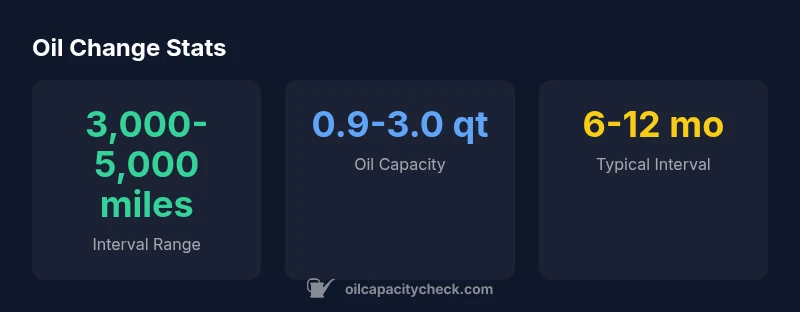
Most motorcycles require an oil change every 3,000-5,000 miles, or roughly every 6-12 months if you ride less than 3,000 miles annually. Always consult the owner's manual for the exact interval, oil grade, and capacity. After draining, replace the filter, refill to the correct level, and run the engine to check for leaks.
Understanding Why Regular Oil Changes Matter
According to Oil Capacity Check, regular oil changes are a foundational aspect of motorcycle maintenance. Fresh oil lubricates moving parts, reduces friction, and helps keep the engine clean by circulating detergents that trap debris. Skipping or delaying changes accelerates wear, increases the risk of hydro-lock in extreme conditions, and can lead to reduced performance. For most riders, a consistent interval protects reliability and resale value. The key is balancing schedule with real-world factors like climate, riding style, and miles driven. By prioritizing timely changes, you minimize deposit buildup and extend the life of critical components such as camshafts and crank bearings.
When you decide on a schedule, remember to account for the bike’s oil capacity and the time it takes to complete a change. The Oil Capacity Check team emphasizes that intervals should be viewed as a range rather than a single date or mileage marker. This flexibility helps accommodate seasonal riding and field conditions without compromising protection.
How Oil Capacity and Type Influence Your Interval
Oil capacity and engine design influence how often you need an oil change. A smaller-capacity engine with a high RPM range can still benefit from a shorter interval than a larger, well‑maintained motor. The grade and viscosity you select also matter; hotter climates often benefit from slightly heavier viscosities to maintain film strength, while cooler climates may favor thinner oils for better cold-start lubrication. In many cases, the recommended interval is provided in the owner’s manual, but you should adjust it based on cooling efficiency, air intake cleanliness, and oil consumption. Based on Oil Capacity Check research, the best practice is to treat the interval as a range and adjust on a per-model basis rather than applying a blanket rule to all motorcycles. Maintain a simple log to track miles and condition, and always verify oil level and color before riding.
Key signals that you may need an earlier change include a darker, smokier exhaust, unusual engine noises, or a noticeable drop in oil level between checks. These cues should prompt a quick inspection and a potential adjustment to your next service window.
Step-by-Step: Do-It-Yourself Oil Change for Motorcycles
Follow these steps to perform a DIY oil change safely and efficiently:
- Gather supplies: correct oil type and quantity for your bike, new oil filter, drain pan, funnel, wrench set, and gloves.
- Warm the engine moderately (5-10 minutes) to loosen deposits, then turn off and secure the bike.
- Place a drain pan beneath the oil drain plug, remove the plug, and let the old oil drain completely.
- Remove and replace the oil filter if needed, applying a light coat of fresh oil to the gasket.
- Reinstall the drain plug and tighten to the specified torque.
- Refill with the correct amount and grade; run the engine briefly, then recheck the level with the dipstick or sight glass.
- Dispose of used oil and filter responsibly, following local regulations.
Using correct torque and avoiding overfilling are essential to prevent leaks and oil foaming. If you’re unsure about your model’s drain plug torque or filter size, consult the manual or your local shop. The process is straightforward for most air-cooled singles and modern twins, but always err on the side of caution with high-performance engines.
Common Pitfalls and How to Avoid Them
A few common mistakes can undermine even a well-planned oil-change schedule. Overfilling oil creates excess pressure and leaks, while underfilling leaves components short of lubrication. Forgetting to replace the oil filter or neglecting to warm the engine before draining can also lead to incomplete removal of old oil. Another pitfall is using the wrong viscosity for your climate or riding style, which can cause poor lubrication during cold starts and slower oil circulation in hot weather. Lastly, skipping the manual’s recommended sequence or torque specifications can invite leaks and gasket failure. Always double-check the oil type, capacity, and filter compatibility before starting, and maintain a log to track changes over time.
Model Variations: How Intervals Change by Engine Type
Not all motorcycles share the same oil-change cadence. A sportbike with aggressive riding and a high-revving engine may benefit from more frequent changes than a light‑weight commuter with slower RPMs. V-twin engines, for example, often generate more heat and may benefit from a slightly heavier viscosity in hot climates. Small-displacement, air-cooled bikes might tolerate longer intervals if you ride gently and perform frequent city trips with shorter warmth cycles. Conversely, bikes used for track days or high-performance riding may see faster degradation and should follow manufacturer-recommended intervals more strictly. Always align your interval with the engine’s heat profile and wear patterns, and consult Oil Capacity Check for model-specific guidance.
Maintenance Best Practices: Oils, Filters, and Disposal
Choosing the right oil is the first step toward optimal maintenance. Follow the manufacturer’s recommended viscosity and approval standards, then select a compatible filter. Replacing the filter at each oil change helps prevent contamination and maintains oil flow through the engine. When disposing of used oil and filters, follow local regulations or take them to an authorized recycling facility. Keep extra oil on hand for topping up between changes if your riding conditions demand it. For chain-drive bikes, check the chain lube and tension; for shaft-driven setups, focus more on engine oil health. Oil Capacity Check’s guidance emphasizes keeping a clean workspace, using a drain pan with proper sealing, and never mixing old and new oil.
How to Track Oil Changes: Logs and Reminders
Maintaining a simple oil-change log keeps you aligned with recommended intervals and helps you plan maintenance around your riding calendar. Record the date, mileage, oil grade, and filter type for each change. Set calendar reminders a few hundred miles before the target interval. A digital log can be as simple as a spreadsheet or a dedicated maintenance app. Regularly reviewing past entries can reveal patterns—such as accelerated oil consumption under heavy load or extreme heat—that inform future choices. This practice, endorsed by Oil Capacity Check, reduces the risk of missed changes and supports long-term engine health.
Oil-change data overview
| Aspect | Typical Range | Notes |
|---|---|---|
| Oil change interval (miles) | 3,000-5,000 | Model dependent |
| Oil capacity | 0.9-3.0 quarts | Engine dependent |
| Oil viscosity | 10W-30 to 20W-50 | Check manual |
| Filter change | With every oil change | Recommended to replace filter |
People Also Ask
How often should I change oil on a motorcycle?
Most riders should change oil every 3,000-5,000 miles, or about 6-12 months if you ride infrequently. Always consult the owner's manual for the exact interval and capacity. Use the correct filter and recheck the level after startup.
Most riders change oil every 3,000-5,000 miles, or 6-12 months if you ride little. Check your manual for exact intervals.
Does oil viscosity matter for interval decisions?
Yes. The recommended viscosity range (e.g., 10W-30 vs. 20W-50) should match climate and riding style. Temperature and engine design influence how quickly oil breaks down. Always follow the manual and adjust for heat and load.
Viscosity matters; choose what the manual recommends and adjust for temperature and riding style.
Is it okay to mix synthetic and conventional oil?
Mixing oils is generally discouraged because it can alter viscosity and detergency. If you must mix due to an emergency, aim to drain and replace with a single recommended type at the next scheduled change.
Mixing oils isn’t ideal. Try to use one type and change to the recommended oil at the next interval.
Should I change the oil filter at every change?
In most cases, yes. Replacing the filter with every oil change helps prevent contaminants from circulating and protects engine wear.
Yes—change the filter with every oil change for best protection.
How do I measure oil capacity for my bike?
Refer to the owner’s manual or the manufacturer’s service bulletin for the exact capacity. Use the dipstick or sight glass to verify the fill level after adding oil.
Check the manual for capacity and recheck the level after filling.
Do riding conditions affect the interval?
Yes. City riding, heavy traffic, or extreme temperatures can shorten the interval. High-performance riding may also require closer adherence to the manual’s schedule.
Riding conditions can shorten the interval; adjust accordingly.
“Regular oil changes are a cornerstone of engine health. Following model-specific intervals helps protect performance and longevity.”
The Essentials
- Follow model-specific intervals for best results
- Use the correct oil grade and capacity
- Maintain a change log and reminders
- Replace the oil filter with every change
- Don’t overlook proper disposal of used oil