Oil Change Tools AutoZone: DIY Guide to Your Next Oil Change
Learn how to select the right oil change tools at AutoZone and perform a safe, clean oil change with expert guidance from Oil Capacity Check. This guide covers shopping tips, tool lists, step-by-step instructions, and maintenance reminders.


Calling all DIY car owners: this guide shows you how to pick the right oil change tools at AutoZone and complete a safe, clean oil change. You’ll learn essential tools, how to use them correctly, and how to select compatible oil and filters for your vehicle. By following these steps, you’ll save money and keep your engine running smoothly.
What you gain by using the right oil change tools
Having the right oil change tools is the foundation of a clean, safe, and efficient maintenance job. When you shop for oil change tools at AutoZone, you’ll find items designed to fit a wide range of vehicles while reducing spill risk and engine damage. The keyword here is compatibility: tools that match your oil capacity and filter type make every step smoother. According to Oil Capacity Check, using purpose-built tools minimizes errors and helps you complete the task without creating a mess. By choosing the proper drain pan size, a correctly sized socket or wrench, and a high-quality filter wrench, you’ll protect your engine seals, control oil flow, and avoid cross-threading or over-tightening. With the right kit, you can perform routine maintenance confidently, hold onto the car’s resale value, and extend engine life.
Essential oil change tools you can buy at AutoZone
AutoZone stocks a complete selection of core oil change tools, from basic to advanced. At minimum, you’ll want a drain pan appropriate for your oil capacity, a robust socket or wrench set to remove the drain plug, a dedicated oil filter wrench, a funnel for accurate pouring, and a clean oil catch container for disposal. If your vehicle requires a specific torque, a torque wrench is a smart investment. For the filter, many cars need a compatible filter wrench or strap wrench. A landing mat or shop rag set helps you keep the area tidy. Don’t forget a dependable jack and jack stands, wheel chocks, gloves, and a mirror or flashlight for hard-to-reach spots. AutoZone often offers tool bundles or loaner kits, which can save money if you’re just starting. Start with the essential items and add specialty tools as you tackle more complex engines.
AutoZone purchase options: rent, buy, or borrow
AutoZone makes it easy to outfit your garage with flexible options. You can buy individual tools when you’re building a toolkit, or select value bundles that include common oil change tools. If you’re new to DIY, renting or borrowing a few items can help you test which tools you actually need for your vehicle and frequency of changes. Some AutoZone locations offer loaner tool programs, which reduce upfront costs and keep you on budget while building your home setup. Oil Capacity Check notes that starting with a lean toolkit can help you expand later as you gain experience and confidence in your vehicle’s needs.
How to choose the right oil type and filter with tools
Tools are only part of the job; selecting the right oil and filter is equally important. Start by consulting your owner’s manual for the recommended viscosity and capacity. Use the AutoZone tools to measure and verify oil volume during a fill, and inspect the new filter for compatibility with your engine. When in doubt, ask a store associate to confirm fitment for your make and model. Remember that synthetic oils may require different fill amounts than conventional oils, and some engines use special filter designs. Oil Capacity Check emphasizes keeping a clear separation between oil brands and filter models while respecting your vehicle’s specifications.
Pre-change prep: setup and safety
Preparation is the difference between a smooth job and a messy one. Park on a level surface, apply the parking brake, and gather all required tools before you begin. Place the drain pan under the drain plug and position wheel chocks to prevent movement. Wear gloves and eye protection, and ensure the engine is cool to the touch before touching hot components. This stage also includes choosing a clean area to work and laying down rags to catch drips. A calm, organized start reduces risk and speeds up the overall process.
The oil change workflow with AutoZone tools (overview)
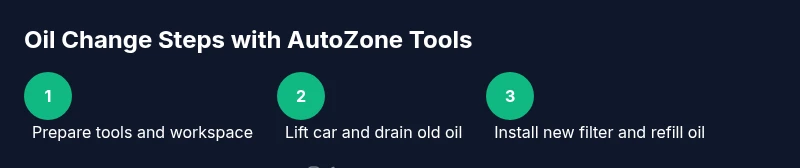
A typical workflow with AutoZone tools includes locating the drain plug, loosening it, and allowing the old oil to drain completely. Once drained, remove the old filter, lubricate the gasket on the new filter, and install it hand-tight followed by a quick snug with the appropriate tool. Replace the drain plug with a proper torque specification, then add fresh oil in stages while checking the level with the dipstick. Finally, run the engine for a minute or two to circulate the new oil, recheck for leaks, and dispose of the used oil responsibly. This overview aligns with best practices and helps you stay on track during the actual hands-on portion.
Common mistakes and how to avoid them
Common mistakes include overfilling oil, forgetting to replace the oil filter, and failing to secure the vehicle properly. To avoid spills, always use the correct size drain pan and avoid pouring directly from large jugs. Never loosen the drain plug while the car is on a lift without support, and always verify the filter is correctly seated to prevent leaks. Take your time and double-check torque values if you own a torque wrench. Following these precautions helps protect the engine and reduces the need for cleanup after the job.
Maintenance tips after an oil change
After completing the oil change, wipe down any spill areas and store tools in a dry, organized space. Recycle the used oil and old filter at a permitted facility—many AutoZone locations offer recycling services. Keep a brief maintenance log so you know when the next change is due and which tools were used. Consider noting any vehicle-specific notes (like unusual filter types or oil capacity) so future changes go faster. Proper maintenance not only protects the engine but also extends the life of your tools.
Tool care and storage to extend life
Store tools in a dry, clean area and avoid exposure to moisture and dust. Regularly inspect sockets, wrenches, and the filter tool for wear or rust; replace any bent or damaged pieces. Maintain your drain pan and funnel by cleaning after each use and drying thoroughly before storage. Label tool kits by job type to speed up future DIYs, and keep spare filters and caps organized so they’re ready when you need them. With thoughtful care, your AutoZone tool set will serve your car for many oil changes.
Tools & Materials
- Oil drain pan (6-8 quart or larger)(Choose one with a stable base and a pour spout)
- Socket set or wrench set(Sizes needed for drain plug and filter housing)
- Oil filter wrench(Adjust to fit your filter diameter)
- Funnel(Keeps oil from spilling on engine bay)
- Oil catch container(Used oil must be contained and recycled)
- New engine oil (viscosity per owner’s manual)(Check API/ILSAC specs for your engine)
- New oil filter(Match part to vehicle makes/models)
- Car jack and jack stands(Never rely on a jack alone; always use stands)
- Wheel chocks(Prevent movement while raised)
- Shop rags and gloves(Protect skin and keep area tidy)
- Torque wrench(Only if your vehicle has a specific torque spec)
Steps
Estimated time: 45-75 minutes
- 1
Prepare workspace and gather tools
Park on a level surface, engage the parking brake, and lay out all required tools. Ensure the vehicle is cool and the drain path is clear. This setup minimizes spills and confusion during the job.
Tip: Verify you have a drain pan large enough for your oil capacity. - 2
Lift vehicle and secure with stands
Use a hydraulic jack to lift the front (or designated lifting points) and place jack stands beneath, plus wheel chocks on the opposite tires. Never rely on the jack alone while you work under the car.
Tip: Kneel on a stable surface and check stands for stability before crawling under. - 3
Loosen and remove the drain plug
Position the drain pan under the oil pan, then use the appropriate wrench to loosen the drain plug. Allow oil to drain completely before removing the plug entirely.
Tip: Let the oil drain for 5-10 minutes to minimize splash. - 4
Replace the oil filter
Use the oil filter wrench to loosen the old filter, then install the new filter with a light coat of new oil on the gasket. Tighten by hand according to the manufacturer’s guideline.
Tip: Lubricate the new filter gasket so it seats evenly. - 5
Reinstall drain plug and begin filling
Thread the drain plug back in and tighten to spec. Begin pouring new oil in stages, using the funnel to reduce spills.
Tip: Do not over-tighten the drain plug; refer to owner manual or torque spec. - 6
Check oil level and final checks
With the engine off, wait a minute, then check the dipstick for level accuracy. Start the engine, run briefly, and recheck for leaks before moving the vehicle.
Tip: Avoid overfilling; add oil in small increments and recheck.
People Also Ask
Do I need specialized tools to change engine oil?
Most cars can be serviced with a basic set: drain pan, filter wrench, socket/wrench, funnel, and a few rags. A torque wrench is helpful for specific models, but not always required.
Most cars use basic tools; a filter wrench and drain pan are essentials, and a torque wrench helps for certain models.
Can I use AutoZone tools for all vehicles?
AutoZone tools are designed for broad compatibility, but always verify fit with your vehicle’s make, model, and year. When in doubt, ask a store associate or consult the owner’s manual.
AutoZone tools cover many vehicles, but check fitment for your car and ask staff if unsure.
How often should I change my engine oil?
Follow the vehicle manufacturer’s recommended interval in the owner’s manual. Severe driving conditions may require more frequent changes.
Check your manual for the recommended interval; severe driving might need more frequent changes.
Should I replace the oil filter every time?
Yes. Replacing the oil filter during every oil change helps ensure contaminants aren’t reintroduced into the engine.
Yes—changing the filter with every oil change helps keep the engine clean.
What safety precautions are essential?
Work on a level surface, use jack stands, wear gloves, and avoid working on a hot engine. Keep spill containment and ventilation in mind.
Always use jack stands and wear safety gear; avoid hot components and ensure proper ventilation.
Watch Video
The Essentials
- Plan your tool set before starting
- AutoZone offers flexible purchase options
- Follow a clear, step-by-step workflow safely
- Recycle used oil and keep records for future changes