Steps to Oil Change: A Complete DIY Guide for Beginners
Learn to perform an oil change with a clear, step-by-step process. This guide covers tools, safety prep, oil capacity, selecting the right oil, and post-change checks.


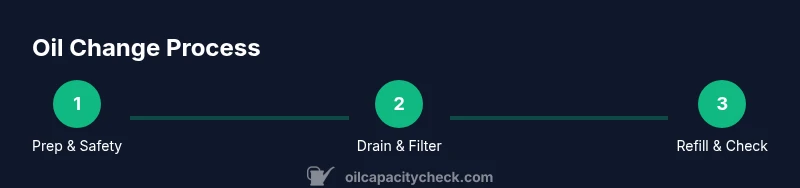
To complete an oil change, you’ll gather the right tools, safely lift the vehicle if needed, drain the old oil, replace the oil filter, refill with the correct capacity of fresh oil, and recycle the used oil. This step-by-step guide from Oil Capacity Check ensures you use the right oil type and quantity for your engine.
Why regular oil changes matter
According to Oil Capacity Check, regular oil changes are essential for maintaining engine health, protecting moving metal parts, and ensuring optimal fuel efficiency. Fresh oil reduces friction, carries heat away from critical components, and helps prevent sludge buildup. When you skip or delay changes, varnish and deposits can accumulate, reducing oil flow and accelerating wear. Over time, this can lead to diminished performance, higher emissions, and costly repairs. DIY oil changes empower car owners to take control of maintenance and save money, while ensuring the engine receives oil with the correct viscosity and capacity. The right oil schedule depends on your vehicle make, model, and driving conditions, but a typical baseline is every 5,000 to 7,500 miles for many modern cars, with high-mileage or performance engines requiring more frequent changes. Oil Capacity Check's analysis emphasizes that following the manufacturer’s oil capacity and grade guidance is critical to achieve accurate fill levels and avoid under- or overfilling. Always consult your owner's manual for capacity specs, and consider an oil change interval based on your driving style (short trips, harsh weather, or towing).
How oil capacity and viscosity affect engine health
Oil capacity and viscosity are foundational to how well an engine stays lubricated under varying temperatures and loads. The capacity sets the target fill level so that the oil can circulate properly and cool hot components. If you overfill, oil foaming can occur, reducing lubrication; if you underfill, the pump may struggle, increasing wear. Viscosity determines how the oil behaves at start-up and when hot. Using the grade recommended by your manufacturer ensures the oil protects engine parts across seasonal temps and driving styles. Oil Capacity Check analysis shows that staying within the specified range—not guessing—helps maintain fuel efficiency and prolong engine life. Always verify the exact capacity and viscosity in your owner's manual, and use a quality oil that meets API/ILSAC specifications for your region and vehicle.
How to choose the right oil for your vehicle
The right oil depends on the engine, climate, and driving habits. Most modern engines use a synthetic or synthetic-blend oil, but some older or high-mileage designs perform well with conventional oil. Always prioritize the viscosity grade and API/ILSAC certifications recommended by the manufacturer. If you tow heavy loads, operate in extreme cold or heat, or drive many short trips, you may benefit from a higher-performing oil or a more frequent change interval. The decision should be guided by your owner's manual and, when in doubt, consult Oil Capacity Check for an interpretation of capacity, grade, and scheduling guidance. Remember to compare oil brands by their performance in endurance tests rather than price alone.
Safety and prep steps before you start
Begin on a level surface with the engine off and cooled for at least 10 minutes to avoid burns from hot oil. Park in a well-ventilated area and engage the parking brake. If you must raise the vehicle, use a hydraulic jack with sturdy jack stands or ramps designed for your car’s weight and stance. Wear gloves and eye protection, and lay out absorbent rags to catch spills. Keep a fire extinguisher nearby as a precaution. Safe prep reduces risk and makes the process smoother, especially for first-timers performing their first oil change.
Tools and materials you’ll need
Gather a drain pan, a funnel, an appropriate socket or wrench, an oil filter wrench, a new oil filter, the correct amount and viscosity of fresh oil, rags, gloves, and (optionally) a torque wrench. If lifting the vehicle, have jack stands or ramps ready and ensure the vehicle is secure before climbing underneath. Always check the tool sizes against your drain plug and filter to avoid damaging components. Keeping everything within reach minimizes drips and helps the workflow stay clean and efficient.
Common mistakes and how to avoid them
Common mistakes include rushing the drain, over- or under-filling the engine, and failing to replace the oil filter. Rushing can leave residue or let old oil contaminate the new fill. Always double-check the oil level with the dipstick after pouring and wait a few minutes for the level to settle. Using the wrong oil grade can compromise lubrication, so verify the exact viscosity in your manual. Proper disposal of used oil is essential for safety and environmental responsibility.
Reading your oil level and monitoring health after the change
After adding fresh oil, wait a minute or two and check the level with a clean dipstick. The level should fall between the minimum and maximum marks. Inspect the oil's color and consistency; a clean amber color is typical, while a milky or gritty appearance can indicate contamination or engine issues. Run the engine for a short period and recheck for leaks around the drain plug and filter. Document the change date and mileage for future reference.
Tools & Materials
- Oil drain pan(Deep enough to collect 4-8 quarts; install on level ground)
- Socket wrench or appropriate driver(Fits drain plug size on your vehicle)
- Oil filter wrench(Loosen tight, aged filters safely)
- New oil filter(Replace with a compatible model for your engine)
- Correct engine oil (viscosity & quantity)(Refer to owner’s manual for capacity and grade)
- Funnel(Pour oil cleanly without spills)
- Rags/paper towels(Clean spills and wipe hands)
- Jack and jack stands or ramps(Raise the vehicle safely if clearance is needed)
- Gloves and eye protection(Protect hands and eyes from hot oil and debris)
Steps
Estimated time: 30-45 minutes
- 1
Prep and safety
Before touching tools, confirm the engine is cold and gather all required materials within reach. This reduces burns, spills, and missteps. Set up your workspace on a flat surface and ensure the vehicle is secured if you plan to raise it.
Tip: Pro tip: place a reflective work light under the car to clearly see the drain plug and filter. - 2
Position vehicle and drain oil
Place the drain pan under the oil pan and ensure it will catch all the old oil. If you need to raise the car, use a jack and secure with stands or ramps, then loosen the drain plug slightly to begin oil flow.
Tip: Pro tip: loosen the drain plug a quarter-turn first to start a controlled drain before fully removing it. - 3
Loosen and remove drain plug
Carefully remove the drain plug and allow used oil to drain completely into the pan. Keep the plug and any washers clean; inspect the plug for wear which could indicate other issues.
Tip: Pro tip: cap the plug with a rag held by a magnet to catch any stray metal shavings. - 4
Remove old oil filter
Use the oil filter wrench to loosen and remove the old oil filter. Be prepared for additional oil to spill from the filter’s housing; allow it to drain into the pan.
Tip: Pro tip: place a rag over the open filter to control drips as you unscrew it. - 5
Install new oil filter
Apply a light coat of new oil to the gasket on the new filter, then screw it in by hand until snug. Avoid over-tightening, which can damage the gasket and cause leaks.
Tip: Pro tip: hand-tighten only; check the filter’s alignment after the first start to ensure there are no leaks. - 6
Refill with fresh oil
Remove the oil cap and pour in the new oil through a funnel. Add the required amount as specified by the owner’s manual, then replace the cap.
Tip: Pro tip: pour slowly and stop to recheck the level frequently to avoid overfill. - 7
Check level and look for leaks
Start the engine and let it run for a minute, then shut off and wait a few minutes. Check the oil level with the dipstick and inspect for leaks around the drain plug and filter.
Tip: Pro tip: recheck after a short drive to confirm the level settles correctly and there are no leaks.
People Also Ask
Do I need to warm up the engine before an oil change?
No, wait until the engine and oil are cool enough to handle safely. A warm engine drains faster, but the risk of burns increases. For beginners, starting with a cold engine minimizes injury risk.
No—the engine should be cool to avoid burns, and the drain is safer when oil is thicker.
How do I know how much oil to add after changing?
Refer to the owner's manual for exact capacity. Add oil gradually using a funnel, then recheck with the dipstick to reach the correct level.
Check your manual for the exact capacity, add slowly, and recheck the level with the dipstick.
Can I reuse my old oil filter?
No. Always replace the oil filter during an oil change to ensure proper filtration and seal integrity.
No, replace the filter every time you change the oil.
What safety gear should I wear?
Wear gloves and eye protection, and perform the work in a well-ventilated area. Keep a fire extinguisher nearby just in case.
Gloves and eye protection are important; work in a ventilated area with a safety plan.
Can I change oil without a car lift?
Yes, if you use ramps or a floor jack with stands on level ground. Ensure the car is stable before sliding underneath.
You can change oil without a lift by using ramps or jack stands on level ground.
How do I dispose of used oil safely?
Take used oil to a recycling center or an automotive shop that accepts used oil. Do not pour it down the drain.
Recycle the old oil at a designated facility; never pour it down the drain.
Watch Video
The Essentials
- Prepare with the right tools before starting.
- Use the manufacturer's oil capacity and viscosity guidance.
- Drain completely and replace the filter to avoid contamination.
- Refill to the correct level and recheck after running the engine.
- Dispose of used oil responsibly and document the change.