Oil Change After 3000 Miles: A DIY Guide
Learn how to perform an oil change after 3000 miles with practical steps, tools, and safety tips. This guide from Oil Capacity Check helps car owners maintain engine health, choose the right oil, and document maintenance for future service.


At 3000 miles since the last oil change, verify your car's service interval rather than just following the odometer. According to Oil Capacity Check, 3,000 miles is a common milestone for early maintenance, especially with conventional oil, though synthetic oils can extend intervals. Plan a change now or consult your owner's manual for the recommended range.
Why oil change after 3000 miles matters\n\nThe 3,000-mile milestone is particularly relevant for novice drivers or engines that are recently breaking in. During the first several thousand miles, engine tolerances settle and microscopic wear particles can be released from break-in. Regular oil changes help keep the engine parts lubricated, reduce varnish buildup, and maintain overall efficiency. Skipping an early change can allow contaminants to accumulate, potentially speeding wear and reducing fuel economy. This threshold is not a universal mandate, but using 3,000 miles as a checkpoint can help you establish a predictable maintenance rhythm. Oil Capacity Check notes that aligning maintenance with engine wear rather than solely the odometer improves long-term reliability. If your vehicle uses synthetic oil, intervals can extend, but early miles still matter for varnish control and filter loading. Always confirm with the owner’s manual and consider driving patterns, climate, and oil type.
How to assess whether you should change at 3000 miles\n\nAssessing the 3,000-mile interval starts with the owner’s manual. Some vehicles specify a fixed range: every 3,000–5,000 miles for conventional oil, while others using synthetic blends can go longer. Consider your driving conditions: frequent short trips, heavy traffic, hot climates, or towing increase contaminants and fuel dilution, which can shorten effective oil life. Inspect the current oil’s appearance and level; dark, gritty, or milky oil suggests replacement is due even if the odometer hasn’t reached the limit. If the maintenance light or oil-life monitor shows a healthy reading, you may still opt for a proactive change, especially if you perform the service yourself and have the correct oil grade. Track the last change date and miles and plan the next service accordingly.
How to choose the right oil and filter after 3000 miles\n\nSelect the oil grade that matches the vehicle maker’s specification. The viscosity rating (such as 5W-30 or 0W-20) depends on engine design, climate, and driving style. If you crossed 3,000 miles and your manual recommends synthetic oil, staying with synthetic is typically wise, as it provides better protection under heat and heavy loads. Conventional oil is perfectly acceptable for many older engines, especially with simpler driving patterns. When buying oil, choose a high-quality API or ACEA rated product; avoid bargain-store blends that don’t meet spec. Replace the oil filter with a compatible unit; a high-quality filter helps capture particulates and maintain oil pressure. Don’t forget a new washer for the drain plug if your design requires one. Double-check your vehicle’s filter size and thread type before purchase.
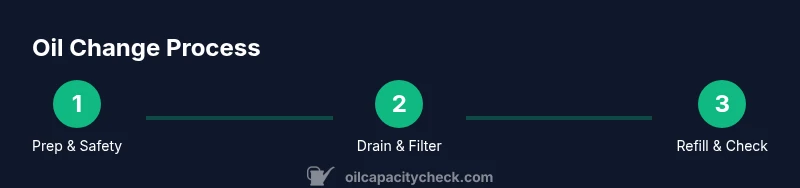
Step-by-step overview and planning\n\nBefore you lift the hood, map out the plan and safety measures. Ensure you have the right tools: a drain pan, wrenches, a funnel, gloves, rags, and the correct oil amount. Factor in environmental requirements for disposal. Confirm the recommended capacity for your engine to avoid overfilling. If you’re working in a garage, secure the vehicle so it won’t roll; if you’re outdoors, choose a level surface with shade. This planning reduces the risk of spills and ensures you can complete the job in one go. Oil Capacity Check analysis suggests keeping a spare drain plug washer and a stable catch container on hand.
Common pitfalls and mistakes to avoid\n\nCommon mistakes include overfilling the engine, using the wrong oil grade, or forgetting to replace the drain plug washer. Never start an oil change with a hot engine and always dispose of used oil properly. Failing to inspect for leaks after refilling can hide issues that lead to engine damage. Lastly, neglecting to reset the oil-life indicator or keep a maintenance log makes it harder to track future service needs.
Maintenance cadence and record keeping\n\nMaintaining a simple, repeatable schedule helps prevent skipped services. Record the date, mileage, oil type, and quantity every time you change the oil. Store receipts or notes in a dedicated maintenance folder or digital log so you can reference it later. Revisit your engine's recommended interval as the vehicle ages or if you begin towing, frequent heavy loads, or operate in extreme climates. A well-kept log helps you communicate with technicians and plan preventative maintenance more reliably.
Tools & Materials
- Drain pan(Capacity to hold at least the engine's oil capacity in liquid form)
- Socket/wrench set(Standard drain plug size for your vehicle)
- Oil filter wrench(Appropriate size for your filter)
- Funnel(Wide mouth for clean pouring)
- Rags/paper towels(Clean spills and wipe dipstick)
- New oil (appropriate grade)(Quantity per vehicle spec; have extra for top-ups)
- New oil filter(OEM or equivalent specification)
- Drain plug washer (if required)(Some models require a new washer)
- Gloves and eye protection(Protect hands and eyes during work)
- Jack stands or ramps (optional)(Use only if you must lift the vehicle safely)
- Oil disposal container or recycling bag(Used oil must be recycled)
Steps
Estimated time: 30-45 minutes
- 1
Gather tools and materials
Collect all required items and confirm the oil grade and capacity for your engine. Set them within easy reach to avoid multiple trips to the toolbox. Ensure the area is clean and well-lit.
Tip: Lay out a drop cloth under the drain pan to catch any stray drips. - 2
Warm up the engine lightly
Run the engine for 2-3 minutes to warm the oil. Warm oil drains faster and carries away more contaminants. Do not let the engine overheat before you begin.
Tip: A warm engine makes draining cleaner and faster; avoid burning yourself on hot components. - 3
Secure and lift the vehicle (if needed)
Park on a level surface and engage the parking brake. If you need to access the drain plug from underneath, raise the car on ramps or jack stands. Never rely on a jack alone for support.
Tip: Place wheel chocks on the opposite side to prevent movement. - 4
Drain the old oil
Position the drain pan under the drain plug. Remove the plug carefully and allow the oil to drain completely. Once dripping slows, reinstall the plug with a new washer if required.
Tip: Check the drained oil for metal flakes; a small amount is normal, but metal shards warrant inspection. - 5
Replace the oil filter
Use the oil filter wrench to loosen and remove the old filter. Lightly lubricate the gasket on the new filter with fresh oil, then thread it on by hand until snug. Do not overtighten.
Tip: Place a bit of oil on your finger and coat the gasket to ensure a proper seal. - 6
Refill with fresh oil
Remove the oil fill cap and pour in the correct amount of new oil using a funnel. Check the level with the dipstick and add small increments to avoid overfilling. Replace the fill cap securely.
Tip: Avoid overfilling; most engines tolerate slight underfill better than overfill. - 7
Check for leaks and finalize
Start the engine and let it run for 30-60 seconds while you inspect for leaks around the filter and drain plug. Turn off, wait a moment, then recheck the oil level and top up if needed.
Tip: If you see leaks, stop the engine and retighten the drain plug and filter as needed. - 8
Dispose of oil and record the change
Turn off the engine, allow the oil to cool, and transport the used oil and filter to a recycling facility. Log the date, mileage, oil type, and quantity for your records. Reset any service indicators if applicable.
Tip: Keep a photo of the receipt or a digital note in your maintenance log.
People Also Ask
Is 3,000 miles a mandatory oil-change interval?
No; 3,000 miles is a common milestone for early maintenance, but exact intervals vary by engine design, oil type, and driving. Always consult the owner’s manual for the recommended range.
Three thousand miles is a common early milestone, but always check your manual for the exact interval.
Should I switch to synthetic oil at 3,000 miles?
If your manual recommends synthetic oil or you’ve had unusually heavy driving, switching can provide extra protection. For many engines, continuing with the recommended oil type is acceptable.
Switching to synthetic can be beneficial if the manual recommends it or your driving is heavy, otherwise follow the spec.
What signs indicate I should change oil sooner than 3,000 miles?
Look for a sudden drop in oil level, dark or gritty oil, burning oil smells, or a warning light indicating low oil life. If any of these occur, change oil sooner rather than later.
If you notice dark oil, a low level, or warning lights, change oil sooner.
Can I reuse an oil filter after 3,000 miles?
Oil filters should be replaced with every oil change. Reusing a filter can reduce filtration efficiency and lead to contaminants recirculating in the engine.
It’s best to replace the filter at every oil change.
How do I reset the oil life monitor after changing oil?
Reset procedures vary by make and model; consult the owner’s manual or service portal. In most cases, you’ll navigate to the maintenance menu and select ‘oil life reset’ after completing the change.
Check your manual for the reset steps; it usually involves the maintenance menu after the change.
Is it safe to drive long distances after a 3,000-mile oil change if the service light is off?
Yes, if the oil is within spec and no warning indicators are present, but continue to monitor engine temperature, oil level, and performance. For extreme conditions, consider a closer follow-up inspection.
Yes, as long as everything looks good and you monitor the engine, but be mindful of extreme conditions.
Watch Video
The Essentials
- Verify interval rather than relying solely on miles.
- Choose the correct oil grade and a quality filter.
- Monitor for leaks and record the maintenance.
- Dispose of used oil responsibly and update your logs.