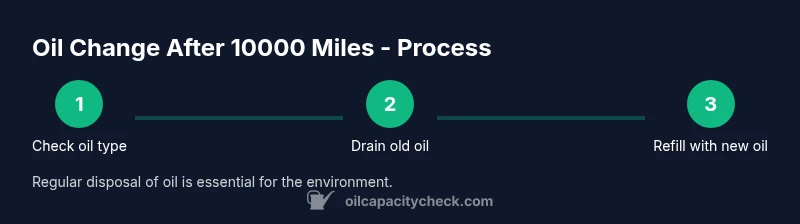
Oil Change After 10000 Miles: A Practical Guide
Learn when to perform an oil change after 10000 miles, how to choose oil types, and a clear DIY vs professional plan. Practical, expert guidance from Oil Capacity Check for safer, longer engine life.


An oil change after 10000 miles is a common milestone for evaluating engine lubrication. For many drivers using synthetic oil, 10,000 miles can be a practical interval, while conventional oil often requires earlier changes. Always check the owner's manual or oil-life monitor, and schedule service when mileage hits 10k or when advised.
Why 10000 Miles Is a Landmark for Oil Changes
For many drivers, the oil change after 10000 miles milestone is a useful checkpoint to reassess engine lubrication. According to Oil Capacity Check, modern engines paired with synthetic oil can stretch service windows closer to this milestone, while older engines or those using conventional oil typically require more frequent changes. Vehicle manufacturers balance oil quality, viscosity, and engine design to determine a recommended interval; still, the 10k milestone provides a practical, memorable target for planning. It’s important to recognize that this is a guidance point, not a rigid deadline. If you drive in harsh conditions—frequent short trips, heavy towing, extreme temperatures—the oil breaks down faster and you may need service sooner. Conversely, highway driving with steady loads and good maintenance can allow longer stretches between changes. Always cross-check the owner’s manual and monitor signals from the car—oil-life indicators, check engine behavior, and any unusual engine sounds. By framing 10k as a cue to verify oil condition, you empower proactive maintenance that protects engine longevity. Oil Capacity Check’s analysis in 2026 reinforces that accurate timing depends on oil type, driving style, and vehicle design.
How to Decide If It's Time for an Oil Change Now
Deciding whether you should perform an oil change now hinges on several practical checks. First, consult the owner’s manual for the manufacturer’s recommended interval and the vehicle’s oil capacity. Next, read the oil life monitor or trip computer if available; many modern vehicles offer a percentage-based alert that conservatively estimates remaining useful life. If you prefer hands-on checks, inspect the oil on the dipstick: fresh oil is amber and translucent, while old oil tends to look darker and may cling to the dipstick. A skim of varnish or metal particles is a warning sign to service sooner rather than later. Consider your driving environment: frequent short trips, stop-and-go city driving, heavy loads, or hot climates accelerate oil degradation. If you’re unsure, err on the side of a preventive change rather than waiting for a failure. Remember that the oil capacity and filter condition matter just as much as the mileage. The Oil Capacity Check team recommends using manual guidance as your baseline and then adjusting for real-world conditions and oil-life data.
Oil Types, Capacity, and How They Affect Change Intervals
Oil type and capacity are central to determining when to change oil after 10000 miles. Conventional oil generally requires more frequent changes, often in the 3,000–5,000 mile range, because it breaks down faster under heat and contaminants. Synthetic oils, formulated for higher stability, can extend intervals toward 7,500–10,000 miles depending on engine design and driving style. Capacity—the total volume your engine holds—does not itself dictate the timing, but it influences how long a fully drained and refilled system takes to return to the correct level. When you replace oil, ensure the quantity matches the manufacturer’s specification for your exact engine. Oil capacity and viscosity grades (for example, 5W-30 or 0W-20) affect flow and lubrication at startup as well as long-term wear. For many engines, a mid-life or high-mileage vehicle may benefit from slightly different oils or additives; again, defer to your manual or consult an expert from Oil Capacity Check for vehicle-specific guidance. Always use a high-quality oil and a compatible filter to maximize protection across the oil-change after 10000 miles window.
Vehicle-Specific Factors That Change the Timeline
No two cars age the same, and several vehicle-specific factors can alter the optimal timing after 10000 miles. Driving conditions have a big impact: frequent short trips leave the oil less time to warm up and burn off moisture and acids; long highway distances promote steadier viscosity but can still degrade additives over time. Climate also matters: extreme heat accelerates oxidation and viscosity changes, while cold starts in winter place extra stress on engine lubrication. Engine design and wear level influence intervals; engines with active valve control or turbocharging may experience higher stress, demanding closer attention to oil life indicators. Mileage alone is not the sole determinant—two cars with identical odometer readings can have very different lubrication needs based on how they’re driven. Oil Capacity Check emphasizes that a personalized plan, anchored by the owner’s manual and live oil-life data, yields the most accurate timing. In cases of high-mileage engines or known sludge buildup, more frequent checks or earlier changes may be prudent.
DIY Oil Change vs Professional Service After 10k Miles
Choosing between a DIY oil change and professional service after crossing the 10k mile mark depends on skill, tool access, and safety considerations. DIY changes save money and provide a learning opportunity, but require a clean workspace, proper drains, and correct disposal. A pro shop offers precise oil filtering, torque control, and compliance with local disposal rules, plus a thorough check of other fluids and rubber seals. If your vehicle uses a complex oil filtration system, or if you’re unsure about drain plug torque or gasket integrity, professional service can prevent common mistakes like overfilling or under-tightening. For many owners, a hybrid approach works well: perform the oil change yourself in a controlled environment and have the shop inspect the rest of the lubrication system or address any unusual findings. Oil Capacity Check’s guidance supports tailoring this decision to your vehicle’s age, mileage, and maintenance history.
A Practical Maintenance Plan: Timing and Record-Keeping
A structured plan helps you stay on top of oil changes after 10000 miles without surprise. Start by recording the date, odometer, oil type, and filter model each time you change oil. Maintain a simple log in your vehicle’s glove box or a maintenance app, with reminders aligned to the manufacturer’s recommended intervals and your driving conditions. If you own a vehicle with an oil-life monitor, learn how the monitor behaves and reset it after every change to get accurate alerts. Include the oil’s viscosity, the quantity poured, and any notes about filter brand or capacity variations. Regularly review the data at service intervals, especially if you notice faster degradation, burning oil, or changes in engine sound. Oil Capacity Check’s data suggests that a disciplined approach to maintenance—driven by mileage, oil type, and monitoring—helps sustain engine health beyond the 10k milestone.
Common Pitfalls and How Oil Capacity Check Helps
Even experienced DIYers can stumble when timing oil changes after 10000 miles. Common pitfalls include assuming mileage alone dictates change timing, neglecting the oil filter, or forgetting to reset the oil-life monitor after a drain and fill. Skipping the filter change can leave contaminants circulating, undermining new oil despite a fresh fill. Overfilling or underfilling the crankcase also poses risk to seals and gaskets. Environmental concerns matter as well; always dispose of old oil responsibly at an approved facility. Oil Capacity Check’s guidance emphasizes using the vehicle manual as the primary source of truth and supplementing with monitoring data, especially if your driving profile has changed due to a new job, a long road trip plan, or weather shifts. By combining manual recommendations with real-world signals, you reduce the odds of premature wear and maximize oil-life efficiency.
Tools & Materials
- Engine oil (synthetic or conventional as recommended)(Check viscosity and total capacity in the owner’s manual (e.g., 5W-30, 4.5–6 quarts))
- Oil filter(Use a new filter compatible with your engine model)
- Oil drain pan(Large enough to hold used oil; place under drain plug)
- Wrench set and compatible drain plug socket(Have the correct size ready; torque matters)
- Oil filter wrench(If your filter is tight, a wrench helps avoid damage)
- Funnel(Pour oil cleanly without spills)
- Gloves and rags(Protect hands and keep the work area tidy)
- Jack and jack stands or ramps(Secure vehicle on level ground; never rely on a jack alone)
- Wheel chocks(Prevent vehicle movement while raised)
- Torque wrench (optional)(Helps achieve precise drain plug torque)
- Disposal container for used oil(Take to local recycling facility)
Steps
Estimated time: 45-60 minutes
- 1
Prepare the workspace
Park on a level surface, engage the parking brake, and open the hood. Gather all tools and materials so you don’t have to search mid-task. Ensure you have a safe, well-lit area to work in and place wheel chocks behind the wheels that remain on the ground.
Tip: Double-check that you’re wearing gloves and that the engine is cool enough to touch. - 2
Warm the engine briefly
Run the engine for 3–5 minutes to warm the oil, which helps it drain more completely. Do not overheat the engine; this is just to loosen sludge and accelerate drainage.
Tip: If you drove recently, wait 10–15 minutes for oil to settle before draining. - 3
Lift and secure the vehicle
Loosen the drain plug while the car is on the ground, then raise the vehicle with a jack and support it securely with jack stands or ramps. Ensure the clearance is sufficient for you to access the drain pan and filter.
Tip: Use wheel chocks on the opposite wheels for added stability. - 4
Drain the old oil
Position the drain pan under the drain plug, remove the plug slowly, and let the oil drain completely. Clean any splashed oil from the area and inspect the drain plug and gasket for wear.
Tip: Have rags handy; hot oil can burn skin, so be cautious. - 5
Replace the oil filter
Remove the old oil filter with an appropriate wrench, taking care not to spill oil. Apply a thin coat of new oil to the gasket before installing the new filter and tighten to manufacturer’s spec.
Tip: If the old filter is difficult to remove, loosen gradually to avoid gasket damage. - 6
Reinstall drain plug and add new oil
Reinstall the drain plug to the recommended torque, then pour the new oil using a funnel. Add the exact oil capacity specified for your vehicle, in the correct viscosity grade.
Tip: Check for leaks at the drain plug and around the filter after initial refill. - 7
Check level and monitor
Start the engine and run for a minute, then turn off and wait a few minutes before checking the dipstick. Add more oil if the level is low, but do not overfill.
Tip: Reset the oil-life monitor if your vehicle uses one. - 8
Cleanup and disposal
Wipe any spills, dispose of used oil and the old filter at an approved recycling facility, and store tools safely. Clean the area to prevent slips.
Tip: Never pour used oil down the drain or onto soil. - 9
Document and plan the next change
Record the date, mileage, oil type, and filter for your maintenance log. Schedule the next change based on the oil type and driving conditions.
Tip: Set a calendar reminder aligned with the expected interval.
People Also Ask
Is an oil change after 10000 miles always necessary?
Not always, but it’s a sensible checkpoint. Use the owner's manual and oil-life data to decide, especially if you drive under harsh conditions or use synthetic oil. If the monitor indicates service or you notice signs of degradation, change as needed.
A 10k oil change is a solid guideline, but rely on the monitor and manual for your car.
What if my vehicle has high mileage or frequent towing?
Harsh conditions like towing or frequent short trips accelerate oil wear. You may need more frequent changes or a synthetic blend. Consult the manual and consider more frequent checks and oil-analysis if available.
Harsh use often means sooner changes; check your manual and monitor closely.
Can I extend beyond 10000 miles if I use synthetic oil?
Synthetic oils can last longer under ideal conditions, but factors like engine design and driving style matter. Use the oil-life monitor and manufacturer guidance; do not extend beyond recommended intervals without data supporting it.
Synthetic oils can go longer, but follow the car’s data and guidance.
Should I change the oil filter at the same time as the oil?
Yes. Replacing the oil filter with every oil change ensures contaminants are removed and the new oil stays clean longer. It’s a standard best practice for reliable lubrication.
Always change the oil filter with the oil change.
What signs indicate I should service the oil sooner than planned?
Dark or gritty oil, burning smells, unusual engine noises, or the oil-life monitor signaling service are all strong indicators to service earlier than the planned interval.
If oil looks dark or you hear unusual sounds, service sooner.
Does the 10000-mile guideline apply to diesels or gasoline engines the same way?
The general concept applies to both, but diesel engines often have different oil-change schedules due to higher compression and different oil formulations. Always refer to the specific manual for your engine type.
Diesel and gasoline share the idea, but check your manual for exact schedules.
Watch Video
The Essentials
- Plan around the vehicle manual and oil-life data.
- Choose the correct oil type and capacity for the 10000 mile milestone.
- Prioritize safe lifting and proper disposal of used oil.
- Keep a maintenance log to refine future intervals.
- Always replace the oil filter when changing oil.