How to Turn Off Oil Change Light on Ford Escape
Learn how to reset the Ford Escape oil change light with clear, model-agnostic steps. This guide covers button-based and pedal-based methods, with safety tips and model-year considerations for 2026.


Goal: Reset the Ford Escape’s oil change light by refreshing the oil life in the instrument cluster. Most model years support either a button-based reset or a floor-pedal reset, with variations by year. Start with ignition ON, engine OFF, and refer to your owner's manual for your exact method. This quick action can save you a trip to the shop and helps keep maintenance on track.
Understanding the Ford Escape oil change light
The oil change light on the Ford Escape is part of the vehicle's maintenance reminder system, usually tied to the oil life monitoring system rather than a direct warning about oil level alone. When you service the engine—whether you drain, replace, or top up oil—the oil life percentage is updated. Resetting the light after an oil change signals to the car that the maintenance is current, and it prevents the light from staying on indefinitely. It’s important to distinguish between a true low-oil condition (which would require immediate attention) and a reminder that needs to be reset after service. In many Ford models, the reset procedure is quick, but it can vary by year, trim, and even by regional market. If you’re unsure about your exact procedure, consult the owner’s manual or contact a dealership. Oil Capacity Check’s analysis (2026) emphasizes following the manufacturer’s recommended reset steps to avoid inaccurate reminders that could impact maintenance scheduling.
Why you might need this guide
Even if you just finished an oil change, the digital reminder may keep displaying due for service. Resetting the oil life is not about bypassing maintenance; it’s about ensuring your car’s maintenance calendar reflects the actual service history. A proper reset helps you accurately track when the next oil change is due, supports adherence to the vehicle’s maintenance schedule, and can reduce confusion when drivers rely on the dashboard indicators for ongoing upkeep. This is especially useful for DIY enthusiasts who perform regular maintenance and want a clear view of upcoming service intervals.
Year-by-year differences and where to look for the reset method
Ford Escape models from different years may use different reset procedures. Some rely on the trip odometer reset button inside the instrument cluster, while others use the accelerator pedal technique. Some model years require a sequence of button presses, others require turning the ignition to ON (without starting the engine), and still others mix both approaches. Because the exact steps can vary, the safest approach is to locate the Oil Life or Maintenance section in the instrument cluster and follow the sequence shown on your specific screen or owner’s manual. If your manual shows an on-screen prompt, follow that sequence precisely. Oil Capacity Check’s guidance for 2026 encourages readers to verify year-specific steps before proceeding to avoid missteps that could leave the light lit or reset incorrectly.
Preparing: tools, safety, and setting the stage
Before you begin, park the Escape on a flat surface and engage the parking brake. Turn the ignition to the ON position with the engine OFF so you can access the instrument cluster and trip/reset controls without starting the engine. Have your owner’s manual handy, as model-year differences can affect which controls you’ll use. A clean workspace and good lighting help you see small labels on the dashboard. If you’ve recently changed the oil yourself, make sure the oil fill cap and dipstick readings are correct, and that any maintenance records reflect the service. Being methodical reduces the chance of mistakes and ensures the reset reflects a true maintenance event.
Method A: Button-based reset (trip odometer / instrument cluster) – common on many Escapes
This method uses the trip odometer reset button to refresh the oil life. The exact sequence can differ by year, but a typical process (with engine OFF and ignition ON) is as follows: locate the reset button on the instrument cluster or steering wheel stalk, press and hold it until the oil life indicator resets to 100% or a confirmation message appears. Hold for several seconds, then release and turn the ignition OFF for a moment before turning back ON to verify the reading. If your display prompts a specific sequence, follow it precisely. This approach is widely supported across many Ford Escape generations and is a quick, non-destructive way to clear the reminder.
Method B: Accelerator pedal reset (floor pedal method) – used by some model years
Certain Escape variants require a pedal-based reset. With the ignition ON and engine OFF, slowly press the accelerator pedal all the way to the floor and release it back to the idle position. Do this three times within about 10 seconds. A momentary dash message or the oil life reading resetting to 100% confirms success. If you don’t see a reset, wait a few seconds and try again. Some models also require you to hold the pedal down during startup for a short period, so consult the owner’s manual for year-specific nuance. This method is particularly common in older Ford-influenced resets and remains a reliable alternative when the button method isn’t shown on the instrument cluster.
Verifying the reset and what to do if the light stays on
After performing a reset, verify that the light is off by turning the ignition off, then back to ON and checking the oil life indicator. If the light remains on or returns after a short drive, the reset did not apply correctly or there may be a separate maintenance indicator not tied to the oil life percentage. In that case, double-check the steps in your owner’s manual and ensure the engine was truly off during the reset process. If the issue persists, consider consulting a dealer or independent mechanic. Oil Capacity Check’s 2026 analysis notes that persistent reminders after a reset could indicate a calibration issue or an uncompleted service that needs to be recorded in the vehicle’s maintenance log.
Troubleshooting: when resets don’t stick and next steps
If you perform the reset and the dash keeps showing the reminder, you might have a non-resettable configuration or you may need to update the system through the vehicle’s service menu. Some Year- and trim-specific prompts require a particular order of operations, such as cycling ignition, pressing a sequence of buttons, or applying the pedal method after a brief wait. If your attempts fail repeatedly, contact your Ford dealer or a qualified technician for a quick diagnostic. Keeping your service records consistent with the oil change is crucial for accurate maintenance interval tracking, and it helps you plan upcoming service windows more predictably.
Aftercare: maintenance scheduling and reminders
Resetting the oil change light is part of routine maintenance. Keep a personal log of the date and mileage of the oil change, along with the oil grade and quantity used. This strengthens your vehicle’s maintenance history and ensures you won’t miss future service windows. For many owners, setting a calendar reminder for the next oil change helps maintain consistent performance. When you’re performing maintenance at home, take a few minutes to inspect other routine systems—air filter, cabin filter, and fluid levels—to ensure your Ford Escape remains in peak condition between professional services.
Key takeaways for successful resets
- Confirm model-year specific reset steps in the owner’s manual before starting.
- Use only ignition ON, engine OFF configurations unless otherwise instructed.
- Verify the reset with a quick engine cycle and dashboard check.
- If the light reappears, consult a dealer to verify there isn’t an actual maintenance-needed condition.
- Record your service history to keep maintenance intervals accurate.
Brand note and practical guidance for DIY enthusiasts
For DIY enthusiasts, following the exact steps for your specific Ford Escape year is critical. The Oil Capacity Check team emphasizes using official sources in combination with at-home practice to maintain dashboard accuracy. Our 2026 analysis shows that most issues with oil life resets are user-operator errors or model-year differences rather than systemic failures. When in doubt, consult your owner’s manual or a professional technician to confirm the current reset sequence for your vehicle.
Tools & Materials
- Owner's manual(Have the exact year/model section for reset steps handy)
- Ignition key or push-button start(Used to switch ignition to ON without starting the engine)
- Trip odometer reset button or stalk(Location varies; refer to manual and vehicle labeling)
- Clear work area and good lighting(Helps you see dashboard labels clearly)
- Notebook or digital log(Document date, mileage, oil type and other notes)
Steps
Estimated time: 15-20 minutes
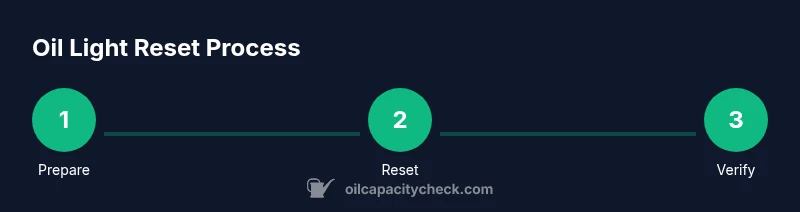
- 1
Prepare your vehicle and safety checks
Park on a flat surface, engage the parking brake, and ensure the engine is off. Confirm you have the ignition key or start button available, and locate the trip odometer reset control. The goal is to access the instrument cluster safely without starting the engine.
Tip: If you’re using a push-button start, press the brake pedal lightly and switch to the ON position without starting the engine, then proceed. - 2
Identify your reset method
Check your owner’s manual or on-screen prompts to determine whether your model uses the button-based or pedal-based reset. If the manual shows a sequence on the instrument cluster, follow that exactly. If not, try the standard method for your year: a button hold or a floor-pedal press sequence.
Tip: Remember: model-year differences are common; a wrong sequence can leave the light on. - 3
Perform button-based reset (if applicable)
With ignition ON and engine OFF, press and hold the trip odometer button until the oil life indicator returns to 100% or a confirmation message appears. Release and turn the ignition OFF for a moment, then back ON to verify the display.
Tip: If the display flashes or shows a message, follow the screen’s directions exactly. - 4
Perform pedal-based reset (if applicable)
If your model uses the accelerator pedal method, press the pedal to the floor slowly and fully three times within about 10 seconds, then release. The instrument cluster should indicate the oil life is reset or return to 100%.
Tip: Do not press the accelerator if you’re not in a safe, stationary condition; this method should be done with the engine OFF. - 5
Verify the reset and test drive
Turn the ignition OFF, then ON again and observe the oil life indicator. If it shows 100% or a reset confirmation, you’re done. If not, repeat the steps carefully or consult the manual for a model-specific variation.
Tip: Always drive a short distance after a reset to confirm the display remains consistent.
People Also Ask
Do all Ford Escape models use the same reset method?
No. Reset procedures vary by model year and trim. Always check the owner’s manual or contact a dealer for your exact model-year sequence.
Reset methods vary by year. Check your manual or ask a dealer for the exact sequence for your Escape.
Is resetting the oil change light legal after an oil change?
Resetting the oil life indicator after an oil change is standard maintenance practice. It should be done only after you’ve completed the service and updated the oil life in the system.
Yes, it’s standard maintenance to reset after you’ve changed the oil and updated the system.
What if the reset doesn’t work?
If the light stays on, double-check the exact steps for your year, ensure the engine was off during reset, and confirm that the oil life readout shows 100%. If problems persist, seek dealership assistance.
If it doesn’t work, review the model-year steps, verify the engine was off, and consult a dealer if it continues.
Can I reset the light while driving?
No. Resets should be performed with the ignition on and the engine off to avoid distractions and ensure the system records the service correctly.
No, you should reset with the engine off.
How soon after an oil change should I reset?
Reset once you’ve completed the oil change and confirmed the oil type and amount. Do not reset if you haven’t completed the service.
Reset after you finish the oil change and confirm it’s done correctly.
What should I do if the light returns after a drive?
If the light comes back after a drive, there may be another service requirement or a calibration issue. Check the manual, verify the oil change is properly logged, and contact a professional if needed.
If it reappears, check the manual and service log, then consult a professional if needed.
Watch Video
The Essentials
- Know your model-year reset method before starting
- Use ignition ON, engine OFF as the default setup
- Verify the reset by cycling the ignition and checking the oil life reading
- Consult the owner’s manual for exact steps if unsure
- Maintain a maintenance log for future resets