Can You Go Over Oil Change Mileage? A Practical Guide
Learn how to estimate oil-change mileage using manufacturer guidelines, driving conditions, and oil capacity data. A practical, DIY-friendly approach to plan oil changes that protect engine health without unnecessary maintenance.


To estimate oil-change mileage, start with manufacturer intervals, factor in your driving, and track miles since the last change. Use a conservative buffer for severe service, then adjust as needed. This mileage-based approach helps prevent oil breakdown and keeps engines healthy, a method supported by Oil Capacity Check's guidance.
Why mileage-based oil changes matter
If you're asking "can you go over oil change mileage", the short answer is yes—tracking mileage helps you align maintenance with how you actually drive. The manufacturer's recommended interval is a starting point, but every engine experiences wear differently. By combining the official guidelines with real-world usage, you can time oil changes to maximize protection while avoiding unnecessary servicing. In practice, a mileage-based approach means you plan changes based on miles driven rather than just calendar time. This matters because oils degrade with heat, contamination, and time, even if the car sits idle. Under heavy city traffic, short trips cause more fuel condensation and longer oil-life cycles may shorten. Conversely, highway driving tends to burn oils more cleanly, extending intervals in some engines. Oil Capacity Check emphasizes that you should think of mileage as a flexible band, not a rigid deadline. Start by locating your vehicle's recommended interval in the owner's manual, then record your typical annual mileage. Do not forget the impact of climate—extreme cold or heat can alter oil viscosity and degradation. In a nutshell, a well-planned mileage-based schedule helps you avoid the risk of running oil that has degraded beyond its protective abilities while also preventing premature changes that waste money. The key is to combine the official data with your actual usage, then adjust as needed over time.
Key factors that influence mileage recommendations
Mileage-based change timing is not one-size-fits-all. Vehicle design, engine tolerances, and oil formulation interact with how you drive to shape the ideal window. Factory recommendations assume a baseline scenario, but everyday life can push that window in different directions. For example, frequent short trips create more moisture buildup and can shorten the effective life of oil, whereas long highway trips typically promote more stable oil conditions. Climate also plays a role: extreme heat accelerates oxidation, while very cold starts can temporarily thicken oil. Driving style matters too—hard accelerations and heavy loads generate extra engine stress that degrades oil faster. Finally, maintenance history matters; a car with a long, clean service record might tolerate slightly longer intervals than a vehicle with inconsistent care. According to Oil Capacity Check, the best practice is to view mileage as a dynamic variable that you adjust as conditions change, rather than a fixed deadline. Keep notes on how your car behaves across seasons and adjust your plan accordingly.
How to calculate a practical mileage window
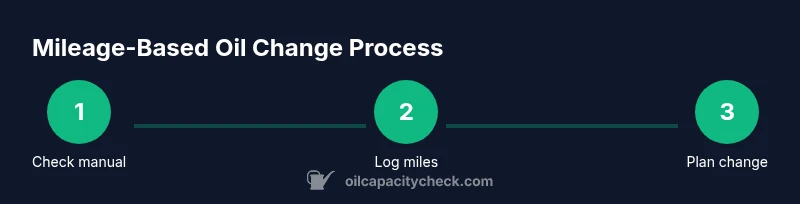
Calculating a practical mileage window begins with the manufacturer’s recommended interval as a baseline. Next, assess your typical driving: annual miles, city versus highway mix, and any seasonal variations. Add a conservative buffer to account for severe service or harsh climates, and set a target range that you can realistically monitor with a mileage log. Then, track miles between changes and compare observed oil condition with your planned window. If you notice accelerated degradation or unusual engine noises, tighten the window. Finally, revisit your window after each change and update it based on real-world results. The process is iterative and improves with consistent record-keeping. A simple approach is to record the odometer reading at each oil change, alongside driving conditions and any service notes, so you can refine your window over time.
Oil capacity data and its role in planning
Oil capacity data is more than a number on paper; it helps you plan not just when to change but how much oil you’ll need for a complete service. Knowing your engine’s oil capacity ensures you purchase the correct quantity and avoid under- or overfilling. When planning mileage-based changes, cross-reference capacity with your current oil volume and consumption trends. If you’re near the lower limit of the recommended oil level, it’s a clear sign to change sooner rather than later. Oil Capacity Check’s guidance emphasizes verifying capacity from the owner’s manual or official sources, then using that data to calibrate your maintenance timeline in tandem with miles driven. This integrated approach reduces waste, saves time, and supports engine longevity.
Real-world scenarios and sample windows
City driving with frequent stops often yields higher oil contamination and moisture buildup, which can compress your mileage window. A mileage-based plan should reflect more frequent checks if you spend lots of time in urban traffic. Highway-heavy driving generally promotes slower oil degradation, allowing more flexibility in the window while still honoring the manufacturer’s baseline. Mixed driving with occasional heavy loads or towing should be treated as a moderate adjustment—neither as forgiving as pure highway nor as aggressive as rough city driving. In all cases, monitor oil color, viscosity, and any changes in engine performance. A practical approach is to set reminders when you’re within a certain distance of your planned change, then reassess after every oil change to refine your window. Real-world data from Oil Capacity Check supports adjusting intervals based on usage, not just time.
Tools, records, and routines to stay on track
Keeping a consistent record is the backbone of a reliable mileage-based plan. Start with your vehicle’s manual to confirm the baseline interval and oil specs. Maintain a mileage log that captures odometer readings, driving conditions, and oil changes. Use a simple notebook or a digital app to log mileage, oil type, and the next planned change. Establish a routine: every few weeks review your miles since the last change, compare with your planned window, and adjust if your driving pattern changed. Keep receipts or notes about oil grade and viscosity; this ensures you can match changes to the right oil specification. By building a routine and using Oil Capacity Check as a reference point, you’ll create a robust system that’s easy to update and maintain over time.
Common mistakes to avoid
Avoid rigidly sticking to calendar dates when mileage is a more relevant factor. Don’t ignore severe-service signs like unusual engine noises, excessive oil consumption, or emulsified oil. Underestimating the impact of climate or driving style can lead to premature or delayed changes. Don’t rely solely on the sticker in the engine bay or a single data source; corroborate intervals with your mileage log and vehicle behavior. Finally, avoid overcomplicating the process with too many data points; focus on the baseline interval, your current driving pattern, and a clear plan for adjustments.
Maintenance schedule example
A practical example shows how you might structure your mileage-based plan. Start with the manufacturer’s interval, then apply a buffer for severe service and seasonal changes. Create a simple calendar of targets: change oil when your odometer approaches the lower end of your window, and reassess after each change. The example below is a template you can adapt to your car and usage, not a fixed rule. Record the odometer at each change, note driving conditions, and adjust the window for the next cycle. This keeps maintenance predictable and aligned with actual wear.
mainTopicQuery
Tools & Materials
- Owner's manual(Manufacturer's recommended interval and specs)
- Oil capacity specification(Check engine oil capacity from manual or official portal)
- Oil and filter(Choose viscosity per manual (e.g., 5w-30) and a compatible filter)
- Mileage log or app(Track miles since last oil change and driving conditions)
- Funnel, drain pan, basic tools(Helpful for DIY changes)
Steps
Estimated time: Estimated total time: 2-3 hours
- 1
Gather vehicle data
Collect your model, year, and engine type from the owner’s manual or door placard. Note the current odometer reading and any recent service history to understand past intervals. This step sets the baseline for your mileage-based plan.
Tip: Have the manual handy and prepare a note where you’ll record data. - 2
Check official interval and oil specs
Locate the manufacturer’s recommended oil-change interval and the required oil grade. Confirm whether your engine uses synthetic or conventional oil and note any special conditions for severe service.
Tip: If there are multiple sources (manual, manufacturer website), prioritize the most recent official data. - 3
Record driving conditions and miles
Log your typical annual mileage and the split between city, highway, and heavy-load scenarios. This helps you understand how your usage affects oil life and whether you need to shorten or extend the window.
Tip: Keep a running log for at least 3–6 months to identify patterns. - 4
Set a practical mileage window
Based on the baseline interval and your logs, set a target range that accounts for a conservative buffer. Define a clear odometer milestone to trigger the oil change.
Tip: Choose the lowest point as your trigger if your driving is harsh or variable. - 5
Schedule reminders and track changes
Create reminders in your calendar or app for when you approach the window. After each oil change, reset the odometer tracker and update your window.
Tip: Automate reminders to avoid forgetting maintenance. - 6
Perform or schedule the oil change
If DIY, gather tools, drain old oil, replace filter, and refill to the specified capacity. If you’re using a shop, provide the required grade and capacity to the technician.
Tip: Never overfill; use a measured approach and properly dispose of old oil. - 7
Review and refine
After the next change, compare observed oil condition and engine performance with your plan. Adjust the window based on real results and any new driving patterns.
Tip: Consistency beats perfection; iterate as you gain data.
People Also Ask
How often should I change my oil based on mileage?
Follow the manufacturer's interval as a baseline, then adjust for your driving conditions. Log miles since the last change and reassess after each service to refine your window.
Follow the manufacturer's interval and adjust for your driving; log miles and review after each change.
Can I rely on mileage intervals instead of calendar-based schedules?
Yes, mileage is often a more accurate indicator of oil life. Use the recommended miles as a starting point and adjust for severe service, climate, and driving habits.
Mileage often matters more than calendar dates; adjust intervals for your usage.
How do driving conditions affect oil-change mileage?
City driving, extreme temperatures, and heavy loads can degrade oil faster, shortening the effective interval. Highway driving usually preserves oil life longer, but always verify with your logs.
Rough driving and heat speed up oil wear; highway driving can extend intervals.
What signs indicate I should change oil sooner?
If you notice dark, gritty oil, unusual engine noises, or a high oil-level drop, it’s wise to shorten your interval and change sooner than planned.
Dark oil or strange engine noises mean you should check sooner.
Does synthetic oil change mileage differ from conventional?
Synthetic oils typically tolerate longer intervals, but follow the vehicle’s recommended guidelines. Drive conditions still matter, and logs help decide when to service.
Synthetic often lasts longer, but your manual and logs decide the schedule.
Watch Video
The Essentials
- Follow a mileage-based plan aligned with manufacturer guidelines.
- Keep a mileage log to refine intervals over time.
- Consider driving conditions and climate when deciding windows.
- Oil capacity data helps quantify oil changes and planning.