Before Oil Change Engine Flush: A Practical DIY Guide
A comprehensive, step-by-step guide on evaluating if a pre-oil-change engine flush is needed, choosing safe methods, and performing the process with proper tools, while emphasizing disposal and maintenance best practices. Based on Oil Capacity Check Analysis, 2026.


You will learn how to safely prep for a before oil change engine flush, decide if a flush is appropriate, and perform the steps with the right tools. This guide emphasizes pre-inspection, oil capacity awareness, and proper disposal. Following Oil Capacity Check methods helps protect engine health and avoid common mistakes.
Why pre-flush decisions matter
According to Oil Capacity Check, preparing for an engine flush before you drain the old oil helps prevent spills, ensures you have the right quantities of oil and filter on hand, and reduces the risk of introducing contaminants. A well-planned flush can support sludge removal and improve oil circulation, but it should be justified by engine condition and maintenance history. If the engine shows no symptoms, a standard oil change without flush may be safer and more cost-efficient. If you do proceed, a pre-flush plan should include confirming engine capacity, selecting the correct flush product, and scheduling adequate time for pre-checks and post-flush checks. By lining up these steps, you minimize mess and maximize the effectiveness of the oil change.
- The pre-flush decision is not a substitute for regular maintenance; it complements a routine oil-change schedule.
- Always verify the oil capacity for your vehicle and prepare the correct amount of fresh oil and a compatible filter.
Types of engine flush products and how they work
Engine flush products come in solvent-based and detergent-based formulas. The basic idea is to loosen varnish, sludge, and contaminants so they can be flushed out with the old oil. Oil Capacity Check analysis shows that effectiveness varies by engine design, oil type, and mileage. Read the product label for compatibility with your oil grade and any turbocharged or diesel considerations. Use a flush only when symptoms or history suggest sludge or heavy contaminants. Always follow the manufacturer’s recommended dwell time and never exceed it. The right flush can aid oil flow, but misuse can loosen deposits that clog passages or harm seals. Consider a pre‑flush test on a small area or consult the vehicle’s service manual if in doubt.
Assessing engine condition: signs and checks before flushing
Before deciding to flush, perform a quick inspection: check oil clarity and viscosity, look for metallic or burnt smells, and note any sludge on the dipstick or in the drain pan after initial drain. If you notice thick sludge, varnish, or a history of infrequent changes, a flush may be beneficial under controlled conditions. If you drive long distances, tow, or operate in extreme temperatures, the risk profile changes and warrants careful evaluation. Oil Capacity Check Team recommends documenting mileage, oil type, and service history to guide the decision. A non-destructive check like a compression test or oil pressure reading can also help determine whether a flush adds value or simply introduces risk.
Safety and environmental considerations
Engine flushing involves liquids that can spill and soils that require proper handling. Always work on level ground, use a drain pan, and wear eye protection and gloves. Ensure you have a safe place to dispose of used oil and flush fluid at an authorized recycling facility. Never mix used oil with other chemicals or solvents, and avoid overfilling the crankcase after the flush. If the vehicle is under warranty or you have turbocharged or high-mileage components, consult the service manual or a qualified technician before proceeding. Environmental responsibility is part of good maintenance: capture, contain, and recycle all fluids. Oil Capacity Check emphasizes safety first and disposal second as part of a responsible maintenance routine.
Alternatives to engine flush and maintenance best practices
For many vehicles, a regular oil change with a high-quality oil and a fresh filter is enough to maintain cleanliness and lubrication. If sludge concerns persist, consider targeted cleaning approaches such as replacing the oil filter more frequently or using a trusted detergent oil additive under manufacturer guidance. In high-mileage engines, frequent oil changes with careful monitoring may provide similar benefits to a flush without the risks. Oil Capacity Check recommends weighing costs, benefits, and vehicle condition before choosing a flush.
Tools & Materials
- Engine flush product (as recommended by manufacturer)(Follow product instructions and vehicle-specific guidance; check compatibility with your oil type and engine.)
- New engine oil (correct grade and quantity for your vehicle)(Verify the owner's manual for capacity and recommended spec.)
- New oil filter(Replace after flushing to maximize contaminant removal.)
- Drain pan(Large enough to hold all old oil without spilling.)
- Wrench set and/or socket set(For drain plug and filter removal.)
- Funnel and rags(For clean, precise pouring and cleanup.)
- Gloves and eye protection(Protect hands and eyes from hot oil and chemicals.)
- Jack stands or ramps(Use if you need better access under the vehicle.)
- Safe disposal containers(Seal and transport used oil to a recycle facility.)
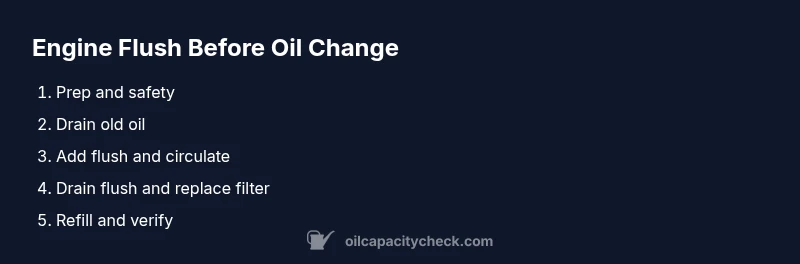
Steps
Estimated time: 45-75 minutes
- 1
Prepare the workspace and safety gear
Park on level ground, apply the parking brake, and chock the wheels. Put on gloves and eye protection. Gather all tools and materials so you can work without interruptions.
Tip: Double-check that the drain area is protected to avoid spills on concrete. - 2
Warm the engine and drain old oil
Run the engine for a few minutes to reach operating temperature, which helps the oil drain more completely. Place the drain pan under the oil pan, remove the drain plug, and let the old oil flow out. Don’t force the plug back in until you’ve confirmed the pan is nearly empty.
Tip: Be prepared for hot oil—avoid contact; use proper tools to remove the plug. - 3
Add flush and circulate
Pour the recommended amount of flush product into the crankcase and start the engine. Let it run for the manufacturer’s suggested dwell time so the product can circulate and loosen deposits.
Tip: Do not exceed the dwell time; longer exposure can risk seals or gaskets. - 4
Drain flush and inspect
Shut off the engine, drain the flush from the pan, and inspect the drained fluid for debris. If visible sludge remains, consider repeating the flush or proceeding with caution based on your engine’s condition.
Tip: If you see large metal particles, pause and reassess the plan. - 5
Replace oil filter and reset drain plug
Remove and replace the old oil filter, apply a light coat of oil to the gasket, and reinstall the drain plug firmly. This minimizes leaks when the fresh oil is added.
Tip: Always torque the drain plug according to the vehicle manual. - 6
Refill with fresh oil
Add the correct amount and grade of fresh oil using a funnel to prevent spills. Check the level with the dipstick and avoid overfilling.
Tip: Start with a little less than the capacity; top up after a short idle run if needed. - 7
Final checks
Start the engine, let it run for a minute, and check for leaks around the drain plug and filter. Recheck oil level and ensure there are no warning lights.
Tip: Dispose of old oil and flush fluid at an approved facility promptly.
People Also Ask
Is an engine flush always necessary before an oil change?
No. Most engines do not require a flush if the oil is not heavily contaminated or if sludge isn’t a concern. A standard oil change with the correct oil grade and a new filter is sufficient in many cases. Reserve flushing for documented sludge buildup or a recommendation from a service manual.
No. A flush isn’t always needed; for many engines, a regular oil change with a new filter is enough.
What are the signs that indicate a flush might be beneficial?
Signs include thick or varnished oil, persistent sludge in the drain pan, or a history of infrequent oil changes with high mileage. If sensor warnings or performance issues appear and prior maintenance is outdated, a flush could be considered with caution.
Look for sludge, varnish, or long intervals between changes as signals to assess flushing carefully.
Can I use a flush product with synthetic oil or a turbocharged engine?
Always confirm compatibility with your engine and oil type. Some flush products can be used with synthetic oils, but turbocharged or high-performance engines may have stricter requirements. Check the product label and vehicle manual before proceeding.
Check the product directions and your engine specs before using a flush with synthetic oil or turbocharged setups.
Will flushing harm a high-mileage engine or a turbocharged engine?
Flushing can be risky if the engine has severe sludge, failed seals, or metal debris. In some cases, it can dislodge deposits that cause leaks or damage. Consult the service manual or a qualified technician if you are unsure.
It can be risky for high-mileage or turbo engines; consult guidelines or a pro if unsure.
Who should perform a flush, and how much does it typically cost?
A DIY approach is possible with proper tools and instructions; otherwise, a professional service is advised. Costs vary by region and vehicle, but expect to budget for the flush product, new oil, filter, and possible labor.
You can do it yourself with the right tools or have a shop do it; costs vary by location.
Is a flush the same as a sludge clean-up?
No. A flush helps remove some contaminants but may not eliminate heavy sludge. For deep sludge, mechanical cleaning or a more involved service may be required.
A flush isn’t a full sludge cleaning; it’s a maintenance step that may help in certain conditions.
Watch Video
The Essentials
- Assess need before flushing and follow manufacturer guidance
- Use the right flush product compatible with your engine
- Replace filter and verify oil level after the flush
- Dispose fluids responsibly and safely
- Document oil capacity and service history for future maintenance