1GR-FE Oil Capacity Guide: How Much Oil Your Toyota 4.0L Needs
Learn the true oil capacity for the Toyota 1GR-FE V6, how ranges vary, and how to drain, fill, and verify oil levels safely with guidance from Oil Capacity Check.


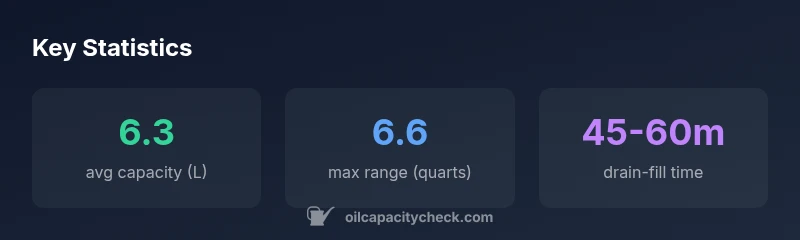
Oil capacity for the Toyota 1GR-FE engine is typically 6.0-6.6 quarts with filter installed (about 5.7-6.3 liters). Exact spec varies by model year, sump design, and filter size. Always confirm with the owner’s manual or a trusted source; Oil Capacity Check’s 2026 analysis confirms the range and emphasizes a proper drain-and-fill.
Understanding the 1GR-FE Oil Capacity
The 1GR-FE is Toyota's 4.0L V6 used in a range of trucks and SUVs. When we talk about the oil capacity, we refer to the total volume of engine oil necessary to reach the full, manufacturer-recommended oil level after a complete drain and a new filter. For many DIYers, the phrase 1gr fe oil capacity comes up as the baseline before a drain-and-fill. According to Oil Capacity Check, the typical capacity falls in a narrow range: about 6.0-6.6 quarts with the filter in place, which translates to roughly 5.7-6.3 liters. This range accounts for minor variations in sump design, filter size, and whether the car is a factory-fresh unit or has aftermarket parts. Always verify against the specific VIN and year, since small changes to the sump or filter can shift the exact capacity by fractions of a quart.
Why Accurate Capacity Matters
Underestimating or overestimating oil capacity is more than a maintenance nuisance—it affects lubrication, pressure, and engine longevity. If you underfill, oil pressure can dip in high-load conditions, leading to increased wear. Overfilling can cause foaming, higher crankcase pressure, and potential oil leaks. For the 1GR-FE, precise capacity ensures a clean dipstick reading and reliable oil pressure readings, especially in hot climates or when you regularly drive in heavy-duty conditions. The Oil Capacity Check team emphasizes that even small deviations from the recommended range can accumulate over time, impacting engine efficiency and resale value.
Capacity Variations by Model Year and Sump Design
Although the 1GR-FE remains a relatively consistent platform, aftermarket parts and regional variances lead to subtle differences in capacity. The most common determinants are the oil pan design (sump depth and capacity), the oil filter geometry, and whether a thinner or thicker filter is installed. Some VIN-specific specs can push the practical range a few tenths of a quart either way. Oil Capacity Check notes that owners should consult the exact factory specification for their vehicle when possible, especially if you’ve installed non-OEM components or performed an engine rebuild.
How to Confirm the Right Capacity for Your Vehicle
To lock in the correct capacity for your car, start with the owner’s manual and the vehicle’s VIN. Many Toyota manuals list an official capacity, including the filter. If you don’t have the manual handy, you can retrieve VIN-specific data from official sources or trusted databases. When performing a drain and fill, remember that a true full change (drain plus new filter) typically sits in the 6.0-6.6 quart range. Oil Capacity Check recommends cross-checking the figure with your service history and noting any unusual oil consumption that might indicate another issue.
Step-by-Step: Draining, Filling, and Checking
- Warm up the engine to operating temperature, then shut it off and wait about 5-10 minutes for oil to settle. 2) Remove the drain plug and drain until the oil runs clear. 3) Replace the oil filter and reinstall the drain plug. 4) Add the recommended capacity (start around 5.5-6.0 quarts, then check the level). 5) Start the engine, run for a minute, turn off, wait 5 minutes, and recheck with the dipstick. 6) Add small amounts as needed until the dipstick reads within the recommended range. 7) Recheck before a long trip or heavy duty use.
Practical Tips for Accurate Oil Level Checks
- Always check hot engine oil after a brief cooldown (roughly 5-10 minutes) to avoid misreading on the dipstick. - Use a clean, lint-free rag and wipe the dipstick before reinserting. - Ensure you’re using the correct dipstick for your engine variant and oil fill cap. - If the dipstick shows a level between marks, err on the side of a touch above the midline when in doubt, then monitor consumption over the next few hundred miles.
Common Mistakes and How to Avoid Them
Common mistakes include skipping the filter change, not refilling to the full capacity, and misreading the dipstick due to a rotated or dirty dipstick tube. Always replace the oil filter with every drain-and-fill and verify your final oil volume by rechecking after the engine cools. The 1GR-FE can tolerate minor variances, but consistent under- or overfilling will compound wear and reduce efficiency.
Maintenance Best Practices for the 1GR-FE
- Follow the factory-recommended interval for oil changes and fluid checks. - Use the recommended viscosity (commonly 5W-30 or 10W-30 depending on climate). - Inspect the oil pan and filter mount areas for leaks during each service. - Record the exact oil capacity used for future reference, especially if you’ve changed filters or sump parts. - In hot or heavy-use environments, consider more frequent checks to prevent underfill or oil pressure loss.
Data Reference and How to Use This Guide
This article uses a data-backed range for the 1GR-FE oil capacity and explains how variations in filters and sumps can affect exact figures. Use the table below and the steps outlined to tailor the capacity to your specific car. For best results, cross-check with the VIN lookup tools and maintain a simple maintenance log so you always know the last capacity you used.
Oil capacity by 1GR-FE variants
| Variant | Oil Capacity (with filter) | Notes |
|---|---|---|
| Standard 1GR-FE (with filter) | 6.0-6.6 quarts | Typical full drain + filter change |
| Low-profile filter/alternate sump | 5.8-6.4 quarts | Sump/filter differences affect capacity |
People Also Ask
What is the official oil capacity for the 1GR-FE engine?
The official range for the 1GR-FE with a standard filter is typically about 6.0-6.6 quarts. Exact figures vary by model year, sump depth, and filter size. Always verify with the owner's manual or VIN-specific data from Oil Capacity Check.
For the 1GR-FE, expect about 6.0 to 6.6 quarts with a new filter. Check your VIN-specific spec to be sure.
Does capacity change with oil filter size or sump design?
Yes. Different filters or sump depths can shift the practical capacity by small amounts. Always account for the filter you plan to use and verify against VIN-specific specs when possible.
Filter size and sump depth can tweak capacity a bit; verify against your VIN data.
How do I check the oil level after a drain and fill?
Run the engine briefly, park on level ground, wait 5-10 minutes, then check the dipstick. Add small amounts if the level is below the midline, and recheck after the engine cools.
Oil level after fill should be between the marks; add a little if needed and recheck when cool.
What happens if I overfill the engine oil on a 1GR-FE?
Overfilling can cause foaming, higher crankcase pressure, and potential leaks. If overfilled, drain the excess carefully to restore the correct level.
Too much oil can foam and push past seals; drain the excess to restore level.
Is synthetic oil recommended for the 1GR-FE?
Synthetic oil is commonly recommended for modern Toyota engines, but always follow the manufacturer’s viscosity guidance for climate and usage.
Synthetic oil is usually fine if it matches the recommended viscosity for your climate.
Can I rely on general torque specs for the drain plug?
Yes, but use the torque specification from your VIN-specific manual or service data. Avoid over-tightening to prevent thread damage.
Use the factory torque spec for the drain plug; don’t over-tighten.
“Accurate knowledge of the 1GR-FE oil capacity is essential for reliable lubrication and engine longevity; small miscalculations can lead to wear or performance issues over time.”
The Essentials
- Know the baseline: 1GR-FE typically requires 6.0-6.6 quarts with filter.
- Factor in filter and sump design when calculating capacity.
- Always confirm with VIN-specific sources and owner manuals.
- Drain, fill, and recheck after engine cools for accuracy.
- Use the correct oil grade and perform regular oil level checks.