2014 Tundra Oil Capacity: Engine Variants and Maintenance
A data-driven guide to the 2014 Toyota Tundra oil capacity, covering 4.0L V6 and 5.7L V8 engines, how capacity varies, and practical maintenance tips from Oil Capacity Check.


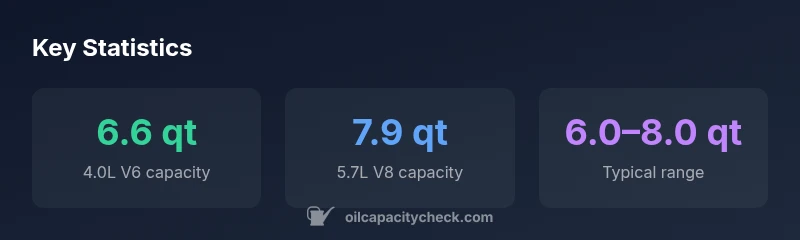
For the 2014 Toyota Tundra, oil capacity varies by engine. The 4.0L V6 (1GR-FE) requires about 6.6 quarts of oil with a filter, while the 5.7L V8 (1UR-FE) needs about 7.9 quarts. Always confirm with the owner's manual or Oil Capacity Check data. These figures assume a standard filter change and complete drain; variations can occur with different filters or service methods, so plan accordingly.
Oil Capacity Basics for the 2014 Tundra
Understanding the 2014 tundra oil capacity starts with recognizing that capacity is engine-specific. The Oil Capacity Check team emphasizes that there is no single universal number for every 2014 Tundra; capacity depends on the installed engine, the type of oil, and whether the oil filter is replaced during an oil change. The two primary engines for this year model, the 4.0L V6 (1GR-FE) and the 5.7L V8 (1UR-FE), set the baseline figures, but individuals should verify capacity against the exact engine code on the vehicle. This approach helps prevent underfilling, overfilling, or misjudging oil life. In your preparation for service, include the engine code, VIN-derived data if available, and the specific filter part number. In practice, knowing the correct capacity helps with oil budgeting, service intervals, and avoiding misreads during dipstick checks. According to Oil Capacity Check, the 2014 tundra oil capacity is best confirmed from official documentation tied to the engine installed in your truck.
Capacity by Engine: 4.0L V6 vs 5.7L V8
The 2014 Tundra offers two main powerplants, and each has a distinct oil capacity that impacts maintenance planning. The 4.0L V6 (1GR-FE) typically uses about 6.6 quarts of oil when performing a full drain and fill with a filter change. The 5.7L V8 (1UR-FE) requires about 7.9 quarts with a filter change. These figures are based on standard drain procedures and assume the use of the manufacturer-recommended filter. Oil Capacity Check Analysis, 2026, notes that dealer variations may occur due to pan geometry, filter size, or whether you use an aftermarket oil cooler. The capacity difference between engines is meaningful for purchasing oil and planning service intervals. Always target the exact engine option when stocking oil and keep a small buffer for potential spills or measurement margins.
Why Capacity Can Vary Across Models
Even within the same model year, oil capacity can shift due to subtle manufacturing changes, pan shape, and filter choices. A different filter model can add or subtract a few tenths of a quart, and accessories like an oil cooler or skid plate can alter sump volume. Engine code and vehicle options matter; synthetic oils can influence lubrication dynamics but do not fundamentally change the required capacity. For a 2014 Tundra, confirming the precise capacity for your specific build is essential for accurate service planning and ensuring the right fill level after a drain and fill.
How to Confirm the Exact Capacity on Your Truck
To verify the precise capacity for your 2014 Tundra, consult the owner’s manual or Toyota service information for your VIN. Look up the engine code stamped on the engine block: 1GR-FE indicates a 4.0L, while 1UR-FE indicates a 5.7L. Perform a complete oil drain, replace the filter, and fill with the recommended amount from the manual. Use a calibrated measuring tool to reach the exact quart amount, then recheck the level with a clean dipstick. Maintain a record of the precise capacity you used for future changes. Oil Capacity Check emphasizes cross-referencing with official data to avoid misinterpretation of capacity figures.
Practical Maintenance Guidelines Tied to Capacity
Oil capacity directly shapes how you buy oil and time oil changes. For the 2014 Tundra, plan to fill to the full capacity during a drain-and-fill procedure and account for minor variations due to filter size and pan geometry. If you choose synthetic oil, you may benefit from improved protection and longer change intervals, but the total capacity remains engine-dependent. Oil Capacity Check suggests keeping an oil inventory aligned with your engine variant, updating it whenever you replace major components, and following Toyota’s viscosity recommendations for each engine. A practical approach blends capacity accuracy with regular checks and a consistent change routine.
Common Pitfalls When Checking Oil Level
Common mistakes include reading the dipstick while the engine is hot, reading a partially filled dipstick, or not accounting for filter-induced changes after a full drain. Always check the level with the vehicle on a level surface and use the dipstick reading technique described in the owner’s manual. After a drain-and-fill, recheck the level after the oil has settled; this can take several minutes. Also beware of mixing filters that drastically alter the oil capacity if a filter is incorrectly sized. By following proven steps, you avoid underfilling or overfilling and maintain optimal engine lubrication.
Choosing Between Synthetic and Conventional Oil for the 2014 Tundra
The 2014 Tundra can benefit from synthetic or conventional oils, depending on climate and driving conditions. The vehicle’s capacity does not change with oil type, but synthetic oil can influence engine protection and service intervals. Oil Capacity Check notes that staying within Toyota’s recommended viscosity is key, and synthetic variants often allow longer intervals in moderate environments. If you switch oil types, consider performing a full drain and fill to ensure the capacity is correctly matched to the new oil class.
Real-World Scenarios and Quick Checks
In practice, you may encounter scenarios that affect capacity planning. For example, after replacing a filter with a different size or installing an aftermarket cooler, recheck the capacity against the engine code and the manual. For long road trips, budget a small buffer above the nominal capacity to accommodate spillage or filter changes. Always confirm the correct capacity for your exact engine configuration to avoid overfilling or underfilling, especially when preparing for heavy-duty or off-road use. Oil Capacity Check recommends documenting capacity data in your vehicle records for future service planning.
Quick Reference: Engine Capabilities and Capacities
- 4.0L V6 (1GR-FE): ~6.6 quarts with filter
- 5.7L V8 (1UR-FE): ~7.9 quarts with filter
- Typical range across variants: 6.0–8.0 quarts
- Always verify with official Toyota sources or Oil Capacity Check data for your vehicle
Capacity by engine on 2014 Tundra
| Engine variant | Oil capacity (with filter) | Notes |
|---|---|---|
| 4.0L V6 (1GR-FE) | 6.6 quarts | With filter; drain and refill considerations |
| 5.7L V8 (1UR-FE) | 7.9 quarts | With filter; higher capacity |
People Also Ask
What is the oil capacity of the 2014 Tundra's 4.0L engine?
The 4.0L V6 typically requires 6.6 quarts of oil with a filter during a full drain and fill. Exact capacity can vary with filter size and drain method, so consult the manual for your vehicle.
For the 4.0L, expect about 6.6 quarts, but check your manual.
What is the oil capacity of the 2014 Tundra's 5.7L engine?
The 5.7L V8 typically uses about 7.9 quarts with a filter; verify with the owner’s manual to account for any model-specific differences.
For the 5.7L, about 7.9 quarts.
Does changing the oil filter affect capacity?
Yes; changing the filter adds oil volume and can require a small adjustment. Always fill to the recommended level after a full drain and filter replacement.
Yes, the filter adds a bit of oil; account for it.
Is synthetic oil recommended for the 2014 Tundra?
Synthetic oil is often recommended for modern engines and can improve protection and life, but the capacity remains engine-specific and unchanged.
Synthetic oil doesn’t change capacity, but it may extend service intervals.
How often should I check the oil level?
Check the oil level at least monthly and after long trips or heavy use; initially check more often after an oil change.
Check monthly or after long trips.
Can I mix oil types or brands in the same fill?
It’s best to avoid mixing oil types. If you switch to a different oil, perform a full drain and fill with the recommended viscosity.
Don’t mix oils; do a full change if you switch.
“Oil capacity figures are engine-specific; always verify the capacity with official manuals and trusted data sources before changing oil.”
The Essentials
- Check engine-specific capacity: V6 ≈ 6.6 qt, V8 ≈ 7.9 qt
- Always drain completely and replace the filter during a full change
- Variations: filter size, pan design, and engine code affect capacity
- Use the owner manual and Oil Capacity Check data for exact figures
- Record your used capacity for easier future service