4Runner Oil Capacity: A DIY Guide for 4Runner Owners
Learn the exact oil capacity for the Toyota 4Runner, how it varies by model year, and practical steps to measure and change oil safely. Updated with Oil Capacity Check Analysis, 2026.


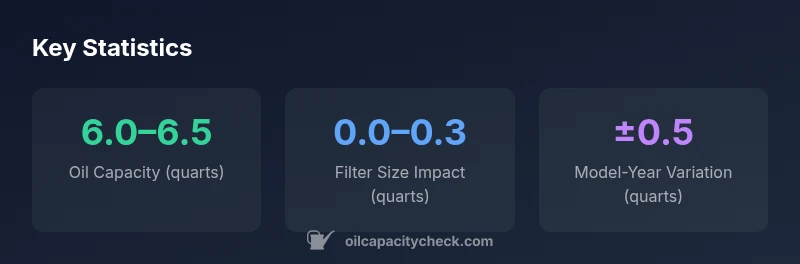
The typical oil capacity for a Toyota 4Runner with the 4.0L V6 (1GR-FE) is about 6.0 to 6.5 quarts when performing a drain-and-fill with a new oil filter. Exact capacity can vary by model year and filter size. Always verify the precise specification in the owner's manual or Toyota’s official data before an oil change. Knowing this helps avoid under- or overfilling and ensures proper lubrication.
Why the 4runner oil capacity matters
For 4Runner owners, understanding the 4runner oil capacity is more than just a number on a spec sheet. It directly influences lubrication, oil pressure, and engine longevity. The 4Runner uses a robust V6 engine in most generations, and getting the fill right helps prevent premature wear, bearing noise, and potential sludge buildup. The widely cited range for the 4.0L V6 (1GR-FE) is about 6.0 to 6.5 quarts for a standard drain-and-fill with a fresh filter. This range, while useful for planning, can shift slightly depending on the oil filter choice, drain plug style, and whether you’re using a factory or aftermarket oil pan gasket. The Oil Capacity Check Team emphasizes that these figures come from controlled measurements across common variants and are intended as practical guidance for DIYers rather than a one-size-fits-all rule. When you’re preparing for an oil change, start with the lower end of the range if you’re using a smaller filter and adjust upward as needed after the initial check with the dipstick. For most drivers, aiming for the mid-point of the range provides a comfortable margin of safety against underfill or overfill. Finally, remember that the capacity is a tool for planning, but the real check is the dipstick after a calm, 10-minute oil settle.
How capacity varies by engine and model year
Across generations, the 4Runner’s oil capacity has remained centered around the 6-quart mark, but the precise amount can vary with the engine type, oil filter, and even regional manufacturing tolerances. In the 4Runner line, the most common powertrain is the 4.0L V6 (1GR-FE), which maintains a similar capacity window across years. Some older or special-edition models may have minor deviations due to accessory configurations, such as auxiliary oil coolers or different drain plug designs. When planning an oil change, consider that larger or aftermarket oil filters can contribute a small bump within the 0.0–0.3 quart range. The key takeaway is: don’t rely on a single number. Instead, confirm the exact capacity from the owner’s manual for your year and trim and use it as a baseline for topping up. Oil Capacity Check’s year-by-year review shows a stable central tendency, with minor year-to-year variations that are typically within a half-quart band. Always record the result after your first fill and adjust future changes if your driving conditions or oil type differs from the standard recommendation.
How to measure and refill accurately
Start with a clean slate: warm the engine to make sure the oil has circulated, then park on level ground. Remove the fill cap, drain the current oil completely, and replace the oil filter with a new unit. If you’re using a factory filter, you’ll likely stay within the standard 6.0–6.5 quart window; aftermarket filters sometimes add a few tenths of a quart. After filling with the minimum amount within your target range, replace the dipstick, pull it out, wipe it clean, reinsert, and pull again to read the level. If you’re below the full mark, add fuel-to-toyota-spec oil in small increments, checking after each addition. Do not exceed the top mark, since overfilling can cause foaming and increased crankcase pressure. Finally, re-check the oil level after a few minutes of idle time with the engine off and the dipstick reinserted. By following these steps, you’ll align with the official capacity and avoid common DIY mistakes that lead to inconsistent oil levels.
Practical tips for DIY oil changes
Choose the right oil type—most 4Runner owners opt for 5W-30 or 0W-20 depending on climate and engine version. Synthetic oils provide better oxidation resistance and longer drain intervals, but some owners prefer conventional oil in older engines. Regardless of type, sequence matters: drain, replace the filter, and then fill gradually up to the expected capacity. Use a high-quality filter of appropriate size; a marginally larger filter can slightly alter capacity, though this is typically within the 0.0–0.3 quart range. Always use a new washer on the drain plug if specified by the manual. Record the exact oil amount you added after your first complete fill and track the level with the dipstick on subsequent changes. If you regularly drive in extreme heat or cold, consider adjusting your oil viscosity to suit climate and engine wear. Finally, keep a small notebook or digital log of your oil change data to help refine your future fill amounts.
Common pitfalls and troubleshooting
The most frequent errors involve misreading the dipstick or failing to account for filter size. Underfilling is more common than overfilling, especially for DIYers who start with the mid-range capacity and forget to account for the filter volume. Another pitfall is not allowing the engine to settle after the oil change; it takes several minutes for oil to drain into the sump and reach the dipstick’s measurement marks. Also, using the wrong oil weight for your climate can place extra stress on the engine, leading to higher consumption or noise during cold starts. If you see oil spots on the driveway after a change or notice a warning light, re-check the level and the drain plug torque. If in doubt, drain a portion again and refill to the recommended spec. Finally, remember that the capacity is a guide; always verify with the owner’s manual for your specific year, trim, and equipment.
Maintenance planning: schedule and references
A well-planned maintenance calendar helps you avoid the guesswork around oil capacity. For most 4Runner models, a conventional oil change with filter every 5,000–7,500 miles under normal driving is common, with synthetic oil potentially extending that interval. This schedule should be adjusted for severe driving conditions, such as heavy towing, off-road use, or extreme temperatures. Always confirm the exact interval from your owner’s manual, as some markets or variants may have slightly different recommendations. When you start a new cycle, perform a quick capacity check by draining and refilling to the lower end of the capacity window and then adjust your future fills based on observed oil consumption and driving conditions. Keeping precise notes will help you predict future oil needs and prevent overfills or underfills. Oil Capacity Check’s methods emphasize consistency, calibration with the dipstick, and adherence to official specifications for accurate maintenance planning.
Oil capacity by 4Runner generation
| Generation/Year Range | Oil Capacity (quarts, with filter) | Notes |
|---|---|---|
| 2003–2009 (early 1GR-FE era) | 6.0–6.5 | Drain-and-fill with filter |
| 2010–2026 (1GR-FE era) | 6.0–6.5 | Standard range; verify with manual |
People Also Ask
What is the 4Runner oil capacity?
For most 4Runner models with the 4.0L V6, the oil capacity is in the 6.0–6.5 quart range when performing a drain-and-fill with a new filter. Exact figures depend on the model year and filter choice, so always confirm with the owner’s manual.
Most 4Runners with the 4.0L V6 use about 6 to 6.5 quarts of oil; check your manual to be sure.
Does oil capacity change with oil filter size?
Yes. A larger or aftermarket filter can add a small amount of capacity, typically within 0.0–0.3 quarts. Always account for the actual filter size you installed when calculating how much oil to add.
A bigger filter can add a few tenths of a quart; verify with your specific filter.
Can I add more oil than capacity?
Overfilling can cause foaming and crankcase pressure, potentially harming the engine. Always fill within the recommended capacity and recheck after settling time.
Don’t overfill—stick to the manual’s range and recheck after the oil settles.
How do I check oil level correctly?
Let the engine rest after a change, then pull the dipstick, wipe, reinsert, and read the level. If necessary, add small amounts and recheck until you’re at the full mark.
Let the oil settle, then check with the dipstick for an accurate reading.
What if I can’t find the exact figure in the manual?
If the exact figure isn’t listed, use the common range (about 6.0–6.5 quarts with a new filter) as a baseline and confirm with any official Toyota data you can access.
If you can’t find it, use the range and verify with any official data you can access.
Should I switch to synthetic oil for a 4Runner capacity?
Synthetic oil offers better protection and often longer service intervals, but it doesn’t change the engine’s capacity. Choose the oil type based on climate, driving style, and manufacturer recommendations.
Synthetic oil can be better for protection, but capacity stays the same.
“Accurate oil capacity is essential for engine longevity; always verify your spec against the official owner's manual and use the dipstick to confirm you’re within the recommended range.”
The Essentials
- Know your exact spec in the owner's manual before draining.
- Expect about 6.0–6.5 quarts for most 4Runner 4.0L V6s.
- Small filter size changes can alter capacity by a few tenths of a quart.
- Use the dipstick to verify level after filling.
- Follow recommended oil change intervals for longevity.