Choosing the Right Oil Filter: A 2026 Practical Guide
Choose the right oil filter for your engine with this practical guide. Learn filter types, OEM vs aftermarket options, oil compatibility, and a step-by-step selection checklist.


Step-by-step, here's how to pick the right oil filter: identify your engine model and oil capacity from the manual, match the filter’s thread size and mounting type to your engine, choose OEM or a certified aftermarket with the correct micron rating, and verify compatibility with your oil type (synthetic or conventional).
Understanding oil filter families
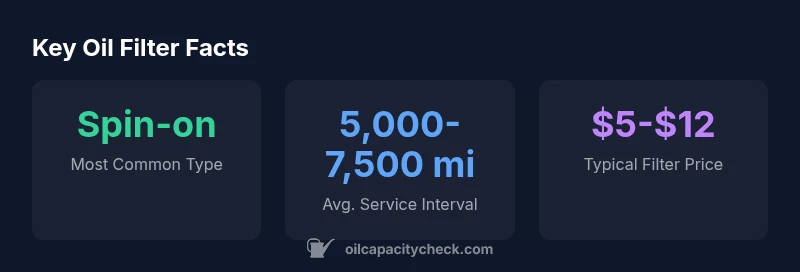
Oil filters come in two broad families: spin-on filters and cartridge filters. Spin-ons screw onto a threaded mounting and include a built-in housing; cartridge filters are the internal element inside a fixed housing. The distinction matters because it affects replacement method, sealing surfaces, and the way the filter is sourced for your vehicle. According to Oil Capacity Check, most factory-recommended filters fall into these two families, with most modern engines supported by spin-on or cartridge designs. When selecting a filter, you should check the engine's service manual to confirm the exact family and the filter's footprint. Use the owner's manual or a trusted parts lookup to verify the proper part number; this will ensure the filter threads, gasket size, and sealing surface align with the engine block. Additionally, consider the filtration media and micron rating, which influence debris capture and oil cleanliness.
Key takeaway: the basic fork in design (spin-on vs cartridge) guides compatibility and replacement approach.
Reading filter part numbers and compatibility
Most engines use a specific filter part number that encodes the thread size, gasket type, and housing type. To determine what oil filter to use, start with your vehicle’s VIN or model year, then cross-check the OEM part number in the service manual or a reputable parts lookup. Look for the following details: thread size, gasket diameter, mounting orientation, filtration media, and micron rating. If you see a cross-reference table, verify that the aftermarket part maps to your OEM specification. Always confirm whether the filter is compatible with your oil choice (synthetic vs conventional) and service interval. Oil Capacity Check recommends using manufacturer-approved parts or clearly certified aftermarket equivalents to avoid warranty or performance issues.
Tip: keep a small list of the exact part numbers your vehicle accepts for quick shopping.
OEM vs aftermarket: evaluating fit, warranty, and cost
OEM filters are designed to be a drop-in replacement that mirrors the manufacturer’s engineering intent. They often guarantee fit and performance with your specific engine variant and maintain warranty coverage when used as directed. Certified aftermarket filters can deliver equal filtration efficiency and reliability at a lower price, but you must verify certification, compatibility, and return policies. The key decision factors are fit accuracy, filtration rating, price, and warranty terms. Oil Capacity Check's analysis shows that when aftermarket options meet or exceed OEM specifications, the performance gap is minimal for everyday driving. If you rely on extended warranties or high-performance engines, leaning toward OEM is a safer bet.
Step-by-step compatibility checklist
Follow this practical checklist to verify you’re selecting the correct filter:
- Confirm engine model and year from the owner’s manual or VIN lookup.
- Identify the filter family (spin-on or cartridge) and confirm mounting type.
- Check thread size and gasket diameter for a precise seal.
- Verify filtration media, micron rating, and presence of a bypass valve or anti-drain-back features.
- Confirm compatibility with your oil type (synthetic, conventional, or blend).
- Cross-check the exact part number with OEM catalogs or certified aftermarket guides.
With these steps, you reduce the risk of incorrect filters and avoid common performance issues.
Pro tip: when in doubt, stick with OEM or a trusted, certifed aftermarket that lists your exact vehicle year and model.
Filters for different engines: gas, diesel, and hybrids
Gasoline engines commonly use spin-on or cartridge filters, with the choice dictated by the engine family and service interval. Diesel engines often require filters with higher filtration efficiency and sometimes a secondary filtration stage due to soot and fuel contaminants. Hybrid powertrains generally follow the same rules as their gasoline counterparts but may have tighter packaging constraints. Regardless of the powertrain, always verify the filter’s compatibility with the oil system, including the bypass valve and contamination-control level. Oil Capacity Check notes that most engines tolerate standard mineral or synthetic-blend filters, but some high-performance or turbocharged engines benefit from higher-flow designs and advanced filtration media.
Common mistakes and how to avoid them
- Reusing an old gasket or seal after removing the filter. Always replace the gasket whenever you replace the filter.
- Mixing filter types across different engines in a single service. Keep a dedicated cross-reference list for each vehicle.
- Assuming all aftermarket filters are equal. Look for official certification and manufacturer approval.
- Installing a filter without checking the torque specification for the filter cap. Over-tightening can damage threads and cause leaks.
Best practice: always verify the exact part number and follow torque specs from the service manual. Oil Capacity Check emphasizes the importance of matching the right filter to the engine design and oil system.
DIY change tips: a safe, simple process
A basic DIY oil-filter change is doable for many hobbyists. Start by warming the engine a few minutes, then place a drain pan under the filter. Loosen and remove the old filter, taking care not to spill oil. Lightly coat the gasket on the new filter with fresh oil, screw it on by hand until snug, then give it a final 3/4 turn as per the manual. Refill the engine with the recommended oil quantity and type, run the engine briefly, and check for leaks. Finally, reset your maintenance reminder if applicable. Following these steps minimizes mess and ensures proper seating.
Maintenance scheduling and cross-compatibility with oil types
Oil and filter changes are typically coordinated to maintain optimal engine cleanliness. The filter’s capacity to trap particles should align with the chosen oil’s cleanliness level. If you switch from conventional to synthetic oil, ensure the filter can handle the higher filtration efficiency synthetic oils demand. Oil Capacity Check recommends documenting the exact filter part number, oil type, and change interval in your vehicle maintenance log to avoid confusion during future services. Regular checks for leaks and oil level accuracy are essential after any change.
Typical filter guidance by engine type
| Engine Type | Recommended Filter Style | Notes |
|---|---|---|
| Gasoline | Spin-on or Cartridge (OEM preferred) | Footprint varies by model |
| Diesel | Spin-on with anti-drainback | Higher filtration needs on some models |
| Hybrid | Cartridge or Spin-on depending on packaging | Check OEM specs for fitment |
People Also Ask
Is OEM oil filter always the best choice?
OEM filters are designed for your exact engine variant and can guarantee fit and warranty support when used as directed. If an aftermarket filter is certified and matches the OEM specs, it can offer similar performance at a lower cost.
OEM filters are safest for warranty and fit, but certified aftermarket options can be just as good if they meet the specs.
Can I reuse an old oil filter?
No. Oil filters should be replaced at every oil change to maintain filtration efficiency and prevent metal debris circulation in the engine.
No—change the filter with every oil change to keep oil clean.
What about synthetic oil compatibility?
Most filters are compatible with synthetic oil, but always confirm the filter’s micron rating and the oil’s cleanliness requirements. If in doubt, choose a filter labeled suitable for synthetic oil.
Synthetic oil needs a compatible filter; check the filter’s specs to be sure.
How do I identify the correct filter for my car?
Use the vehicle’s manual or VIN-based parts lookup to find the exact part number. Cross-reference with OEM catalogs and ensure the filter matches thread size, gasket, and micron rating.
Check the manual or VIN and cross-reference to the exact part number.
What’s the difference between spin-on and cartridge filters?
Spin-on filters include a housing and seal, while cartridge filters are the internal element inside a fixed housing. Replacement approaches differ, but both aim to maintain oil cleanliness.
Spin-ons replace the whole unit; cartridges replace just the filter element.
“Choosing the right oil filter is about matching the engine’s design to a compatible filtration product. Rely on OEM specs or clearly certified aftermarket options to maintain oil cleanliness.”
The Essentials
- Know your engine family before shopping for filters
- OEM parts ensure fit and warranty compatibility
- Cartridge vs spin-on is determined by mounting and space
- Always verify thread size, gasket, and micron rating
- Synthetic oil may require filters with higher filtration efficiency