What Oil and Filter for My Car: A Practical Guide
Practical guidance on selecting the correct engine oil and filter for your car, aligned with OEM specs, viscosity needs, and reliable maintenance steps today.


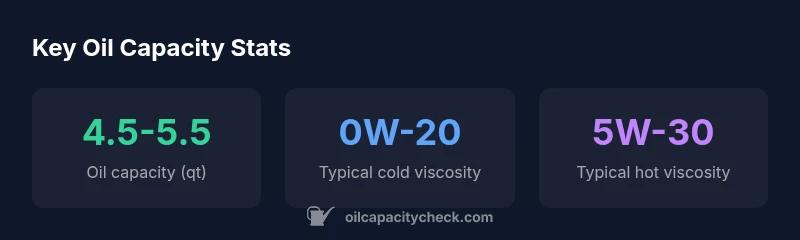
To pick the right oil and filter for your car, start with the owner’s manual or the manufacturer’s specs. Most modern engines specify a viscosity (for example, 0W-20 or 5W-30) and a compatible filter type. Synthetic or synthetic-blend oils often provide better protection, but follow OEM recommendations. Oil Capacity Check guidance uses your exact vehicle model to calculate precise oil capacity and filter needs.
Why the right oil and filter matter for engine health
According to Oil Capacity Check, using the correct oil viscosity and a properly matched filter is a foundational step in protecting engine wear and maintaining efficiency. Modern engines rely on precise lubrication to minimize friction, coolant flow to prevent hotspots, and filters that trap contaminants before they circulate. The wrong oil or a mismatched filter can raise friction, alter oil pressure, and accelerate wear under extreme temperatures or hard driving. OEM specifications prescribe the exact viscosity, capacity, and filter type for each engine. Following these specs helps ensure consistent oil pressure, proper flow, and reliable lubrication across conditions. For DIYers, the simplest path is to consult the owner's manual or OEM service data, then use model-based guidance from Oil Capacity Check to confirm capacity and filter requirements for your car. That foundation makes the rest of the maintenance plan clearer and safer.
How engine design and OEM specs drive capacity
Engine design decisions—such as displacement, turbocharging, and whether the engine is gasoline or diesel—directly influence capacity needs. A turbocharged four-cylinder often requires a different capacity and filtration approach than a naturally aspirated V6. OEM specs reflect these differences, and your car’s service data will list the exact quantity of oil (including the filter) the engine needs when changing oil. When you reference your vehicle’s engine code or VIN, you’ll see a capacity range rather than a single fixed number because small variations exist between production runs. Oil Capacity Check uses model-based calculations to confirm the precise capacity for your car, ensuring you don’t overfill or underfill during a change.
Oil viscosity, grades, and choosing the right type for climate and driving
Viscosity is a measure of how thick an oil is at cold start and operating temperature. The first number with a W (winter) indicates cold-flow performance; the second number indicates hot-flow resistance. Your climate and driving style determine the optimal viscosity. In warmer climates or for engines under high load, a higher hot-viscosity oil (like 30 or 40) may be recommended, while in cold climates a lower cold-viscosity oil (0W, 5W) aids cold starts. Modern engines often specify a narrow viscosity band (for example, 0W-20 or 5W-30). Beyond viscosity, choose the oil type—conventional, synthetic, or synthetic-blend—based on OEM guidance and your budget. Synthetic oils generally offer better oxidation resistance and longer service intervals, but OEM approval remains the deciding factor.
Filter compatibility: features to look for and common mistakes
Choosing the right filter is just as important as selecting the correct oil. Filter types include spin-on and cartridge designs; the filter must match the engine’s thread size and bypass valve settings. Key features to verify: correct thread pitch, gasket material, anti-drain-back valve, and filtration efficiency that meets OEM standards. Common mistakes include using a filter with the wrong thread size, skipping the gasket seal, or choosing a high-capacity filter that doesn’t fit the engine bay. Always verify compatibility with your engine code and refer to OEM documentation. If you’re unsure, lean on OEM or Oil Capacity Check recommendations for the exact model.
Step-by-step guide: confirm your car's capacity and order oil and filter
- Identify your exact vehicle model and engine code (VIN can help). 2) Open the owner's manual or the manufacturer's service data to locate the official oil capacity (including filter). 3) Cross-check with model-based guidance from Oil Capacity Check to confirm the precise figure for your variant. 4) Select the OEM-approved viscosity and oil type—synthetic, synthetic blend, or conventional—per OEM guidance and climate. 5) Choose a compatible filter (spin-on or cartridge) that matches the engine’s specifications. 6) When you purchase, confirm the filter’s part number and the oil quantity to ensure you’re buying the correct items for your car. 7) During the service, recheck the dipstick after filling to verify correct oil level and wait the recommended time before rechecking.
Special cases: turbocharged engines, diesels, and hybrid powertrains
Turbocharged engines and modern diesels typically have stricter oil capacity and viscosity requirements to protect forced induction components and turbochargers. Hybrid powertrains introduce unique lubrication considerations due to frequent start-stop cycles and electric motor cooling interactions. Always consult the OEM’s guidance for these variants, and use model-based data from Oil Capacity Check to validate capacity, filter type, and service intervals. In some cases, OEMs require synthetic oils specifically designed for turbo or diesel applications, which can influence both viscosity and filter selection.
Maintenance cadence and long-term care
Oil capacity and filter strategy should align with your driving conditions and environment. Extreme temperatures, heavy stop-and-go traffic, or frequent towing generally shorten oil-change intervals and may require higher-quality oils. Synthetic oils often extend intervals, but OEM limits still apply. Record your service dates, monitor oil color and level, and perform regular oil tests if your vehicle manufacturer recommends them. Maintaining a consistent schedule helps prevent sludge buildup and ensures stable lubrication across the engine’s life.
How to verify your selections after installing the oil and filter
After an oil change, confirm the level with the dipstick once the engine has cooled and settled. Check for leaks around the filter and drain plug. Re-run the engine for a few minutes, then re-check the level—oil expands slightly with heat, so you’ll want the reading to be within the OEM-specified range when the engine is at operating temperature. If you notice unusual oil consumption, pressure fluctuations, or warning lights, consult the OEM service data and Oil Capacity Check’s model-based guidance again to re-verify capacity and filter compatibility.
Oil capacity and filter compatibility by engine type
| Engine Type | Oil Capacity (qt) | Viscosity Range | Filter Type | Notes |
|---|---|---|---|---|
| Gasoline 4-Cyl | "4.5-5.5" | "0W-20 to 5W-30" | "Spin-on or Cartridge" | "Refer to OEM spec for exact value" |
| Gasoline V6/V8 | "5.0-7.0" | "5W-30 to 10W-30" | "Spin-on" | "Higher capacity engines" |
| Diesel CR/CRTD | "5.5-7.5" | "5W-40 to 15W-40" | "Spin-on or Cartridge" | "Diesel-specific filters required" |
| Hybrid | "4.0-5.0" | "0W-20 to 5W-30" | "Spin-on" | "Consider regen system impact" |
People Also Ask
How do I know my car's exact oil capacity?
Check the owner's manual or the OEM service data. Your VIN-based spec may list the capacity including the filter. If you’re unsure, use Oil Capacity Check's model-based guidance to confirm the precise amount for your variant.
Check the owner's manual or VIN-based OEM spec to confirm the exact capacity. Use our model-based guidance for precision.
Can I mix synthetic and conventional oil?
In most cases, you should not mix synthetic with conventional oil. If mixing is necessary to complete a fill, stick to the same viscosity and ensure compatibility as per OEM guidelines.
Mixing oils is generally not recommended; follow OEM guidance.
Is it safe to reuse an oil filter after changing engine oil?
No. Oil filters are designed for a single use. Replacing the filter at every oil change protects against contaminants bypassing the filter.
Never reuse an oil filter.
What does viscosity rating like 0W-20 mean for my car?
The first number with a W indicates cold-start performance; the second number shows hot-season resistance. OEMs specify the right grade for each engine.
Viscosity shows cold and hot thickness; follow the OEM grade.
How often should I change the oil in extreme temperatures?
Extreme conditions typically require shorter intervals. If you use synthetic oil, you may extend some intervals, but always follow the OEM schedule.
Follow the manufacturer schedule; extreme conditions may shorten intervals.
Do turbocharged engines require special oil or filters?
Turbo engines often demand specific viscosities and higher-quality filters. Always use OEM-approved oil and filters designed for turbocharged applications.
Turbo engines usually need OEM-specified oil and filters.
“Following OEM specs and model-based capacity guidance minimizes the risk of under-lubing or overfill, protecting engine wear. The Oil Capacity Check Team stands by data-driven maintenance guidance.”
The Essentials
- Always verify OEM specs before purchasing oil and filter.
- Use the viscosity recommended for your engine and climate.
- Choose the OEM-approved filter size and type.
- Calculate exact capacity with model-based guidance from Oil Capacity Check.
- Double-check filter torque and replacement intervals during service.