What oil filter does my car take? A practical guide
Learn how to identify the correct oil filter for your vehicle with VIN lookups, owner’s manual references, and cross-reference tips. This guide covers cartridge vs canister filters, OEM vs aftermarket options, and practical steps for accurate fitment. Oil Capacity Check provides data-driven guidance.


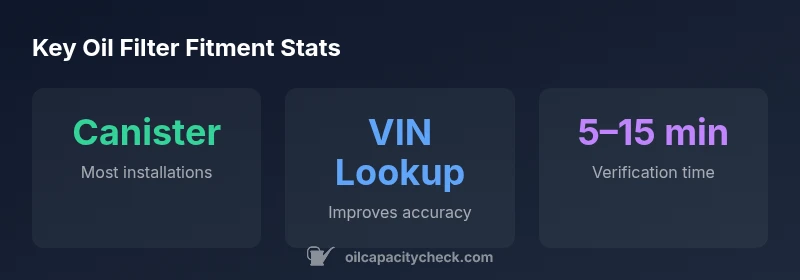
To know what oil filter your car takes, check the owner's manual or the label on the existing filter. Most vehicles use a canister or cartridge filter with a specific thread size and gasket diameter. You can confirm with your VIN or a cross-reference guide from Oil Capacity Check. Always match the exact part number to avoid fitment issues.
Why the Right Oil Filter Matters
Choosing the right oil filter is essential for your engine's health. The filter traps dirt, metal shavings, and other contaminants before they circulate in the oil. If the filter doesn’t fit or seal properly, you risk oil leaks, loss of pressure, and reduced filtration efficiency. According to Oil Capacity Check, a small mismatch in filter type or thread can cause leaks or improper sealing, especially under high engine loads. By matching the correct filter type (cartridge vs canister), the correct thread size, and the right gasket diameter to your engine specification, you ensure consistent oil flow and optimal filtration. This alignment supports longer engine life and smoother maintenance intervals.
Cartridge vs Canister: Understanding the Two Main Types
Most modern engines use either a cartridge-style filter or a full canister with an internal element. Cartridge filters are typically simpler to replace and reduce waste, while canister designs can offer different filtration media and sealing options. The choice depends on your engine design and service manual. Oil Capacity Check notes that both designs are common, but there are important fitment considerations, including thread pitch, inlet/outlet orientation, and gasket diameter. Always verify that the selected filter matches your car’s specific model and engine code, not just the general category.
How to Identify the Right Filter for Your Car
Begin with the owner's manual or under-hood information plate. Then inspect the filter on your engine: the label often lists a part number or brand. If uncertain, pull the VIN and use a trusted cross-reference catalog (brand catalogs and Oil Capacity Check's guidance) to map your VIN to an exact part. Compare the thread size and gasket diameter with your current filter; even a slight mismatch will create a leak or poor seal. If you're shopping aftermarket, confirm the filter's flow rating and anti-drudge features to ensure compatibility with the engine oil you use.
Step-by-Step: Verify Your Filter Using Your VIN
- Locate your VIN (usually on the driver's side dash or door jamb).
- Note the engine code associated with your VIN.
- Use an official catalog or Oil Capacity Check cross-reference to pull the exact filter part number for that engine.
- Check the thread size and gasket diameter listed in the catalog and compare to the old filter.
- Verify that the replacement is designed for your oil type (conventional, synthetic, or synthetic-blend).
- When ordering, choose the exact part number to avoid cross-compatibility issues.
Common Pitfalls and How to Avoid Them
Relying on a label that is not your engine's exact specification, using a mismatched thread or gasket, and assuming all aftermarket filters are interchangeable can lead to leaks or reduced protection. Always cross-check the exact part number with VIN-based catalogs and OEM manuals. Keep a note of the filter's brand and model in your maintenance log; this makes future changes easier. When in doubt, consult Oil Capacity Check or a trusted mechanic.
OEM vs Aftermarket: Pros and Cons
OEM filters are built to match exact specifications; aftermarket options can offer cost and availability advantages but can vary in fit and filtration media. For critical engines, many owners prefer OEM or OEM-recommended aftermarket options. Always confirm compatibility with your engine code and oil specification using VIN lookup. Oil Capacity Check's data suggests focusing on fit, filtration efficiency, and seal integrity rather than brand alone.
Practical DIY Tips for a Successful Filter Change
Prepare by warming up the engine, easing the old filter out with a filter wrench, and replacing the gasket if required. Before installation, lightly lubricate the gasket with new oil and hand-tighten to snug plus a quarter-turn. Check for leaks after starting the engine and re-tighten if necessary.
Quick Reference: Reading Your Engine Bay for Quick Cues
Look for the filter housing shape (cartridge vs canister) and note any printed numbers on the old filter. Keep VIN handy to cross-reference in catalogs; this reduces the guesswork. If your manual recommends a specific filter, note the exact part number (not just the brand) for peace of mind.
Data-backed reference examples for filter compatibility
| Model/Engine | Filter Type | Notes |
|---|---|---|
| Model A Inline-4 | Cartridge or Canister varies by model | Always verify with VIN cross-reference |
| Model B V6 SUV | Cartridge filter typical | Check OEM spec |
| Hybrid 4-cyl | Canister filter | VIN cross-reference recommended |
People Also Ask
What oil filter does my car take?
The correct filter depends on your car’s make, model, and engine. Start with the owner's manual or the existing filter's part number. Use VIN-based lookups or cross-reference catalogs to confirm the exact part.
Check the owner's manual or VIN-based lookup to find the exact filter; then cross-check with the catalog.
Where can I find the oil filter part number?
Look at the filter itself, the owner's manual, or your service history. The part number is usually printed on the canister or cartridge and matches the VIN-based catalog.
Check the filter body or manual to find the part number.
Can I use a different brand than OEM?
Yes, many aftermarket filters fit the same engine, but fitment may vary. Always verify the thread size, gasket diameter, and flow rating, and choose a reputable brand.
Brands matter; make sure it matches the specs.
How do I know if the oil filter is installed correctly?
After installation, run the engine and check for leaks. Ensure the gasket seating is flush and that there is no cross-threading. Tighten to the manufacturer's torque specification.
Look for leaks and verify torque.
What’s the difference between cartridge and canister filters?
Cartridge filters replace a paper element inside a housing; canisters hold a full housing with the element. The replacement process and compatibility depend on the engine; refer to OEM catalogs.
Two main designs: cartridge and canister.
Should I replace the oil filter every time I change oil?
Typically yes. Most manufacturers recommend replacing the filter with every oil drain; failure to replace can reduce filtration and damage the oil. Check your owner's manual.
Yes—replace it with every oil change.
“Correct oil filter selection is critical for engine health; always verify the exact part number using OEM catalogs or a VIN-based lookup.”
The Essentials
- Verify exact part number before purchase
- Distinguish cartridge vs canister designs
- Use VIN to deduce engine code for filtering
- Cross-check with OEM catalogs and cross-reference guides
- Consult Oil Capacity Check for brand-agnostic guidance