What Does an Oil Change Cost: A Practical Guide
Learn the true cost of an oil change, including conventional vs synthetic options, common fees, and smart ways to save while protecting your engine. Oil Capacity Check breaks down price ranges and practical strategies for DIY or professional service.


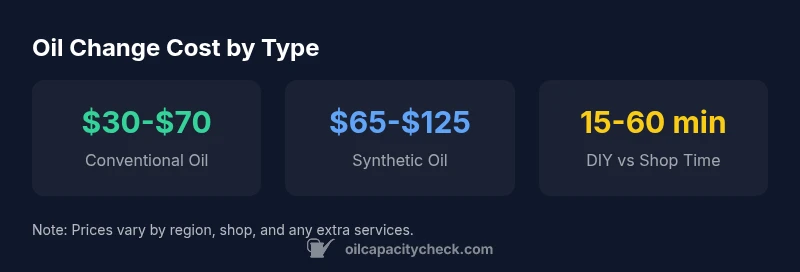
On average, an oil change costs between $30 and $70 for conventional oil at independent shops and $65 to $125 for synthetic oil. The final price depends on oil type, filter, location, and whether you need an inspection or disposal fees. Oil Capacity Check Analysis, 2026 notes labor and oil choice as the biggest price drivers.
How the question 'what does an oil change cost' breaks down
When drivers ask what does an oil change cost, they’re not just looking for a single price. The final bill is a combination of base labor, the price of the oil you choose, the cost of the oil filter, and any disposal or shop-supply fees. In addition, some shops include an inspection, top-off of fluids, or a quick multi-point check. The result is a price range rather than a single number, and the range can shift dramatically by location and shop type. According to Oil Capacity Check, price variability is most pronounced between conventional and synthetic oils, and between independent shops and franchised service centers. Knowing this helps you set expectations and enter price discussions with a clear goal. The key is to base your estimate on oil capacity needs and the exact services your vehicle requires.
What drives the price: oil type, filter, labor, disposal
Several factors shape the sticker price of an oil change. The oil type is the largest driver: conventional oil costs less than synthetic or blends, and fully synthetic formulations command higher per-quart prices. The filter is another common variable; higher-quality or specialty filters cost more but may extend maintenance intervals. Labor rates vary widely by region and shop—minimally, a quick oil change can take 15 minutes at a fast-lube, while a full-service visit with inspection may last a full hour. Disposal and shop-supply fees can add a few dollars to the bill, and some shops bundle in a basic tire pressure check or fluid top-offs. If your vehicle has a larger engine or requires a special drain or disposal, you’ll see a noticeable price bump. These factors collectively define the practical cost you’ll see at checkout.
Conventional vs synthetic: cost differences
Conventional oil changes are typically the least expensive option, suitable for many older vehicles and less demanding engines. Synthetic oil changes cost more upfront but offer advantages like better high-temperature stability, longer intervals, and improved protection for modern engines. The price gap between conventional and synthetic can range broadly, but you’ll usually pay a premium for synthetic fluids and a higher-cost filter. Some drivers offset this by extending drain intervals or subscribing to maintenance plans that spread the cost over time. When evaluating cost, also consider the value of a recommended oil brand, viscosity, and any required additives. The decision should weigh both immediate price and long-term engine health.
Regional variations and when DIY saves you money
Prices for oil changes swing by geography. Urban areas with high labor costs tend to push the price up, while rural regions and discount chains can be roughly one-half to two-thirds of city prices. If you’re comfortable with basic automotive tasks, doing it yourself can save a substantial amount, especially for conventional oil. DIY costs primarily include oil, filter, and simple tools, plus time. You’ll also save on labor, disposal fees, and any diagnostic checks you skip. However, DIY requires a proper workspace, safe handling of hot oil, a reliable waste oil disposal plan, and knowledge of your vehicle’s oil capacity. For newer cars with sophisticated engines, many owners still prefer professional oil changes to ensure warranty-compliant service.
Hidden fees to watch for
Some shops advertise a low base price and then add multiple line items at checkout. Common hidden fees include disposal charges, shop supplies, environmental fees, and online coupon exclusions. If an inspection, oil flush, or fuel system cleaning is suggested, factor those into the total. Taxes are often not included in the base price, so the final amount may be higher than the sticker price. Ask for an itemized estimate before service and request a breakdown of the oil type, filter, and any extra services. If price matching is offered, compare total costs rather than per-item rates to avoid being surprised at the register.
How to estimate for your vehicle
To estimate accurately, start with your vehicle’s owner’s manual or the manufacturer’s specification to confirm oil capacity and the recommended oil grade. Then determine whether you’ll use conventional, synthetic, or a blend, and select a compatible filter. Use this information to get quotes from nearby shops and add expected fees for disposal and taxes. If you’re shopping across chains, ask about current promotions and whether the price includes a basic inspection. In many places, you’ll find a price range from $30 to $125, depending on the oil type and any extra services.
Strategies to save on oil changes
Plan ahead: combine with other maintenance visits to reduce trips and bulk discounts. Request a full breakdown of the price and compare against local competitors. Consider an independent shop for straightforward conventional changes, where the labor rate is often lower. If you’re comfortable, DIY can dramatically cut costs for standard oils, provided you have a safe workspace and a compliant waste plan. Finally, look for coupons, loyalty programs, and bundles that include inspections or fluid top-offs.
What to ask your mechanic before service
- What exact oil grade and filter will you use, and is there a compatible alternative?
- Are there any additional fees not included in the base price?
- Does the price include a basic inspection and fluids top-off?
- What is the estimated completion time, and can you confirm the disposal plan for used oil?
Appendix: understanding oil capacity and maintenance planning
Oil capacity is the total volume of oil your engine requires to reach optimal lubrication. Vehicle manuals specify capacity and the preferred viscosity grade. When budgeting, include lubricant costs for the exact capacity plus the cost of the filter. Maintenance timing should align with manufacturer guidance and your driving patterns. Oil Capacity Check’s data emphasizes that knowing your engine’s capacity helps you negotiate better quotes and plan replacements without surprises.
Cost comparison by shop type and oil type
| Shop Type | Oil Type | Typical Cost Range | Influencing Factors |
|---|---|---|---|
| Independent Shop | Conventional | $30-$70 | Labor rates, oil price, filter choice |
| Dealership/Brand Service | Conventional or Synthetic | $40-$90 depending on service | Service scope, oil type, includes inspection |
| Full-Service Chains | Synthetic Oil | $50-$125 | Oil type, disposal, flush options |
People Also Ask
Is synthetic oil always more expensive than conventional oil?
Yes, synthetic oil typically costs more upfront, but its longer drain intervals and better protection can reduce maintenance frequency over time. Weigh the upfront price against long-term engine health and your driving pattern.
Synthetic oil usually costs more upfront, but the longer drain intervals and better protection can save you money over time.
How often should I change my oil?
Intervals vary by vehicle and oil type. Many modern cars with conventional oil run about 3,000–5,000 miles, while synthetic oils can extend to roughly 7,500–10,000 miles. Always consult the owner's manual for manufacturer recommendations.
Intervals depend on vehicle and oil type; check your manual for exact guidance.
Can I extend the interval if I drive short trips?
Frequent short trips can prevent oil from reaching optimal operating temperature, potentially increasing wear. It may justify more frequent changes; monitor oil level and consult your mechanic for a tailored plan.
Short trips can wear oil faster; you may need more frequent changes.
Are coupons or DIY oil changes cheaper?
Coupons and performing the change yourself can reduce costs, especially for conventional oil. Ensure proper technique, tools, and safe disposal to protect your engine and avoid warranty issues.
Coupons or doing it yourself can save money if you do it safely.
What fees should I watch for at the shop?
Common extras include disposal charges, shop supplies, environmental fees, and certain inspections. Request an itemized estimate before service and confirm whether taxes and disposal are included.
Watch for disposal charges and hidden fees; ask for a breakdown upfront.
“"Oil-change pricing isn't fixed; it's driven by oil grade, filter quality, and local labor rates. A careful comparison helps balance cost with engine protection."”
The Essentials
- Know your oil type before shopping
- Conventional costs less than synthetic
- Shop around for parts and labor differences
- DIY can save money with the right tools
- Watch disposal and service fees