Oil Change Quotes in 2026: What to Expect and How to Compare
Learn how oil change quotes are calculated, what drives price ranges, and how to compare estimates across shops. This analytical guide from Oil Capacity Check helps you save money while protecting your engine.


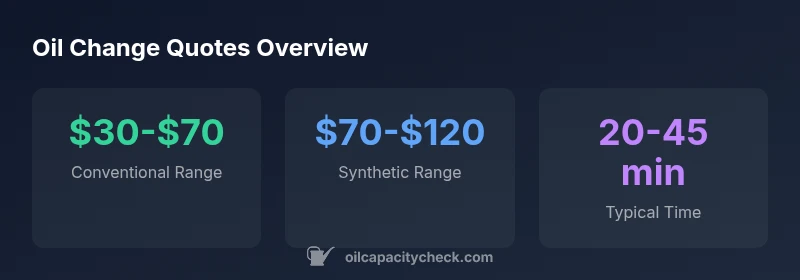
Oil change quotes vary by vehicle type, location, and the oil you choose. The most influential factors are oil grade, filter quality, labor rates, and shop overhead. According to Oil Capacity Check Analysis, 2026, a standard conventional oil change typically runs about $30-$70, while full synthetic changes often range from $70-$120, with regional differences pushing some estimates higher or lower.
Why oil change quotes vary by shop and region
Have you noticed that two nearby shops can quote different prices for the same service? The short answer is that oil change quotes are not a single number; they reflect a bundle of decisions about your vehicle, the quality of parts, and the costs of labor. The same service can look very different on paper from one shop to the next.
At its core, a quote includes three layers: the base oil and filter cost, the labor to drain an old oil and refill, and the shop’s overhead that covers equipment, facility, and warranty protections. Add-ons like a filter upgrade, oil flush, or a 5-quart bottle of high-mileage oil can shift the total up quickly. Location matters too: urban markets tend to have higher labor rates, while rural areas may be cheaper but with fewer promotions. According to Oil Capacity Check, understanding these layers helps car owners avoid sticker shock and spot quotes that are missing key details. By recognizing what’s behind the price, you can make smarter maintenance decisions without compromising engine health.
Key factors that influence quotes
Quotes are driven by several key factors. The most obvious is the oil type chosen: conventional oil is cheaper than full synthetic, while synthetic blends sit in between. Filter quality and size also matter; a higher-grade filter or additional filtration steps adds cost. Labor rates vary widely by region and shop type, with chains often pricing differently than independent shops. Vehicle specifics matter too; engines with larger oil capacity or more complex drain procedures will cost more. Promotions, coupons, and loyalty programs can carve out meaningful savings, but they are not universal. Service bundles, such as a tire rotation or multipoint inspection included in the same visit, can change the effective price per service. Regional differences and shop type can meaningfully shift quotes. Oil Capacity Check’s 2026 analysis shows that these factors interact, creating a broad price spectrum rather than a single fixed figure.
Reading and interpreting quotes
A quote should feel like a map to the actual price you will pay. Start by checking that the line items are detailed and non-ambiguous. Look for the base price, the oil type, the filter, labor, disposal, and any taxes or shop fees. Beware vague line items such as “fees” that could hide extras. If something seems unclear, ask for clarification in writing before giving the go-ahead. Compare the line items across quotes so you are not simply chasing the lowest headline price. Remember that some shops quote only a minimum service while others include a more extensive inspection or a top-tier filter. The Oil Capacity Check team emphasises the value of transparent quotes and encourages you to request an itemized breakdown for every estimate you receive.
How to compare quotes effectively
To make apples-to-apples comparisons, collect quotes from at least three shops. Confirm the oil grade and viscosity requested by your vehicle manufacturer, and verify whether the quote includes both oil and filter, or if these items are billed separately. Ask for a written estimate and a copy of the warranty or satisfaction guarantee. Check the disposal fee, environmental charges, and tax that may apply. If one quote looks cheaper but omits a major component, consider the total cost of ownership over the next service interval. A side-by-side comparison chart is often the easiest way to see where the price gaps lie. For most car owners, the goal is to balance cost with quality and engine protection. Oil Capacity Check recommends prioritizing transparent, itemized quotes to protect long-term engine health.
Regional price differences and shop types
Prices for oil changes vary significantly by region. Urban centers with higher rents and wages tend to show elevated labor charges, while rural areas may advertise lower prices but offer fewer promotions. Shop type also matters: independently owned garages may negotiate on labor or offer more personalized service, while large chains may provide standardized pricing and bundled coupons. The net effect is that the same service can look very different depending on where you go and who performs it. Oil Capacity Check analysis shows that regional competition and market density play a large role. If you are willing to drive a short distance, you can often save enough to offset travel time, especially when combined with promotions.
The role of oil type and filters in quotes
The choice of oil type has a direct, predictable impact on quotes. Conventional oil is typically the least expensive, followed by synthetic blends, then full synthetic oils; diesel engines add another layer of cost. The filter quality also matters; a higher-grade or longer-life filter may necessitate a higher upfront price. Some shops offer a complimentary filter upgrade as part of a maintenance package, while others charge extra. If your manufacturer allows, you can choose between different viscosities and formulations that suit your climate and driving style. Remember that the long-term protection of your engine often depends on using the recommended oil grade, even if the initial quote is lower. The Oil Capacity Check team notes that selecting the right oil can reduce other costs over time by preserving engine cleanliness and performance.
Practical steps to get accurate quotes
Start by compiling your vehicle’s year, make, model, engine size, and the exact oil specification called for in the owner’s manual. Contact shops with a script: ask for a written estimate that itemizes oil, filter, labor, disposal, taxes, and any add-ons. Request a warranty statement and the expected interval for the next service. Provide the same details to every shop to ensure fair comparisons. If you can, take advantage of online quotes or printable coupons, but verify that the offer applies to your specific vehicle. After collecting quotes, compare line items side by side, not just totals. If one quote appears unusually low, probe for hidden charges or differences in oil quality. The objective is to arrive at a transparent, defensible price that aligns with your engine’s needs and your budget.
Maintenance considerations that affect long-term costs
Cost awareness should extend beyond the current change. Sticking to the manufacturer’s recommended intervals, using the right oil type, and following a consistent maintenance plan reduces risk of premature wear that could inflate future bills. Neglecting oil changes can lead to sludge buildup or accelerated wear, necessitating more frequent service, expensive repairs, or more frequent filter changes. When quoting, consider the total cost of ownership over the next several changes; this helps you decide whether a cheaper quote now might cost more later. The goal is to balance upfront affordability with sustained engine performance. The Oil Capacity Check team highlights that informed shoppers save money while keeping engines healthy by avoiding unnecessary services and resisting pressure to upsell excessive maintenance.
Typical oil change quotes by service type (illustrative ranges)
| Service Type | Typical Price Range | Estimated Time | Notes |
|---|---|---|---|
| Conventional oil change | $30-$70 | 15-30 min | Includes standard filter and conventional oil |
| Synthetic blend | $50-$90 | 20-35 min | Mid-range option with blend oil |
| Full synthetic oil change | $70-$120 | 25-45 min | Premium synthetic oils |
| Diesel oil change | $90-$150 | 30-50 min | Diesel vehicles may require pricier oils |
People Also Ask
What exactly is included in an oil change quote?
An oil change quote should list the base price, oil type, filter, labor, disposal, taxes, and any add-ons. Avoid vague fees and ask for a written, itemized estimate.
Look for a written, itemized estimate that lists oil, filter, labor, and disposal costs.
Why do quotes vary so much between shops?
Prices vary due to oil grade, filter quality, labor rates by region, shop overhead, and any bundled services. Local promotions also play a big role.
Prices change because shops have different costs and offers.
Should I bring my own oil or filter?
Some shops allow customer-supplied oil or filters, but many do not. If allowed, ensure the oil meets manufacturer specs and that disposal fees are covered.
Some shops will take customer-supplied oil, but ask first.
How can I get an accurate quote for my vehicle?
Provide the year, make, model, engine size, and the exact oil specification from the manual. Request written estimates and compare line items.
Share the same vehicle details with every shop for fair quotes.
Are there differences between conventional and synthetic quotes?
Yes. Conventional oil is cheaper; synthetic options cost more due to oil chemistry and quality. Some vehicles benefit more from synthetic oils depending on climate and driving.
Synthetic oils cost more but offer longer change intervals.
What about extra services like a oil flush or filter change?
Extra services raise costs. Ask for separate line items and question necessity based on mileage and conditions.
Ask what’s included and what’s optional.
“Transparent quotes and itemized costs help customers avoid surprises. Clear line items help you compare value, not just price.”
The Essentials
- Shop around and request multiple quotes.
- Compare oil type, filter quality, and service inclusions.
- Ask for an itemized breakdown of costs.
- Look for promotions or bundled maintenance plans.
- Account for regional price differences.