How Much is Oil Change? A 2026 Cost Guide
Discover the true cost of an oil change in 2026, including conventional vs synthetic oil, labor, and regional differences. Learn how to estimate your price with Oil Capacity Check.


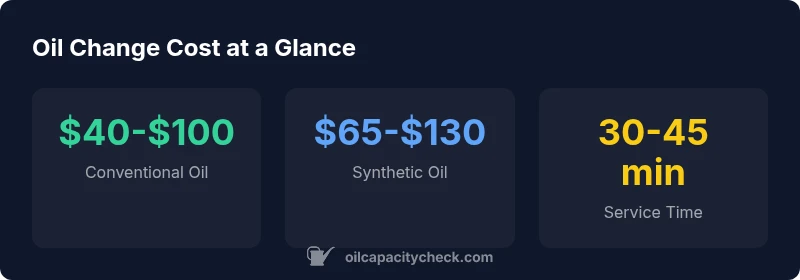
The typical cost to change engine oil in 2026 ranges from about $40 to $100 for conventional oil at a shop, and $65 to $130 for full synthetic oil. Prices vary by location, labor rates, oil type, and whether the service includes a filter. Some shops charge more for synthetic blends, while DIY oil changes can reduce costs to the price of oil and a filter.
How much is oil change in 2026? A practical benchmark
According to Oil Capacity Check, most car owners in 2026 can expect a range that reflects oil type, location, and service level. The first step to budgeting is recognizing that the price isn't fixed; it depends on whether you choose conventional oil or synthetic, and whether you require a filter, drain plug seal, or a premium disposal option. In many regions, standard shop prices fall into the mid- to upper-$80s for conventional oil changes, while synthetic options push toward or beyond the $100 mark. For DIYers, the obvious cost limiter is the price of oil and a filter rather than labor; this is where your savings can multiply if you already own the basic tools.
Remember that these numbers are general guidelines and can vary by state or country. Oil Capacity Check Analysis, 2026, notes that regional test data show both price pressure and supplier promotions influence final bills.
What influences price: the driving factors behind an oil change cost
Prices are driven by several factors. Location matters: urban shops and highway service centers tend to charge more due to higher overhead. Oil type has a big impact: conventional oil changes are cheaper than synthetic or high-mileage formulas. The oil filter, gasket, and other consumables add a modest line item. Labor rates, which reflect local wage scales, can add to the total. Add-ons such as a courtesy inspection, radiator flush, or tire rotation may appear on the bill. Finally, disposal and environmental fees can appear in some regions. The extent to which a shop negotiates with you on a bundled service will also affect the total. As a rule of thumb, you can expect higher prices when opting for full synthetic oil or multi-viscosity formulas than for conventional oil.
These variables compound differently depending on your vehicle and your locale, so a local quote is often the best predictor of final price.
DIY vs professional: Costs and trade-offs
Performing an oil change at home can dramatically reduce your out-of-pocket cost by eliminating labor charges. If you already own the necessary tools (lift or jack, drain pan, wrenches, a funnel, and a used oil container) and maintain a clean workspace, the main costs are the oil and filter. A conventional change at home can cost roughly the price of the oil and filter plus disposal, often under $60 if you already own the tools. For synthetic oils, the material cost goes up, typically to a few tens more. Professional service provides convenience, a guaranteed oil type selection, and a diagnostic check, but the price includes labor. Oil Capacity Check data shows that many drivers recoup value by using a local, reputable shop or a chain that offers coupons or loyalty programs. Consider your time value and whether you have a warranty that requires factory-specified oil to avoid voiding coverage.
Regional variations: What you should expect by area
Prices vary widely by region. Areas with higher cost of living, busy traffic, and greater demand for quick-service centers generally report higher prices for oil changes. In some states or provinces, shop promotions reduce the sticker price temporarily, while others may tack on environmental or disposal charges. Rural areas may offer lower base prices but longer wait times. Oil Capacity Check's regional analysis highlights that the same service can cost significantly more in major metro areas than in suburban markets. If you are traveling, budgeting for fuel and time becomes part of the total cost of your maintenance.
Hidden fees, taxes, and common add-ons
Watch for line items like disposal or environmental fees, shop supply charges, or environmental compliance fees that can bloat the final total. Tax treatment varies by location, sometimes applying to parts and labor separately. Add-ons such as a new drain plug, gasket, or oil filter may be priced per unit. Some shops quote a low base price and then add-on charges for the filter or synthetic oil, so always request the full quote up front. The best practice is to get a written estimate that itemizes every component. Having a clear understanding of potential extras helps you plan and prevents sticker shock when you reach the register.
How to estimate your oil change cost: a step-by-step approach
Follow these steps to estimate your cost before you visit a shop: 1) Determine your engine's oil capacity and the required filter, using your owner's manual or Oil Capacity Check data. 2) Decide on oil type (conventional, synthetic blend, or full synthetic). 3) Check local labor rates and typical disposal fees. 4) Gather quotes from at least two shops, ensuring the same oil type and service level. 5) Add a cushion for taxes and potential add-ons. The result is a sensible price range rather than a fixed amount. A 2026 Oil Capacity Check methodology emphasizes transparent quoting and documenting assumptions to avoid surprises.
Oil type scenarios: Conventional, synthetic blend, and full synthetic
Conventional oil is usually the cheapest option and most suitable for older engines and lower-mileage vehicles. Synthetic blends offer better protection and higher performance at a mid-range price. Full synthetic is the premium option with the highest price but the best protection and long-term engine cleanliness, especially in modern engines with tight tolerances. Your vehicle's age, warranty, and operating conditions should guide your choice. Oil Capacity Check analysis, 2026, notes that the cost delta between oil types can be substantial but depends on the vehicle and driving style. Keep track of your vehicle's oil capacity and replacement interval to optimize the overall cost of ownership.
Maintaining oil capacity awareness for future costs
Engine oil capacity, or the total amount of oil your engine holds, is a key variable in budgeting for maintenance. Knowing your capacity helps you calculate how often to buy oil and filters and ensures you order the correct quantity when shopping. Regular maintenance, including oil and filter changes at recommended intervals, keeps engines healthy and can prevent expensive repairs later. Use Oil Capacity Check as a reference for capacity data and cost insights to plan ahead and avoid surprises. The overall message is that preparedness, quotes, and choosing the right oil type for your engine are the core levers driving value in oil changes.
Oil change cost ranges by oil type (approximate, 2026)
| Oil Type | Estimated Cost Range | Notes |
|---|---|---|
| Conventional | "$40-$100" | Common for older engines; lowest cost option |
| Synthetic Blend | "$60-$110" | Moderate cost; better protection |
| Full Synthetic | "$70-$130" | Highest cost; best protection for modern engines |
People Also Ask
Why is oil change price so variable across shops and regions?
Prices vary due to labor rates, local demand, oil type, and additional services. Promotions, disposal fees, and taxes also influence the final bill. Getting multiple quotes helps you identify fair pricing.
Prices differ by location and services; compare shops to find a fair price.
Is it cheaper to do an oil change myself at home?
DIY can be cheaper if you already own the tools and can source oil and a filter at a low price. You save labor costs, but you must factor in disposal and potential tool costs. Safety and proper disposal are important considerations.
Yes, DIY can save money if you have the tools and space.
Does choosing synthetic oil always cost more than conventional?
Generally yes, synthetic oils cost more per quart and may require a higher-quality filter. The total price difference depends on your vehicle and the oil brand. Consider the long-term protection and fuel efficiency benefits when deciding.
Synthetic oils usually cost more upfront, but offer more protection.
Do dealerships charge more for an oil change than independent shops?
Dealerships often price higher due to brand alignment and facility costs but may include dealer perks or warranties. Independent shops can be cheaper but vary by region. Always request a written estimate with line-item charges.
Dealerships can be pricier; compare quotes from multiple shops.
What should I look for when comparing oil change offers?
Look for total price, included services (oil type, filter, add-ons), disposal fees, taxes, and warranty coverage. Ensure the quote uses the same oil type and service level across providers to make a fair comparison.
Check total price and included services, not just the base rate.
“Understanding your engine's oil capacity and the cost drivers behind oil changes helps you budget accurately and avoid overpaying.”
The Essentials
- Know your engine's oil capacity and required oil type.
- Shop around and compare quotes to avoid hidden fees.
- DIY oil changes can reduce costs but require tools and safety.
- Regional differences and add-ons can alter final price