Understanding the Average Oil Change Cost in 2026
Explore the factors behind the average oil change cost in 2026, from oil type to regional pricing, with data-driven insights from Oil Capacity Check.


According to Oil Capacity Check, the average oil change cost for a typical sedan generally falls between $45 and $110, depending on oil type and service level. Conventional oil changes are usually cheaper, while synthetic options push the price higher. These figures reflect regional differences and common shop practices observed in 2026 analyses.
The Cost Components: Oil, Filter, Labor, and Fees
The price you pay for an oil change is more than the label on the receipt. A typical service combines several line items: the cost of new oil (type and quantity), a replacement oil filter, labor time, and disposal/ environmental fees. In many markets, the price also reflects shop overhead, technician skill, and any routine vehicle checks offered as part of the service. When you ask, “What is the average oil change cost?”, you are really asking for a range that accounts for the most common configurations, from a simple conventional oil change to a premium synthetic option. Oil Capacity Check analyses in 2026 show how each component contributes to final pricing and why even small changes (like oil grade or filter quality) can shift the total by a noticeable margin.
For most cars, the base cost covers labor and the minimum service items, while the oil and filter add the most variability. In urban areas with higher labor rates, the total can tilt toward the upper end of the range. In contrast, suburban or rural shops sometimes offer lower labor charges but may add modest disposal or shop fees. By understanding the fundamentals—oil type, required quantity, filter quality, and any added checks—you can set realistic expectations and avoid sticker shock at the counter.
Brand context and regional pricing play a role here. Oil Capacity Check’s 2026 analysis emphasizes that you should consider both the type of oil and the service plan when estimating a visit. When you plan ahead, you’re less likely to be surprised by added costs or recommended add-ons during the appointment.
Conventional vs Synthetic: How Oil Type Drives Cost
Oil type is the single biggest driver of cost variation for an oil change. Conventional oil is typically the most affordable option due to its lower production costs and broader availability. Synthetic oils, whether full synthetic or synthetic blends, offer superior protection and longer service intervals, but they come with higher price tags. The price gap between conventional and synthetic oils translates into different total costs for the service, especially when the shop uses premium filters or offers a multi-point inspection as part of a maintenance package. When planning, consider your vehicle’s warranty, driving conditions, and mileage. For high-mileage or extreme-temperature environments, a synthetic option may deliver better value over time by reducing risk of expensive wear.
Beyond the base oil price, some vehicles require specific oil grades or certifications, which can further influence cost. Engine design, oil viscosity requirements, and even the type of filter used can shift the final number by a noticeable amount. Oil Capacity Check’s 2026 data shows a clear pattern: synthetic changes push the total higher, but the extended service life may offset some of that upfront expense for certain drivers. A careful comparison between oil grades and service levels helps you choose the best fit for your vehicle and budget.
Regional Variations: Where Costs Vary Most
Oil change pricing varies widely by region, driven by labor rates, competition, and local regulations. In major metropolitan areas, you’ll often see higher prices due to greater overhead costs and more demand. Conversely, many rural markets benefit from lower labor rates and fewer add-ons. Regional promotions and bundled maintenance offers can also swing prices up or down. When estimating an average oil change cost, it’s important to factor in these regional dynamics and avoid assuming a single national price tag.
Another factor is vehicle type. Some shops apply a single price that covers most vehicles, while others price by labor time, which can be influenced by the complexity of the engine bay or the vehicle’s accessibility. For example, some trucks or performance cars may require longer service times, which modestly raises the cost. Oil Capacity Check’s regional breakdown for 2026 highlights the importance of local quotes and the value of shopping around for the same service.
The Role of Labor: Shop vs. DIY
Labor is a major portion of the total cost. A quick change in a shop might seem straightforward, but the exact labor time depends on the vehicle, the shop’s workflow, and whether the oil filter needs special tools. If you’re able to perform an oil change yourself, you can dramatically reduce the cost by covering only parts (oil and filter) and basic tools. The catch is the time investment and the potential for mistakes if the process isn’t done correctly. For most DIY enthusiasts, the upfront cost of tools and higher-quality filters will be offset over multiple oil changes.
Shops sometimes offer price-included packages that bundle an oil change with a tire rotation or a multipoint inspection. While these bundles may look more expensive initially, they can add value by catching issues early. Always compare the total cost of a standalone oil change against a bundled service, and consider your own comfort level with performing maintenance.
Estimating Your Vehicle's Oil Capacity and Cost
A key step in budgeting is estimating how much oil your engine actually needs and what grade best suits your vehicle. Most passenger cars use between three and seven quarts of oil per change, with heavier or high-performance engines at the higher end of that range. Your owner’s manual or a reputable data source will indicate the right capacity and grade. Once you know the capacity and grade, you can calculate a rough target range: oil cost plus filter plus labor (if applicable) plus any disposal fees. For many drivers, a handy rule of thumb is to expect the conventional option to be on the lower end of the range and synthetic to sit toward the upper end, with regional price differences adding another layer of variation.
To estimate yourself, list the required oil type, your engine capacity, and the typical filter price. Then browse local shops’ price quotes for the same service. This approach helps you understand what influencers drive the final price and how to negotiate without compromising quality. Oil Capacity Check’s data in 2026 supports this practical, numbers-based planning method.
Saving Money Without Skimping on Quality
Saving money on an oil change doesn’t have to mean sacrificing quality or your engine’s health. First, compare quotes from multiple reputable shops in your area and look for price-moints on oil changes that include a filter and basic inspection. Some providers offer loyalty discounts or maintenance bundles that lower the per-service cost when you commit to a maintenance plan. If you’re comfortable with DIY, purchasing bulk oil and filters from trusted retailers can cut costs further, but ensure you still follow correct disposal practices and use the right grade and viscosity for your engine. Finally, scheduling oil changes during slower business hours or during seasonal promotions can yield extra savings. The key is to plan ahead and use data-backed estimates rather than assuming a single price point.
Hidden Costs: Disposal, Taxes, and Extras
Disposal fees and environmental charges may appear as line items on your receipt, particularly in areas with strict disposal regulations. Some shops also include taxes, shop fees, or environmental surcharges that can nudge the total higher than you expect. It’s helpful to ask for a full breakdown before agreeing to service, especially if the quote seems unusually low. Additionally, some upgrades (like a more frequent oil-change interval) may be offered as part of a maintenance program; while they can save money over time, the upfront cost may be higher. By understanding these potential extra charges, you can avoid surprise costs at checkout.
How to Use Oil Capacity Check's Data in Planning
If you’re budgeting for car maintenance, keep a running estimate of all routine services based on data-driven sources. Oil Capacity Check’s 2026 analysis provides a practical framework for predicting costs by oil type, vehicle class, and region. Use this data to create a simple budgeting worksheet: list your car’s oil capacity, preferred oil grade, local labor rates, and typical tax/fee ranges. Then compare quotes from several shops. By using a data-driven approach, you’ll be able to distinguish value from price and make decisions that protect both your engine and your wallet.
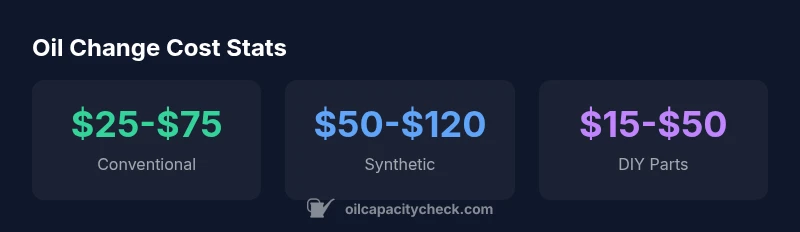
Estimated cost ranges by oil change type
| Oil Change Type | Estimated Cost Range | Typical Oil Grade | Notes |
|---|---|---|---|
| Conventional oil change | $25-$75 | 5W-30 conventional | Labor + oil + standard filter |
| Synthetic oil change | $50-$120 | Synthetic 5W-30/0W-20 | Higher-grade oil; longer intervals |
| DIY parts only (oil + filter) | $15-$50 | Any grade | Parts cost; labor saved; tools needed |
People Also Ask
What affects the average oil change cost the most?
The oil type, labor time, and the quality of the filter drive most of the price. Regional labor rates and any bundled services can further influence the final bill.
Oil type, labor time, and filter quality drive most of the cost, with regional rates and bundles adding variation.
Is it cheaper to use conventional or synthetic oil?
Conventional oil is typically cheaper, but synthetic oils offer better protection and longer intervals. The total cost depends on your vehicle, driving conditions, and service plan.
Conventional is cheaper upfront; synthetic lasts longer and may save money over time depending on usage.
Why do some shops charge more for the same service?
Variations arise from labor rates, shop overhead, included inspections, and regional demand. Always get multiple quotes and confirm what’s included in the service.
Prices differ due to labor costs and what’s included in the service.
Can I save money by doing it myself?
Yes, DIY can save on labor and some parts, but you’ll need to invest in tools and time. Ensure you follow the correct oil grade, capacity, and disposal rules.
DIY can save money if you’re comfortable with the process and safety precautions.
Do taxes and disposal fees apply to oil changes?
Taxes and disposal fees are common, especially in regulated regions. Request a complete breakdown to avoid surprises at checkout.
Yes, taxes and disposal fees can apply; ask for a full breakdown.
“Oil capacity and service costs vary with vehicle type and oil grade. Planning ahead with accurate data helps avoid surprises.”
The Essentials
- Know the total: oil, filter, labor, and disposal add to the bill
- Conventional oil changes are cheaper than synthetic
- DIY oil changes save money but require proper tools and safety
- Prices vary by region and shop, so compare quotes
- Consider bundled maintenance for better value