Oil Change Intervals by Kilometers: A Practical Guide
Discover how many kilometers you should drive before an oil change. This guide explains synthetic vs conventional oils, oil-life monitors, driving conditions, and practical steps to set your interval.


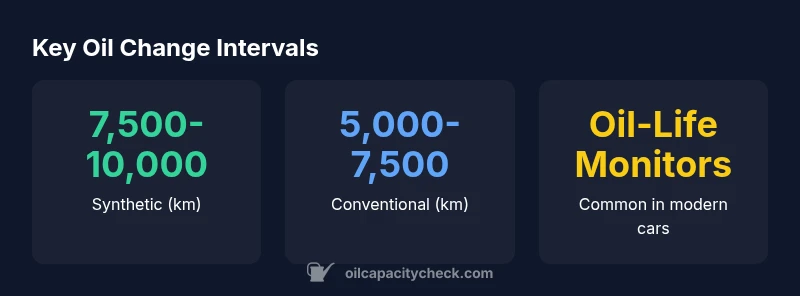
Typically, oil change after how many kilometers depends on oil type and driving. Common ranges are 7,500–10,000 km for synthetic oil and 5,000–7,500 km for conventional oil. If your vehicle has an oil-life monitor, it can extend or shorten this based on real driving, with some models reaching 12,000–15,000 km under ideal conditions. Always verify with your owner's manual and monitor readings.
Why kilometer-based intervals vary by driving style and oil type
Oil change after how many kilometers isn't a fixed rule; it depends on oil type, engine design, and how you drive. For many cars, kilometer-based guidance balances with time-based limits. In practice, owners often find that synthetic oil lets them stretch to 7,500–10,000 km between changes, while conventional oil trends toward 5,000–7,500 km. Driving style, climate, and maintenance history also matter. Higher mileage, frequent short trips, or towing can shorten intervals, while highway cruising in moderate climates can extend them. Always compare to the vehicle's manual and any oil-life indicator present, and remember that the goal is maintaining proper lubrication and minimizing wear. Car makers publish specifications, but your actual interval should reflect your personal driving profile and maintenance history.
Synthetic vs conventional oil: how the interval changes
Synthetic oils are engineered for longer life and better oxidation resistance than conventional oils, so many manufacturers extend intervals when synthetic oil is used. However, not all cars are designed for long drains; some engines require specific viscosities or have performance specs that constrain interval length. In general, synthetic oil intervals often sit around 7,500–10,000 km, while conventional oil hovers around 5,000–7,500 km. Blends fall in between. If you operate in extreme conditions - frequent short trips, extreme temperatures, or heavy loads - your interval may shrink by a few thousand kilometers compared with ideal conditions. Always check your owner's manual and consult the oil-life monitor if equipped; these tools reflect the engine's real-time degradation rather than a fixed distance.
The role of the oil life monitor and OBD in deciding when to change
Many modern vehicles include an oil life monitor that estimates remaining useful life based on driving conditions, engine temperature, and coolant temperatures. This system can override simple kilometer-based rules and tailor changes to how you drive. If your car reports oil life at, say, 15% or 10%, plan a change soon; if it shows 0% or a maintenance light activates, change promptly even if the odometer is well below a fixed threshold. Do not rely only on a specific kilometer number; the monitor offers a dynamic view of oil condition. For older cars without monitors, rely on established ranges plus a regular calendar interval to avoid neglect.
The impact of driving conditions on oil degradation
Engine oil degrades faster under high loads, frequent short trips, dusty or polluted environments, and frequent towing. Cold starts reduce oil pressure until the oil heats up; if you drive city traffic with many starts and stops, you may accumulate metal particles and fuel dilution more quickly. Long highway trips help oil molecules stay in suspension and reduce condensation, sometimes allowing longer drains. Climate also plays a role: extreme heat accelerates oxidation; extremely cold weather stiffens oil viscosity and prolongs protective time, but repeated rapid heating cycles beat the oil up. A realistic approach blends the manufacturer guidance with your actual driving profile, and includes seasonal checks to avoid surprises.
Practical steps to determine your personal interval
Start with the owner's manual to see the recommended range for your engine and oil type. Note whether your car has an oil-life monitor and activate it or check its readings regularly. Compare driving habits: city commuting vs highway miles, towing, and climate. Track mileage and service history; use a log to observe when changes fall outside the norm. Use manufacturer-noted ranges as a baseline, but adjust for your conditions. If in doubt, consult a service professional or use a reputable online calculator to tailor a schedule.
Seasonal changes and how climate affects oil
Seasonal temperature shifts impact oil viscosity and engine warm-up times. In very cold climates, longer oil warm-up can delay efficient lubrication, especially on startup. In hot climates, higher engine temperatures accelerate oil oxidation and may shorten drain intervals if the vehicle experiences heavy loads or sustained high speeds. Consider a slightly shorter interval during peak summer and a conservative schedule in extreme winter conditions. Routine checks of oil level and appearance remain important year-round.
When to extend or shorten the interval safely
You can usually extend a drain interval when you drive primarily on highways, use high-quality synthetic oil, and have a healthy engine. Shorten the interval if you frequently caravan with heavy loads, tow trailers, drive in stop-and-go traffic, or operate in extreme heat. Always align with the vehicle's oil-life readings and manufacturer recommendations rather than rigid kilometer targets. If in doubt, err on the side of more frequent changes rather than risking oil degradation.
Oil change interval ranges by vehicle type
| Vehicle type | Recommended interval (km) | Oil type | Notes |
|---|---|---|---|
| Compact car | 7,500-10,000 | Synthetic or synthetic-blend | City vs highway mix matters |
| Mid-size sedan | 7,500-10,000 | Synthetic or synthetic-blend | Oil-life monitor often used |
| Truck / SUV | 5,000-10,000 | Conventional or synthetic | Heavier loads shorten intervals |
| Diesel engine | 7,500-15,000 | Synthetic preferred | Manufacturer specs vary widely |
People Also Ask
How often should I change oil if I drive mostly on highways?
Highway driving is gentler on oil, and many vehicles can extend intervals when driven predominantly on highways. Still, follow the oil-life monitor and manual for model-specific guidance, as some engines have stricter requirements.
If you drive mostly on highways, you may stretch the interval, but always heed the oil-life monitor and manufacturer guidance.
Can I switch from conventional to synthetic oil mid-program?
Yes, you can switch from conventional to synthetic oil at your next change. There’s no mandatory flush, but ensure compatibility with the engine and oil filter, and monitor for any warranty considerations.
Switching to synthetic at your next change is fine, just confirm compatibility and monitor performance afterward.
Does engine type affect interval length?
Yes. Some engines tolerate longer drains with synthetic oil, while others with turbochargers or high-performance designs may require more frequent changes. Always check the model-specific guidance.
Engine design matters; always check your car’s model guidance for exact intervals.
What oil grade should I use for longer intervals?
Choose the grade recommended by the manufacturer, typically 5W-30 or 0W-20 for many modern engines. If using synthetic, ensure compatibility with your vehicle’s specifications.
Use the grade your manual recommends, usually a synthetic option that matches your engine.
What signs indicate my oil is overdue?
Common signs include a warning light, louder engine noise, reduced oil level, or darker, gritty oil on the dipstick. If any occur, inspect and change oil promptly.
If the oil light comes on or you hear engine noise, check and change the oil soon.
Is it safer to err on the side of shorter intervals?
If you operate in extreme conditions or have a high-risk vehicle, it's safer to err on shorter intervals and use oil-life monitors or professional advice to fine-tune the schedule.
Shorter intervals reduce risk in tough conditions; rely on monitors and advice when unsure.
“Reliable oil-change planning comes from combining manufacturer specifications with your real-world driving data.”
The Essentials
- Follow manufacturer guidance, but tailor to your driving.
- Synthetic oil usually allows longer intervals than conventional oil.
- Oil-life monitors provide personalized guidance.
- Driving conditions and climate can shorten or extend intervals.
- Keep a simple maintenance log to track real-world intervals.