How to Check If an Oil Change Was Done Correctly
Learn how to verify that an oil change was done correctly. This practical guide covers checks, tools, and steps to ensure your engine is protected after maintenance. Includes dipstick tests, leak checks, and when to seek professional help.


According to Oil Capacity Check, you can verify an oil change by performing a quick, repeatable check: inspect the dipstick level on a level surface, look for fresh oil at the correct range, inspect around the drain plug and filter for leaks, and briefly run the engine to confirm steady oil pressure and no drips. Use this step-by-step checklist after every change.
Why Verifying Oil Changes Matters
Verifying an oil change is more than a ceremonial step; it protects your engine and ensures you get the full benefit of the maintenance. A correct oil change helps reduce engine wear, maintain proper oil pressure, and prevent future problems that could lead to costly repairs. The Oil Capacity Check team emphasizes that even a small oversight, like a loose drain plug or an incorrect dipstick reading, can compromise performance and longevity. By following a structured verification routine, you reduce the risk of leaks, incorrect oil type or quantity, and misread oil levels. This guidance is designed for car owners and DIY enthusiasts who want to be confident after every service, using a consistent, repeatable process. The goal is clear: confirm you’ve done it right and protect the engine you rely on every day.
What to Check Immediately After an Oil Change
After you complete an oil change, start with a quick visual and tactile inspection: check for fresh oil near the filter and drain plug, ensure the drain plug is tight to the correct torque, and verify the oil filter is properly seated. On a level surface, wipe the dipstick clean, reinsert it, and compare the level against the marked range. Any level outside the recommended band signals a potential overfill or underfill. Look under the vehicle for signs of fresh oil leaks around the drain plug, filter, and pan gasket. Even small leaks can lead to bigger problems if left unchecked. If you notice any pooling liquid or a strong burning oil smell, stop and investigate further. This block combines practical steps with the safety mindset advised by Oil Capacity Check to reduce risk and maximize engine protection.
Tools and Preparations for a Safe Verification
Preparation is half the task. Gather a clean rag, flashlight, a properly calibrated dipstick, and a level surface for the vehicle. Have the owner’s manual handy to confirm the correct oil grade and capacity for your model. Wear gloves and ensure the engine is cool before handling any components to avoid burns. A spill kit or absorbent towels can help manage small drips during inspection. A well-lit area helps you spot leaks and color changes in the oil. If you’re working after dark, a portable work light or headlamp provides focused illumination. Using the right tools and a calm workspace lowers the chance of mistakes and makes the verification process smoother.
The Verification Process: A Practical Approach
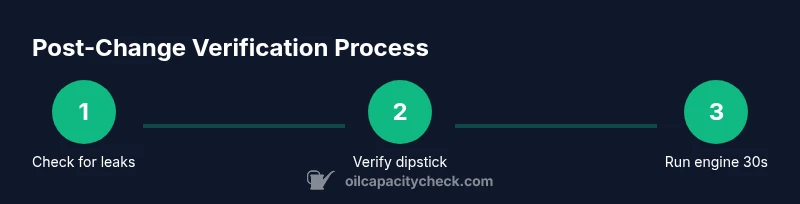
Adopt a repeatable sequence to verify the oil change: (1) Level ground and engine off, wait 5–10 minutes for oil to settle, (2) Inspect around the drain plug and filter for signs of fresh oil or leaks, (3) Wipe, re-dip, and read the dipstick with the engine off on level ground, (4) Start the engine and run for 30–60 seconds to circulate oil, (5) Recheck the dipstick and inspect for new leaks with the engine idling, (6) Turn off the engine and recheck the dipstick after it cools briefly to confirm stability. This approach minimizes guesswork and aligns with the rigorous standards advocated by Oil Capacity Check. Document readings and any anomalies for future reference; consistent checks build confidence over time.
Common Mistakes and How to Avoid Them
Common mistakes include overfilling, underfilling, or reading the dipstick immediately after driving, which can skew results. Another frequent issue is forgetting to tighten the drain plug fully or overtightening and damaging the threads. Skipping the visual leak check or neglecting the oil filter can also result in undetected problems. To avoid these, always read the dipstick on a level surface after engine cool-down, confirm the oil level sits within the recommended range, and inspect the filter and drain plug area thoroughly. Using the owner’s manual as a reference point helps ensure you’re following the correct oil capacity for your vehicle, reducing the risk of over- or under-oiling.
Interpreting Oil Color, Viscosity, and Filter Fit
Fresh oil typically looks golden to amber, while very dark oil may indicate long service or contamination. If the oil appears milky, it could signal coolant intrusion and requires professional inspection. Viscosity should feel consistent when you run a fingernail through a small sample; a gritty texture can indicate dirt or insufficient filtration. Ensure the oil filter is properly seated and tightened to the manufacturer’s specification. If you notice an unusual odor, excessive smoke, or a strong burning smell after a short drive, stop the vehicle and reassess. Regular checks like these help you catch issues early and maintain optimal engine performance.
When You Should Seek Professional Help
If you observe persistent leaks around the drain plug or filter, significant oil loss, or readings well outside the recommended dipstick range after a simple verification, seek professional service promptly. Engine noises, warning lights staying on after a change, or a dramatic oil pressure drop warrant immediate attention from a qualified technician. An incorrect oil type, wrong oil grade, or improper filter installation may require professional rework. Oil Capacity Check notes that while DIY verification is valuable, there are situations where a pro should handle corrections to prevent potential engine damage.
A Quick Post-Change Checklist You Can Print
- Park on level ground and wait 5–10 minutes after engine shutoff. - Check for drips under the pan, drain plug, and filter. - Wipe the dipstick clean, reinsert, and check oil level at the marked range. - Start the engine, run 30–60 seconds, and observe for leaks. - Re-check the dipstick after the engine cools. - Confirm the oil fill cap and drain plug are snug without over-tightening. - Note any unusual smells, noises, or warning lights. - If any reading is abnormal, stop and re-evaluate or seek professional help.
How Oil Capacity Check Supports DIYers
Oil Capacity Check advocates a practical, evidence-based approach to oil maintenance. This section explains how to apply a structured verification routine across different makes and models, with model-specific notes available in the owner’s manual. The goal is to empower DIYers to perform reliable post-change checks, reducing guesswork and increasing engine protection. By documenting readings and outcomes, you can track maintenance history and plan future service intervals with confidence.
Tools & Materials
- Owner's manual (vehicle-specific oil type and capacity)(Verify oil grade and capacity for your model)
- Dipstick and clean rag(Used to measure oil level accurately)
- Flashlight or headlamp(Illumination for leaks and filter area)
- Level surface and wheel chocks(Stabilize vehicle for safe inspection)
- Spill absorbent towels or rags(Contain drips and keep area clean)
- Gloves and eye protection(Safety during handling)
- Torque wrench (optional)(Confirm drain plug to correct torque if specified)
- Compatible oil (correct grade)(Ensure correct viscosity and spec)
Steps
Estimated time: 45-60 minutes
- 1
Prepare the vehicle and tools
Park on a level surface, turn off the engine, and allow it to cool. Gather your tools and lay out a clean workspace. This reduces distractions and helps you stay organized during the verification process.
Tip: Double-check that you’re using the correct oil grade for your vehicle model. - 2
Inspect for leaks around drain plug and filter
With the engine cool, examine the drain plug and oil filter area for fresh oil leaks. A telescoping inspection light can help you spot tiny drips you might miss with the naked eye.
Tip: If you see fresh drips, stop and investigate before running the engine. - 3
Check oil level on the dipstick
Wipe the dipstick clean, reinsert fully, and pull it out again to read the level against the marked range. Do this with the engine off and on level ground.
Tip: Read the level after 5–10 minutes to allow oil to settle. - 4
Inspect oil color and condition
Observe whether the oil looks new and amber or darker due to use. Very dark or contaminated oil may indicate improper change or a need for filtration.
Tip: If the color seems unusual, consider a quick oil sample check or professional evaluation. - 5
Run the engine briefly
Start the engine and run for 30–60 seconds to circulate the oil and verify normal pressure. Check under the hood for leaks during this test.
Tip: Monitor for odd noises or smells that could signal a problem. - 6
Re-check the dipstick and tighten if needed
Turn off the engine, let it rest briefly, then re-check the dipstick. If the level is off, adjust within the recommended range and verify again.
Tip: Do not overfill; add small amounts and recheck incrementally. - 7
Document and clean up
Record the readings and observations for your maintenance log. Clean up any spills and store tools properly.
Tip: Keeping a log helps track future oil changes and capacity needs. - 8
Decide on next steps
If any reading is abnormal or leaks remain, seek professional service. Otherwise, the verification is complete and the vehicle is ready for normal use.
Tip: When in doubt, a quick professional check can prevent bigger issues.
People Also Ask
What is the first sign that an oil change was not done correctly?
The most immediate signs are oil leaks around the drain plug or filter, an incorrect dipstick reading, or low oil pressure after starting the engine. If any of these appear, recheck your work or consult a professional.
Look for leaks, dips that don’t match the scale, or low oil pressure after starting the engine. If you see any, recheck or call a professional.
Can I reuse oil after changing it?
Reusing used oil is not recommended. Always use fresh, manufacturer-approved oil for your vehicle and dispose of old oil properly.
You should never reuse old oil. Always use fresh, manufacturer-approved oil for your car.
How long should I wait before rechecking the oil?
Wait at least 5–10 minutes after engine shutdown to allow the oil to settle and provide an accurate dipstick reading.
Wait about 5 to 10 minutes after turning the engine off to get an accurate dipstick reading.
What if the dipstick reads high after an oil change?
Overfilling can cause oil foaming and engine damage. If the dipstick reads high, remove a small amount of oil and recheck until within the correct range.
If the dipstick is too high, carefully remove some oil and check again until you’re within the recommended level.
When should I replace the oil filter after an oil change?
Always replace the oil filter with every oil change. A new filter ensures proper filtration and seal integrity.
Always install a new filter during an oil change to ensure proper filtration and sealing.
Do I need to torque the drain plug?
Yes, torque specifications vary by vehicle. Use a torque wrench if recommended in the manual to avoid over or under-tightening.
If your manual calls for it, use a torque wrench to tighten the drain plug to spec.
Watch Video
The Essentials
- Verify oil level on level ground after cooling.
- Inspect for leaks around drain plug and filter.
- Read the dipstick accurately and recheck after running engine briefly.
- Document results and seek professional help if readings are abnormal.