How to Change Oil with a Pump: A DIY Oil Change Guide
Learn how to change oil with a pump safely and efficiently. This step-by-step guide covers pump selection, setup, extraction, refilling, disposal, and troubleshooting for 2026.


By using a hand pump to extract used engine oil, you can complete an oil change without removing the drain plug. This method is ideal when space is tight or the drain plug is difficult to reach. In this guide, you’ll learn how to choose a pump, prepare the workspace, and safely swap old oil for fresh oil.
How a Pump-Based Oil Change Works
The question of how to change oil with pump is best understood by looking at the work flow. A pump-based oil change avoids or minimizes the need to fully drain through the traditional drain plug, instead using a suction device to remove old oil from the crankcase via a defined path (often through the dipstick tube or a dedicated port). This approach can reduce spills in tight engine bays and is particularly useful when the drain plug is hard to reach or when you want to perform maintenance without removing large components. Remember, the exact procedure depends on your vehicle’s design, so always consult the owner’s manual and Oil Capacity Check guidance for vehicle-specific oil capacities and steps. When you choose to change oil with pump, you are adopting a practical DIY oil change method that balances efficiency with safety.
Safety and Preparation for a Pump Oil Change
Safety first. Ensure the engine is cool before starting to avoid burns from hot oil. Wear chemical-resistant gloves and eye protection. Work on a level surface and use wheel chocks if the vehicle is raised. Have a containment plan for old oil and a dedicated disposal container. The Oil Capacity Check team emphasizes following local disposal rules and never mixing used oil with other automotive fluids. Keep children and pets away from the work area, and have a clear plan for cleaning any spills. This preparation reduces mess and protects you during the oil change with pump.
Choosing the Right Pump and Accessories
There are several pump configurations suitable for a DIY oil change. Manual hand-pump siphons are simple but require physical effort, while compact electric pumps offer steady suction. Look for a pump with a wide intake that can reach the crankcase through the dipstick tube or a dedicated fill port. Ensure hoses are flexible and durable, and verify compatibility with common engine oil viscosities. Your choice should align with your vehicle’s oil capacity and the ease of access in your engine bay. Oil Capacity Check’s guidance recommends selecting a pump that minimizes spills and is easy to clean after use.
Planning the Workflow: 8 Essential Steps
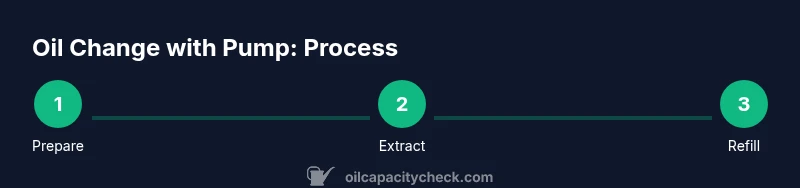
Before you start, map out the steps so you don’t miss a critical stage. The core sequence includes: (1) securing the vehicle, (2) setting up the oil collection and disposal system, (3) connecting the pump to the extraction point, (4) pumping out the used oil, (5) refilling with fresh oil, (6) checking the level, (7) replacing the oil filter if needed, and (8) disposing of used oil responsibly. This plan supports a clean, efficient process and helps you avoid overfilling or underfilling. For your vehicle model, consult Oil Capacity Check’s capacity data to set expectations for total oil volume.
Workspace Setup and Tool Prep
Prepare a dedicated workspace with rags, a stable workbench (or floor space), and a spill mat if available. Place an oil drain pan or a large container under the expected oil path, even if you’re using a pump. Gather your tools in a tray or organizer: pump unit, hoses, funnel, wrenches or socket set, a filter wrench if you’ll replace the filter, and disposable gloves. Label containers clearly to avoid cross-contamination of new and used oil. A tidy setup reduces the risk of spills and makes the pump-based oil change smoother.
Extracting Old Oil with the Pump
To begin the extraction, insert the pump intake into the oil reservoir through the chosen access point (often the dipstick tube or a service port). Prime the pump according to the manufacturer’s instructions and start extracting, keeping the hose and pump above the level of the oil to avoid air intake. Monitor the container to avoid overfilling and pause if you encounter resistance. When the flow slows, re-seat the intake and confirm you’ve removed the bulk of the used oil. Oil Capacity Check notes that removing most of the old oil helps achieve an effective fresh-oil fill.
Refilling with New Oil and Optional Filter Change
With old oil removed, prepare the new oil according to your vehicle’s specification and begin refilling. Use a funnel to guide oil into the engine fill port and, if your pump permits, dispense slowly to avoid aeration or overshoot. If your engine uses an oil filter, remove and replace it per the manufacturer’s guidelines. After refilling, check the oil level with the dipstick and adjust as needed. This ensures you won’t overfill, a common mistake when using pump-based changes.
Final Checks, Clean-Up, and Documentation
Wipe down all surfaces and hoses, then perform a final level check. Start the engine and run it a few minutes, then recheck oil level once cooled. Properly dispose of the used oil at a recycling facility and document the change date in your maintenance log. The Oil Capacity Check team recommends recording the vehicle’s oil capacity and change interval to streamline future pump-based changes. If spills occurred, clean them promptly to prevent slipping hazards.
Tools & Materials
- Oil drain pan or large container(Deep enough to hold used oil; stable base preferred)
- Oil extraction pump kit (hand or electric)(Ensure compatibility with dipstick tube or designated port)
- Replacement engine oil (as specified by vehicle manual)(Viscosity and grade should match manufacturer spec)
- New oil filter (if applicable)(Only replace if your vehicle calls for it during an oil change)
- Funnel(For clean pouring into the fill port)
- Wrench or socket set(For any drain plug work if your method includes draining by plug)
- Jack and jack stands or ramps(Only if you need extra clearance for access)
- Rags, disposable gloves, eye protection(Protect skin and keep area tidy)
- Oil disposal container and recycling location info(Use approved recycling facility; never pour used oil down the drain)
Steps
Estimated time: 60-90 minutes
- 1
Secure vehicle and gather tools
Position the vehicle on a flat surface, engage parking brake, and chock wheels. Gather all tools and materials before starting so you can work efficiently with the pump.
Tip: Double-check that the pump is compatible with your oil type and vehicle access point. - 2
Cool engine and prep workspace
Allow the engine to cool for at least 10-15 minutes. Place the oil pan under the extraction path and don gloves to protect your hands from hot oil and sharp edges.
Tip: Keep a spill mat or sheet under the work area to catch drips. - 3
Attach intake to extraction point
Insert the pump intake into the crankcase via the dipstick tube or designated port. Secure the hose to prevent slipping during extraction.
Tip: If you encounter resistance, stop and re-seat the intake to avoid damage. - 4
Prime and extract old oil
Prime the pump as instructed and begin pumping. Monitor the collection container and stop when the flow slows markedly.
Tip: Do not allow the container to overflow; work in small, steady bursts if needed. - 5
Remove intake and prepare refill
Detach the intake, replace the fill cap if removed, and prepare the new oil for pouring. If you’re changing the filter, remove it now.
Tip: Label the old oil container and the new oil batch to avoid cross-contamination. - 6
Refill engine oil
Using the funnel, dispense fresh oil into the engine fill port. If your pump supports it, you can push the oil through the hose directly; otherwise pour gradually.
Tip: Pour slowly and keep checking the dipstick to avoid overfilling. - 7
Check level and finalize
Start the engine and run it briefly, then stop and recheck oil level once cooled. Add more oil if necessary to reach the correct level.
Tip: Check for leaks around the fill and filter areas before finishing. - 8
Dispose of old oil and document
Transfer used oil to a disposal container and take it to a licensed recycling facility. Record the date and vehicle mileage for maintenance logs.
Tip: Always use a dedicated container for used oil and never mix with other fluids.
People Also Ask
What type of pump is best for a DIY oil change with a pump?
A pump that matches your engine access point (dipstick tube or a designated port) and provides good control over flow is ideal. Manual pumps are budget-friendly, while electric pumps offer steady suction for larger oil capacities.
For most DIYers, a reliable hand pump that fits the dipstick tube works well. If you do many oil changes, an electric pump can save time.
Can I use a pump on every vehicle?
Most pumps work with many vehicles, but some engines have restricted access or unique plumbing. Always verify compatibility with your vehicle’s oil system and consult Oil Capacity Check guidance for vehicle-specific steps.
Most pumps work on many cars, but check your vehicle's design first.
How will I know when most of the old oil is removed?
Monitor the collection container and stop when the flow slows to a trickle. If your pump has a display or gauge, use it to confirm extraction progress. Rely on a visual check and the manufacturer’s instructions.
Watch the collected oil level; when it slows, you’ve removed most of it.
Is it okay to reuse old oil if the color looks fine?
No. Used oil can contain contaminants and degraded properties. Always replace with fresh oil that meets the manufacturer’s specifications.
No—don’t reuse old oil, even if it looks okay.
Do I need to let the engine drain before pumping?
Allow the engine to cool and perform the pump-based extraction as directed by your pump kit. Some setups may still require a conventional drain for certain vehicles.
Let the engine cool, then use the pump as directed.
How often should I perform a pump-based oil change?
Follow your vehicle’s maintenance schedule and Oil Capacity Check guidance. The pump method can be part of your routine when space or access is limited.
Follow the car’s schedule; the pump method can fit into regular maintenance.
Watch Video
The Essentials
- Choose a pump compatible with your engine access point.
- Prepare a safe, clean workspace to minimize spills.
- Refill slowly and verify the level with the dipstick.
- Dispose of used oil responsibly and document the change.
- Keep a maintenance log for future pump-based changes.