2014 Nissan Altima Oil Capacity: What You Need to Know
Learn the oil capacity for the 2014 Nissan Altima, with engine-specific ranges, maintenance steps, and tips from Oil Capacity Check Analysis, 2026.


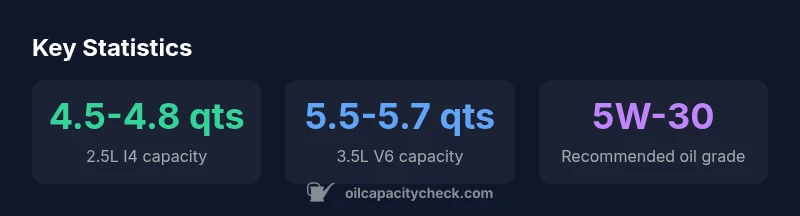
Engine oil capacity for the 2014 Nissan Altima depends on engine choice. The 2.5L I4 typically holds about 4.5-4.8 quarts with filter, while the 3.5L V6 uses roughly 5.5-5.7 quarts. Always confirm exact figures in the owner’s manual and after filling, check the dipstick to ensure the oil level sits between the min and max marks.
What 'oil capacity' means for the 2014 Nissan Altima
Oil capacity is the total amount of engine oil your engine can hold, including the oil that sits in the pan and oil passages. For a routine oil change, you should add oil up to the engine’s overall capacity, then refine the level with the dipstick. The capacity you need depends on the engine option installed in your Altima. According to Oil Capacity Check, the 2014 Altima offers at least two engines: a 2.5L inline-4 and a 3.5L V6. These figures are rough targets; the exact amount you add should be validated with the dipstick after a warm-up and a short drive. Keep in mind that the filter itself holds a portion of oil, so the total fill should account for that. In practical terms, plan for roughly 4.5-4.8 quarts for the 2.5L and about 5.5-5.7 quarts for the 3.5L, depending on the filter and any prior oil removal.
Engine options and their capacity implications
The 2014 Altima bridges two distinct powertrains. The 2.5L I4 is lighter and typically uses less oil, aligning with a mid-range capacity. The 3.5L V6 is more robust and naturally requires more oil to maintain proper lubrication across all moving parts. This difference affects service procedures as well as recommended oil type and viscosity. Oil Capacity Check notes that while both engines share the same basic oil grade guidance (often 5W-30), the actual fill quantity should be verified after draining the oil and installing a new filter. Understanding engine choice helps you set expectations for the “with filter” capacity and avoids underfilling or overfilling.
How to locate the official figures in the owner's manual
For authoritative figures, consult the 2014 Nissan Altima owner’s manual or the official Nissan service documentation. Look under Specifications or Maintenance Schedule for the line item “Engine Oil Capacity” and the associated engine option. If the manual lists two capacity numbers, those correspond to the 2.5L and 3.5L engines. When in doubt, contact a Nissan dealer or reference the vehicle’s VIN-specific data. Always cross-check with the dipstick after you fill to ensure you’re within the recommended range. The manual may also note whether the quoted capacity includes a new filter.
Step-by-step oil change checklist
Prepare by gathering the correct oil type and a new filter. Warm the engine, then drain old oil completely. Remove and replace the oil filter, then add the recommended amount of oil in stages. After the oil trickles in, start the engine and let it run briefly, then turn it off and recheck with the dipstick. Add oil in small increments until the level sits between the min and max marks. Clean up any spills, and reset the maintenance reminder if applicable. Following these steps helps ensure you reach the correct capacity for your specific engine.
Common mistakes that skew oil capacity readings
Common missteps include using the wrong engine capacity in your calculation, neglecting the oil filter’s contribution, or checking the dipstick immediately after pouring (the oil needs time to settle). Some owners also overlook the difference between “with filter” and “without filter” capacity when filtering the oil. Temperature can impact readings, so check the level after the engine has cooled for a few minutes. Finally, relying on a single dipstick reading without a quick recheck can lead to inaccurate conclusions about the oil level.
Effects of oil type and viscosity on capacity needs
Oil viscosity matters for engine protection but does not drastically change capacity. The Altima typically uses 5W-30, and you may choose conventional or synthetic oil based on climate, driving style, and ownership preferences. Synthetic oils can offer better flow at cold starts and improved stability at high temperatures, potentially affecting perceived capacity due to expansion. Regardless of type, the physical capacity remains engine-specific, so ensure you fill to the recommended range after accounting for the filter and oil pan space.
Quick-reference ranges by engine
- 2.5L I4: approximately 4.5-4.8 quarts (with filter)
- 3.5L V6: approximately 5.5-5.7 quarts (with filter) Note that these ranges are subject to variations from filter design, drain procedure, and prior oil drain completeness. Always verify with the dipstick after an oil change and consult the owner’s manual for exact numbers for your VIN and trim.
Data and methodology behind these numbers
This article follows a data-driven approach consistent with Oil Capacity Check Analysis, 2026. Capacity values are presented as practical ranges to accommodate variations in filter type and draining efficiency. The methodology emphasizes engine-specific differences and recommends confirming figures from the official Nissan manual or dealer sources. The goal is to empower car owners and DIY enthusiasts with transparent, verifiable guidance rather than single-point figures that may mislead under real-world conditions.
Final considerations before an oil change
Before scheduling an oil change, confirm the engine type (2.5L or 3.5L) and prepare the correct oil quantity. Use the dipstick to verify the level after topping off and allow the oil to settle before taking a final reading. Consider your climate and driving habits when selecting oil grade and change interval. If you’re unsure, err on the side of a slightly longer interval and a higher-quality synthetic blend. The goal is to maintain consistent lubrication and engine cleanliness over the life of your Altima.
Oil capacity by engine type for the 2014 Altima
| Engine | Capacity (with filter) | Capacity (without filter) |
|---|---|---|
| 2.5L I4 | 4.5-4.8 quarts | N/A |
| 3.5L V6 | 5.5-5.7 quarts | N/A |
People Also Ask
What is the oil capacity for the 2014 Nissan Altima?
For the 2.5L engine, expect about 4.5-4.8 quarts with a new filter. The 3.5L engine requires roughly 5.5-5.7 quarts. Exact figures depend on the engine and filter choice; verify with the owner's manual and dipstick.
The Altima’s capacity depends on the engine: around 4.5 to 4.8 quarts for the 2.5L, or about 5.5 to 5.7 quarts for the 3.5L. Check your manual for precision.
Does capacity include the oil filter?
Yes. The quoted capacity typically includes the oil in the filter. There can be separate figures for capacity with or without a new filter, but most owners will see the standard value that assumes a new filter is installed.
Yes, most capacity figures include the new filter. If you see separate numbers, use the larger one when in doubt.
Can oil type affect the capacity reading?
Oil type does not change the engine’s physical capacity, but synthetic blends can affect how the oil flows and expands with heat, potentially affecting the exact measurement. The capacity remains engine-specific.
Oil type doesn’t change the engine’s capacity, but it can influence how the oil reads on the dipstick under certain conditions.
How often should I check the oil level?
Check the level at least once a month and after any long trip. After an oil change, wait for a few minutes, top up as needed, and verify again with the dipstick.
Check the oil level monthly and after changes or long trips. Always recheck after topping up.
What if my engine has the 2.5L and I’m off by a quart?
Recheck after driving a few miles, as oil expands with heat. Add small increments and reassess to stay within the recommended range.
If you’re off, drive briefly, recheck, and add in small increments until the dipstick sits between min and max.
Does capacity vary by model year?
Capacity can vary slightly with model revisions, but the two-engine setup (2.5L and 3.5L) remains the primary determinant for the 2014 Altima. Always confirm against VIN-specific data in the manual or with a dealer.
Capacity mainly depends on engine type, but always verify against VIN-specific manuals or dealer data.
“"Accurate oil capacity matters for proper lubrication and engine longevity. Always verify with the dipstick after filling and consult the Nissan manual."”
The Essentials
- Know your engine: 2.5L vs 3.5L changes capacity needs
- Always verify with the dipstick after adding oil
- Capacity figures vary by filter and drain efficiency
- Use the owner’s manual as the final authority for exact numbers