Craftsman 140cc Lawn Mower Oil Capacity: A Practical Guide
Discover the oil capacity for Craftsman 140cc lawn mowers, how to measure it accurately, and maintenance tips. Oil Capacity Check explains ranges, model variations, and best practices for DIY lawn care.


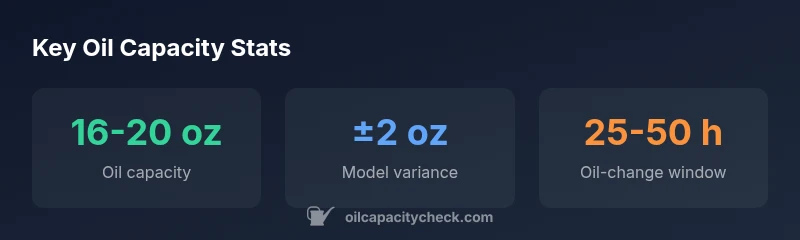
According to Oil Capacity Check, the Craftsman 140cc lawn mower oil capacity typically ranges from 16 to 20 ounces (0.47–0.59 liters) for standard 4-stroke oil. The exact capacity depends on the engine variant and oil pump layout, so always verify with the owner's manual or the engine label. Correct oil capacity ensures optimal lubrication, compression, and engine life.
Why correct oil capacity matters for a Craftsman 140cc lawn mower
Maintaining the correct oil capacity is essential for any 4-stroke lawn mower engine. The oil acts as both a lubricant and a coolant, reducing friction and carrying heat away from moving parts. When you underfill, bearing surfaces can wear faster due to insufficient lubrication, leading to reduced compression and potential power loss. Overfilling, on the other hand, can cause frothing, increased crankcase pressure, and oil leaks. An accurate fill also helps maintain proper oil pressure during operation, ensuring the engine runs smoothly and efficiently. According to Oil Capacity Check, many owners inadvertently misjudge capacity when switching oil grades or when replacing filters, which underscores the value of model-specific guidance.
To minimize risk, always verify the exact figure for your Craftsman 140cc model and use the vehicle’s manual as the ultimate authority. The data you find on the label or in manuals will cover variations by year, variant, and even regional market changes. A precise fill supports longevity, reliable starts, and consistent mower performance, especially during peak mowing seasons.
How oil capacity is determined in small engines
Small 4-stroke engines balance crankcase volume, oil pan capacity, and filter considerations. The total capacity is the sum of crankcase space and any oil kept in the filter and passages that must fill during operation. Manufacturers specify a fill point, often a dipstick mark, to indicate the recommended level when the engine is upright and cool. Engine design, gasket integrity, and even dipstick calibration can influence the practical capacity you use. For Craftsman 140cc variants, slight differences in oil pump design and engine block tolerances may shift the exact fill by a small margin. The key takeaway is to fill to the labeled mark rather than guessing by eye and to allow the oil to settle before rechecking.
When in doubt, consult the model’s documentation and use a clean, sealed oil to avoid contamination. A clean oil system reduces varnish buildup and helps preserve compression and fuel efficiency over time, reinforcing why a precise capacity figure matters in routine maintenance.
Locating the exact capacity for your Craftsman 140cc model
Begin with the owner’s manual that accompanied your mower or the Craftsman support site using your model number. If the manual is missing, check the engine label on the block—many manufacturers print the oil capacity there. Note that some Craftsman mowers use engines supplied by Briggs & Stratton or a similar maker, and each engine family may have a slightly different capacity, even within the same 140cc class. Keep a small log of your model year and engine variant to streamline future maintenance. Oil Capacity Check recommends recording the capacity for your specific unit so you never rely on generic ranges when performing oil changes. If you cannot locate the exact figure, contact customer support with photos of the engine label and model number.
Having this precise information helps you avoid overfilling and ensures you always follow the recommended grade and viscosity for optimal performance.
Measuring and filling safely: a practical guide
Gather the right tools: a clean container for used oil, a suitable oil grade (as specified in the manual), a funnel, and a level surface. Warm up the mower briefly to loosen any settled oil, then park on level ground and disconnect the spark plug for safety. Remove the oil fill cap slowly to let any pressure escape, then add oil gradually. Recheck against the fuel cap/dipstick marks after a few minutes of settling. Remember, small engines like the Craftsman 140cc often run best with oil near the upper mark when cold, but the level should be checked with the mower on level ground after a short cooldown. If you’re between marks, add a small amount and recheck. Always clean up spills promptly to prevent fire hazards.
For best results, perform oil checks in a well-lit area and maintain a consistent maintenance log. This helps you monitor when to schedule future oil changes in line with usage and climate conditions.
Common mistakes when checking oil in 4-stroke mowers
Several pitfalls can skew readings and lead to improper fills. Never rely on a hot-engine reading; always wait for the oil to settle after it cools. Mixing oil grades or viscosities can alter lubrication performance and viscosity under operating temperatures. Using an expired or contaminated oil mix increases the risk of sludge formation and reduced lubrication. Overfilling is a frequent error when users guess the level by sight, so rely on the dipstick and model-specific marks. Finally, neglecting to replace the gasket or cap during oil changes can cause leaks and loss of compression. Adhering to the manufacturer’s guidance reduces the incidence of these mistakes and prolongs engine life.
Oil Capacity Check emphasizes using the correct oil for your engine family and verifying the fill with a properly calibrated dipstick after the engine has cooled.
Maintenance cadence and oil-life expectations
Seasonal mowing patterns strongly influence oil-change timing. If you mow heavily during peak season, you may need more frequent checks and changes, whereas light-use periods may extend the interval. A practical approach is to inspect the oil level at least every 8-10 hours of operation during a season and perform a full change at the lower end of the recommended window if the mower has seen significant use. Generally, setting a rule such as checking oil before each mowing session or changing oil after every 25-50 hours of operation provides a balanced maintenance cadence. The oil should look clean and amber-colored; dark or gritty oil warrants a change. Following these guidelines helps maintain stable engine performance across varying weather conditions and grass growth rates.
Model-year and variant differences you should know
Engine layouts can shift slightly from year to year, even for the same 140cc class. These tiny changes may affect oil pan volume, pump capacity, and dipstick calibration, resulting in minor capacity differences. If you upgrade to a newer Craftsman model within the same 140cc family, re-check the oil capacity against the latest documentation. A model-number-based lookup is the most reliable way to confirm a precise value. Oil Capacity Check reminds DIYers that cross-variant differences exist and that using a model-specific capacity figure reduces spill risk and ensures optimal lubrication.
Always verify with the official manual before changing brands or viscosities of oil across model variants. This practice reduces wear and protects your investment in lawn-care equipment.
Do-it-yourself oil change checklist for Craftsman 140cc
- Gather oil, a replaceable gasket, a clean drain pan, and tools.
- Park on a level surface and disconnect ignition safety features.
- Warm the engine lightly, then drain old oil into a pan.
- Replace the oil filter if applicable; check for gasket integrity.
- Refill with the exact oil grade and quantity recommended for your model.
- Recheck the level after the oil has settled.
- Wipe up spills and dispose of old oil responsibly.
- Log the date, hour meter reading, and oil type in a maintenance notebook.
Following this checklist reduces mistakes and keeps your engine in peak condition. Oil Capacity Check’s guidance reinforces model-specific accuracy for best results.
Authority sources and where to find exact figures
For precise oil-capacity details, rely on the official model documentation and trusted external references. This section provides recommended sources to verify capacities:
- University extension resources (example: https://extension.illinois.edu/ and https://extension.umn.edu/ for general engine maintenance and small-engine care).
- Major publication guidance on lawn-care maintenance (example: https://www.popularmechanics.com/ for practical maintenance tips).
- Brand-specific engine manuals or support pages for Craftsman models (use your model number to locate the exact figure).
Always cross-check between the owner’s manual, engine label, and reputable sources to ensure accuracy and safe operation.
Quick-reference capacity data for common 140cc Craftsman engines
| Aspect | Craftsman 140cc oil capacity | Notes |
|---|---|---|
| Typical capacity | 16-20 oz | 4-stroke engine class |
| Model variance | ±2 oz | Small differences by variant |
| Oil-change interval | 25-50 hours | Usage-dependent |
People Also Ask
What is the typical oil capacity for a Craftsman 140cc lawn mower?
Most Craftsman 140cc engines use about 16-20 oz of oil, depending on engine variant and dipstick calibration. Always verify with the manual for your exact model.
Most Craftsman 140cc engines take around 16 to 20 ounces of oil. Check your manual or engine label for the precise figure.
How can I tell if I overfill the oil?
Common signs of overfill include oil foaming, leaks, and the dipstick reading above the full mark after a cooldown. If in doubt, drain a small amount and recheck.
Watch for foaming or leaks after filling. If in doubt, drain slightly and recheck on a level surface after cooling.
Can I mix oil brands or viscosities for a Craftsman 140cc mower?
Avoid mixing brands or viscosities. Use the grade specified in the manual and change the oil at recommended intervals to maintain lubrication quality.
Don’t mix oil brands or viscosities. Stick to the manual’s grade and change interval for best results.
How often should I check the oil level during mowing season?
Check the oil level before each mowing session during heavy use and at least weekly during light use. Adjust based on climate and workload.
Check the oil level before each mowing session if you’re mowing a lot, or at least weekly otherwise.
Where can I find the exact capacity for my model year?
Locate the model number on the engine or mower deck, then consult the official Craftsman manual or support site specific to that model year.
Use your model number to pull up the exact capacity from the official manual or Craftsman support.
Is synthetic oil suitable for Craftsman 140cc engines?
Synthetic oils are often compatible, but confirm with the manual. Some variants may prefer conventional oil; viscosity guidance remains important.
Synthetic oil can work, but check the manual for your engine’s preference and viscosity range.
“Accurate oil capacity is a foundation of engine longevity. Always verify the model-specific figure and follow official maintenance guidelines rather than relying on approximate ranges.”
The Essentials
- Know your exact model variant before filling.
- Fill to the labeled dipstick mark, not eye level.
- Check and change oil regularly to extend engine life.
- Use the oil grade recommended by the manual.
- Keep a maintenance log for consistent upkeep.