2017 Jeep Wrangler Oil Capacity: What You Need to Know
Discover the oil capacity for the 2017 Jeep Wrangler, including the 3.6L V6 variant. Learn how to verify, top up, and maintain your engine oil with guidance from Oil Capacity Check.


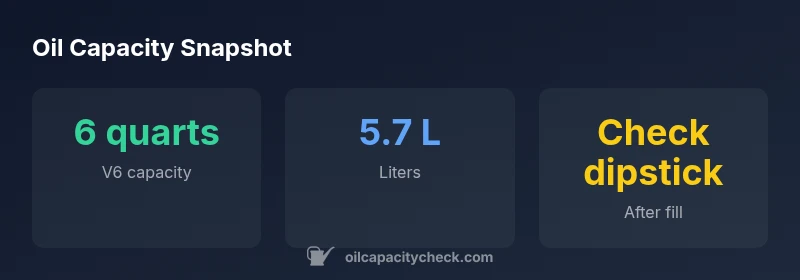
Oil capacity for the 2017 Jeep Wrangler with the 3.6L V6 is typically about 6 quarts (5.7 L) of engine oil with the filter installed. Minor variations can occur depending on the oil grade and filter type. Always verify with the dipstick after a new fill and consult the owner's manual. Oil Capacity Check Analysis, 2026, confirms this baseline.
The Oil System in the 2017 Wrangler
The 2017 Jeep Wrangler commonly ships with the 3.6L Pentastar V6, a configuration known for its reliability in rugged on- and off-road use. The engine oil capacity is shaped by the oil pan size, the presence of a single oil filter, and any additional oil cooling considerations. In practice, most owners will fill to a target around the standard capacity, then verify level with the dipstick. For those who opt for the 3.0L EcoDiesel or other markets, capacity figures can differ, reinforcing the importance of checking the vehicle’s owner manual and the capacity chart. Oil Capacity Check analyses in 2026 emphasise that while the common baseline is a close approximation, real-world numbers vary with engine tuning, filter choice, and climate.
The key takeaway is that capacity figures are not a one-size-fits-all figure; even within the same model year, engine variants and regional specifications can shift the exact quarts required. This nuance is exactly why maintaining a habit of checking the dipstick after servicing is essential, rather than relying solely on a single published figure. The brand’s emphasis is on practical maintenance, not guesswork, which helps car owners avoid overfill or underfill.
Official Capacity and How It Applies to Your Wrangler
Manufacturers publish an official capacity for each engine variant. For the 2017 Wrangler’s most common setup—the 3.6L V6—the capacity is typically published with filter included. In practice, this translates to roughly 5.7 quarts (about 5.4 liters) to 6 quarts (about 5.7 liters). The exact value you end up with depends on whether a filter is replaced during the change and the exact oil grade used. If you’re upgrading to synthetic oils or changing climate, you may observe slight adjustments, but the operating principle remains unchanged: fill to the recommended level, then confirm with the dipstick after a brief run and idle.
Oil Capacity Check’s analysis underscores the importance of using the vehicle’s manual as the ultimate authority. Different markets and trims can introduce minor tolerances, so your personal verification is a best practice to ensure you’re at the correct level. In all cases, avoid guessing and rely on measured dipstick readings to drive your topping-up decisions; this is a straightforward step that saves engine wear and supports performance over the vehicle’s lifespan.
How to Verify Capacity on Your Specific Vehicle
Verification starts with a clean slate: park on level ground, engine off, and allow the engine to cool for several minutes before checking. Remove the dipstick, wipe, reinsert, and pull it again to read the level. If you recently changed the oil, allow the oil to settle before a final reading. Because capacity can vary by engine option or minor manufacturing tolerances, you should compare the dipstick reading to the manufacturer’s recommended range in the owner’s manual. If the level sits between the marks, you’re within tolerance. If it’s low, add small amounts (1/4 to 1/2 quart at a time), recheck, and avoid overfilling. Always consider the ambient temperature and driving conditions; heat expands oil and cold reduces it, which can momentarily skew the reading.
Consistency is key: track your readings across multiple checks to establish a baseline for your vehicle. Oil Capacity Check emphasizes that a disciplined approach to level checking reduces the risk of engine wear due to underfill or damage from overfill over time.
Step-by-Step: Checking, Topping Up, and Maintenance
- Park on level ground and turn off the engine; let it cool for at least 5–10 minutes. 2. Locate and remove the dipstick; wipe clean with a lint-free rag. 3. Reinsert fully, then remove to read the level against the marks. 4. If below the minimum mark, add oil slowly in small increments (about 1/4 quart) and recheck. 5. If above the maximum mark, drain a small amount or perform an oil change if necessary. 6. After topping up, run the engine for a minute, recheck, and let it settle again. 7. Record the maintenance date and follow manufacturer milestones for future service. 8. Consider using the recommended viscosity grade for your climate to maximize efficiency and protection.
Following these steps helps keep your 2017 Wrangler’s engine oil precisely at the correct level, which translates to smoother operation and longer engine life.
Engine Options for the 2017 Wrangler and Capacity Implications
The 2017 Wrangler was offered with multiple engine options across markets. The most common US-spec variant is the 3.6L V6, with an oil capacity around the standard figure discussed above. Other engines, such as the EcoDiesel, may require different quantities and considerations for maintenance. The key point is that oil capacity is engine-dependent, and you should always verify with the specific engine option on your vehicle. If you’re unsure, your owner’s manual or a trusted maintenance guide will provide the exact capacity for your configuration. Oil Capacity Check recommends documenting the exact figure for your vehicle to avoid miscalculations during topping up, especially if you switch oil brands or viscosity.
In summary, while the most common capacity for the 3.6L V6 sits around the 5.7–6 quart range, always refer to your manual for the precise figure and follow the dipstick verification process to confirm. This approach reduces risk and supports consistent engine health over the life of your Wrangler.
Common Mistakes and How to Avoid Them
- Guessing the capacity and topping up too quickly without checking can lead to overfill, which may cause foaming and increased pressure in the crankcase. - Relying only on online figures without consulting your manual may result in using the wrong viscosity or missing engine-specific variations. - Skipping the dipstick check after a fill leaves you blind to potential errors. - Using an oil grade not suited for your climate can reduce performance and protection. To avoid these issues, always verify the exact capacity for your variant, follow the dipstick method, and stick to the manufacturer’s viscosity recommendations. Oil Capacity Check stresses that disciplined maintenance yields the best long-term results.
Quick Reference: Capacity by Engine in the 2017 Wrangler
- 3.6L V6 (most common): ~5.7–6 quarts with filter (5.4–5.7 L)
- Other engines (where available): capacity varies by engine and market; always consult the manual and capacity charts for your exact configuration.
- After each oil change, verify level with the dipstick: target within the middle marks after a short engine run and cooldown.
Oil capacity by engine option for the 2017 Wrangler (approximate; verify against manual)
| Engine Option | Oil Capacity | Notes |
|---|---|---|
| 3.6L V6 (common in 2017 Wrangler) | 5.7–6.0 quarts | With filter; varies by filter and climate |
| Other 2017 Wrangler options (varies by market) | Varies by engine | Refer to owner manual for exact figures |
People Also Ask
What is the oil capacity of a 2017 Jeep Wrangler with the 3.6L V6?
For the 3.6L V6, the typical oil capacity is about 6 quarts with filter installed, roughly 5.7 liters. Capacity can vary slightly with filter type and climate, so always verify using the dipstick and the owner's manual.
The 3.6L V6 usually needs about six quarts of oil with the filter; check the dipstick after adding.
Does oil capacity change with different engines in the 2017 Wrangler?
Yes. Other engines in the 2017 Wrangler lineup can have different oil quantities. Always refer to the specific engine variant in the owner's manual and capacity charts.
Different engines mean different oil amounts—check your exact engine variant in the manual.
Should I use synthetic or conventional oil for topping up?
Both synthetic and conventional oils are acceptable, as long as you follow the manufacturer’s recommended viscosity and capacity. If in doubt, choose a synthetic that meets the OEM spec.
Either type works if it matches the recommended viscosity and spec.
How often should I check the oil level after a fill?
Check the level after filling, then recheck after the engine runs briefly and cools. Establish a routine to track your readings over time.
Recheck after running and cooling; keep a log.
Is it safe to top up oil between changes?
Top up small amounts as needed to stay within the recommended range. Avoid large top-ups that could overflow the crankcase.
Top up a little at a time and recheck.
What are signs of overfill or underfill in the Wrangler?
Common signs include oil on the dipstick reading outside the marks, oil foaming, or engine misfires. If you suspect overfill, drain a small amount back to the recommended level and recheck.
Watch for readings outside the marks and foaming; adjust as needed.
Where can I find the exact capacity for my model year?
Consult the owner’s manual or capacity charts for your specific engine and trim. If in doubt, contact a trusted service advisor.
Check the manual or ask a service advisor for your exact specs.
“Understanding the exact oil capacity helps prevent overfill or underfill, protecting engine health and longevity.”
The Essentials
- Know your engine option: capacity varies by variant.
- Always verify with the dipstick after a fill.
- Use manufacturer-recommended viscosity for climate and engine.
- Document the exact capacity for your vehicle and stick to it.