Which Oil Change to Get: Synthetic vs Conventional
Comprehensive comparison of conventional, synthetic-blend, and full synthetic oil changes. Learn which oil change to get for your engine, climate, and mileage with clear guidance from Oil Capacity Check and our trusted sources.


According to Oil Capacity Check, choosing which oil change to get depends on your engine and driving conditions. In practice, full synthetic or synthetic-blend oils offer the best protection for modern engines and extreme climates, while conventional oil can be fine for older engines with light duty. Use your manufacturer’s recommendation and your maintenance history to decide between standard, synthetic-blend, or full synthetic.
Why the oil change choice matters
Deciding which oil change to get affects not only engine wear and fuel efficiency but also your vehicle’s long-term reliability and resale value. Oil viscosity, additives, and base oil type influence lubrication, heat tolerance, and sludge resistance. The Oil Capacity Check team emphasizes that the right choice aligns with the engine design, driving conditions, and maintenance history. For many drivers, choosing between conventional, synthetic-blend, and full synthetic is not just about price—it’s about balancing protection, performance, and cost over the life of the vehicle.
Engine manufacturers specify oil requirements that balance protection, emissions, and performance. Deviating from those specs can affect warranty coverage or the effectiveness of the lubrication system. When you understand your climate (hot summers, cold winters), daily duty cycle (short trips vs. highway cruising), and mileage, you can pick an oil-change strategy that minimizes friction and maximizes longevity.
Quick primer on oil types
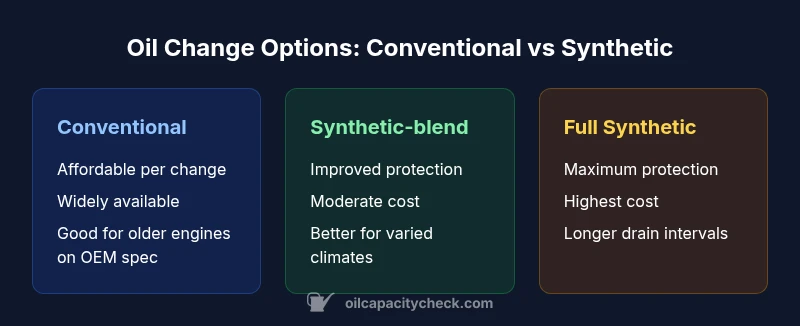
Oil types fall along a spectrum from conventional to synthetic. Conventional oil is refined crude with basic additive packs. Synthetic-blend oils combine conventional oil with synthetic components to improve stability and resistance to oxidation. Full synthetic oils are engineered from synthetic base stocks and tailored additive packages for maximum protection. Each type has a distinct performance profile: conventional oil is affordable and adequate for many older engines with light use; synthetic blends offer better protection in variable conditions; full synthetics provide the strongest protection for modern, high-stress engines. Understanding these differences helps you answer the question: which oil change to get for your vehicle?
Conventional oil: where it shines
Conventional oil excels in simple, older engine designs that have straightforward lubrication needs. It is typically the most budget-friendly option per change and is widely available at most quick lube shops and dealerships. For vehicles that operate mostly under normal conditions, conventional oil can meet the OEM specification when changed at manufacturer-recommended intervals. However, older seals and gaskets may not tolerate wide temperature shifts as well as synthetic options, and prolonged extreme use can accelerate wear if the oil’s protection is insufficient. In short, conventional oil shines where cost and basic maintenance matter most.
Synthetic-blend oil: the middle ground
Synthetic-blend oils offer a practical middle ground between conventional and full synthetic. They provide improved oxidation resistance and better film strength than conventional oils, which helps under higher temperatures and during heavy loads. This makes blends a good compromise for drivers who tow, drive in hot climates, or operate vehicles with modern engines that call for some form of synthetic protection but without the higher cost of full synthetic. Blends can extend drain intervals modestly compared with conventional oil, but performance benefits vary by vehicle and driving pattern.
Full synthetic oil: maximum protection
Full synthetic oils deliver the most robust protection against wear, sludge, and thermal breakdown. They maintain viscosity across a wider temperature range, improve engine cleanliness, and perform well under high-stress conditions such as frequent highway cruising, hot climates, or cold starts in very low temperatures. For many modern engines, manufacturers explicitly recommend synthetic or semi-synthetic oils to optimize performance and fuel economy. The upfront cost is higher, but the long-term protection and potential for longer drain intervals offset some of that expense over time.
How climate and driving affect your choice
Climate and daily driving patterns heavily influence the optimal oil-change choice. In extremely hot environments, synthetic oils resist thinning and oxidation, helping protect engine components at high temps. In cold climates, synthetic oils flow more easily at startup, reducing wear during cold starts. If you rack up long highway miles or tow heavy loads, synthetics’ superior film strength reduces friction more effectively than conventional oil. Conversely, in mild climates with light driving, conventional oil can still meet OEM requirements if changes occur on schedule.
Vehicle age and mileage considerations
As engines age, seal integrity, gunk buildup, and clearance tolerances can shift. Some owners start with conventional oil on older engines, then migrate gradually to synthetic blends or full synthetic if OEM recommendations allow. For high-mileage engines, synthetic oils can help maintain compression and reduce oil burn-off. Always verify the manufacturer’s guidance for oil type against your vehicle’s history—switching between oil types should be done with care to avoid ninety-day “re-conditioning” effects on seals and gaskets.
How to read OEM specs and viscosity
Viscosity numbers like 5W-30 or 0W-20 matter because they describe how oil behaves at different temperatures. OEM specs often specify a viscosity range that balances fuel economy and protection. If your climate or engine tune requires a different viscosity, synthetic oils often provide more flexibility without sacrificing protection. When in doubt, consult your owner’s manual and the Oil Capacity Check database to compare viscosity options that meet or exceed OEM requirements.
Practical steps to decide which oil change to get today
- Locate the OEM oil specification in your owner's manual or on the engine label. 2) Consider climate and typical driving (short trips vs. long highway). 3) Assess engine age and maintenance history; discuss signs of wear with a technician. 4) Compare prices and drain intervals among conventional, synthetic-blend, and full synthetic offerings. 5) Choose an oil and filter package that aligns with your maintenance budget and the vehicle’s warranty requirements. 6) Record the chosen oil type and schedule future changes accordingly.
Costs and maintenance considerations
Conventional oil changes are generally the least expensive per service, while synthetic options cost more upfront. However, when longer drain intervals and reduced wear are factored in, some drivers realize a lower total cost over several changes—especially with synthetic blends or full synthetics in engines that run hotter or for higher mileage. It’s important to budget for the long-term maintenance plan your vehicle requires and to avoid under- or over-maintaining the engine. Oil capacity and filter costs should also be considered in total ownership costs.
How to switch between oil types safely
If you decide to switch oil types, follow a proper drain-and-fill procedure and consider a shorter initial interval to monitor for leaks, consumption, or oil pressure changes. A transition from conventional to synthetic may prime seals differently, so watch for any abnormal oil consumption or smoking on startup. Likewise, moving from synthetic to conventional should be done only if the OEM allows and the engine has demonstrated reliability with the type you are using. A qualified technician can guide you through the transition and confirm you’re within warranty guidelines.
Common myths about oil changes
Myth: Synthetic oil wears out seals or causes leaks in older engines. Reality: Most modern seals are compatible with synthetic oils, though transitions should be monitored. Myth: You must switch to synthetic oil as soon as you reach a certain mileage. Reality: Follow OEM specs and your driving profile rather than a fixed mileage threshold. Myth: All oils last the same number of miles. Reality: Drain intervals depend on oil type, climate, and driving style. Clarifying these myths helps you pick which oil change to get more accurately.
Step-by-step checklist for your next oil change
- Confirm OEM oil specification and viscosity. - Choose the oil type matching your driving environment. - Inspect the filter and gasket seals for wear. - Reset maintenance reminders and log the change. - Note any engine performance changes after the next drive. - Schedule the subsequent service according to the selected interval. - Keep receipts and product details in your maintenance binder.
Final tips and maintenance mindset
A deliberate maintenance mindset saves money and preserves engine health. Always prioritize OEM recommendations, then layer in climate, mileage, and duty cycle considerations. Keep a running log of oil type, drain interval, and any symptoms like unusual noises or leaks. With the right oil-change strategy, your engine remains responsive, efficient, and reliable over the long haul.
Authority sources
For further expert guidance, consult reliable sources such as government and industry publications. Key references include the U.S. Department of Energy and EPA consumer guidance on motor oil, the National Highway Traffic Safety Administration, and SAE International technical standards. These sources provide foundational information on oil types, viscosity, and maintenance best practices.
Feature Comparison
| Feature | Conventional oil | Synthetic-blend oil | Full synthetic oil |
|---|---|---|---|
| Viscosity options commonly supported | 5W-30 / 10W-40 | 5W-30 / 10W-40 | 0W-20 / 5W-30 |
| Typical drain interval guidance | 3,000–5,000 miles | 5,000–7,500 miles | 7,500–10,000+ miles |
| Initial cost per change | Lower | Moderate | Higher |
| Best used for | Older engines with normal use | Moderate climate, mixed driving | Modern engines in extreme conditions |
What's Good
- Enhanced engine protection with synthetic oils
- Longer drain intervals when using synthetic or synthetic-blend
- Better cold-start performance and high-temp stability
- Wider availability and compatibility with many engines
Cons
- Higher upfront cost than conventional oil
- May be unnecessary for engines not specified for synthetic
- Synthetic oils can be overkill for very light, short-trip driving
Synthetic oils (especially blends) are often the best all-around choice for modern engines, with full synthetic providing maximum protection in extreme conditions; conventional oil remains viable for older, lightly used vehicles.
Choose based on OEM specs and climate. If you drive aggressively or in extreme temperatures, synthetic options offer stronger protection. For budget-conscious drivers with older engines, conventional oil can be appropriate when changes are kept to schedule.
People Also Ask
What is the difference between conventional, synthetic-blend, and full synthetic oils?
Conventional oil is the basic refined oil used in many older and simpler engines. Synthetic-blend combines conventional oil with synthetic components for better stability and protection. Full synthetic is engineered for maximum protection and performance, especially in extreme temperatures and demanding driving conditions.
Conventional is the budget option; synthetic blends add protection; full synthetic offers the strongest protection and performance.
Can I switch oil types between changes?
Yes, you can switch types if the OEM allows it and you monitor oil quality after the change. Transitioning from conventional to synthetic may require a shorter initial interval, and switching back should be discussed with a technician to avoid warranty issues.
You can switch types, but follow OEM guidelines and watch for leaks or consumption after the switch.
How often should I change oil with synthetic oil?
Drain intervals depend on vehicle, oil type, and climate. Synthetic oils often allow longer intervals than conventional, but always follow the manufacturer’s schedule and consider driving conditions like extreme heat or towing.
Follow the manufacturer’s schedule and consider driving conditions to decide on interval.
Is there a cost difference I should expect?
Yes. Conventional oil changes are usually cheaper per service, while synthetic oils cost more upfront. Some drivers save over time with longer drain intervals, especially with high-mileage engines.
Synthetic costs more upfront, but may save time between changes with longer intervals.
Do all cars require synthetic oil?
No. Many cars specify conventional oil. Some modern engines require synthetic for optimal performance and warranty compliance. Always check the OEM specification for your model.
Not all cars need synthetic; check your owner's manual.
Will switching oil types affect warranty?
It can, if the switch goes against OEM recommendations or if a failure is tied to the oil type and not to the vehicle. Always verify with the dealer or manufacturer when in doubt.
Switching oil types can affect warranty if it violates manufacturer specs.
The Essentials
- Check OEM specs before choosing oil type
- Synthetic oils excel in extreme temps and high-mileage engines
- Conventional oil is viable for older engines with light use
- Consider climate, mileage, and driving style in your decision
- Always log the oil type and interval for future maintenance