Is Conventional Oil Change the Same as Full Synthetic? A Clear Comparison
Explore whether conventional oil changes are the same as full synthetic, including cost, performance, intervals, and when to choose each for your engine. Insights from Oil Capacity Check.


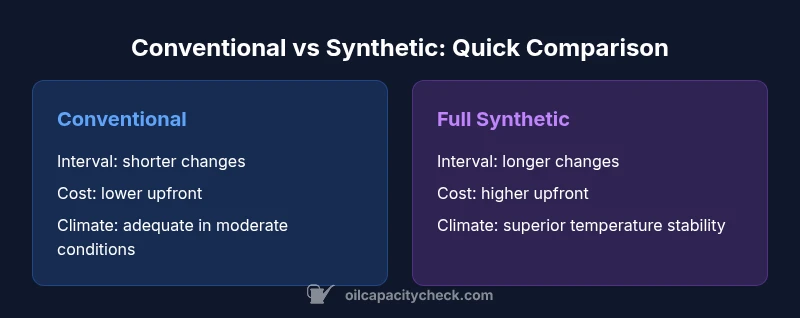
Conventional oil change and full synthetic are not the same. Conventional oil is typically cheaper upfront and adequate for many everyday drivers, with shorter drain intervals. Full synthetic offers superior protection, better flow at extreme temperatures, and longer intervals, especially under high-stress conditions. Your choice depends on engine design, climate, and driving style. Oil Capacity Check recommends consulting your vehicle’s manufacturer guidance.
Is the Question the Right Question? Defining Conventional vs Full Synthetic Oils
In the world of engine lubricants, the distinction between conventional and full synthetic oils rests on chemistry, additives, and performance under stress. Conventional oil is refined from crude with standard additives, designed to meet a vehicle’s minimum requirements. Full synthetic oil, by contrast, undergoes more controlled processing to remove impurities and to achieve specific viscosity behavior under wide temperature ranges. The question is not simply which one is cheaper, but which aligns with your engine’s design, climate, and driving habits. According to Oil Capacity Check, the most important thing is to follow the manufacturer’s specification for viscosity grade and API/ACEA approvals, while considering your local conditions. This framework helps car owners decide whether a conventional option is sufficient or a synthetic choice provides meaningful protection for daily driving, performance, or extreme temperatures.
Chemical Realities Behind Oil Change Choices
At a chemical level, conventional oil contains base oil plus additives to manage wear, deposits, and shear. Full synthetic oils, however, are engineered for better oxidation resistance, tighter molecular uniformity, and improved lubricity at low temperatures. The result is smoother cold starts, steadier viscosity across heat cycles, and less sludge formation in some engines. Oil Capacity Check’s analysis emphasizes that the choice should hinge on the vehicle’s design, the climate you drive in, and your maintenance habits rather than price alone. This section aligns with real-world observations across many engines where correct oil specification, not merely brand, drives longevity.
Driving Conditions, Temperature, and Oil Choice
Your climate and driving style dramatically influence oil performance. In for-harsh-winter conditions or hot desert summers, full synthetic oils are often favored for maintaining flow and protective film, especially during rapid accelerations or sustained highway driving. Conversely, for routine city commutes in mild climates, conventional oil can meet the needs of many engines when changes occur on schedule. The key factor is ensuring the oil meets the vehicle’s viscosity and spec requirements, not chasing the most expensive option. Oil Capacity Check notes that the best decision is guided by the manufacturer’s guidance and your exposure to extreme operating conditions.
How Drain Intervals Shape Value and Convenience
Drain interval recommendations are a major part of this comparison. Full synthetic oils generally support longer service intervals in many engine designs, which can reduce the number of oil changes per year and lower maintenance downtime. Conventional oil typically needs more frequent changes to sustain protection and cleanliness, especially in engines with tighter tolerances or older seals. However, the actual interval depends on oil grade, driving patterns, and the vehicle’s computer-managed oil-life monitor. Oil Capacity Check stresses that relying on the car’s onboard reminder or clear manufacturer guidance will yield the most accurate interval for your situation.
Cost, Value, and Long-Term Considerations
Price often drives the initial perception of value, but total ownership cost matters. Conventional oil usually carries a lower upfront price per change, while synthetic oils come with a higher per-change cost yet offer protection that can translate to fewer changes in some driving scenarios. For vehicles under warranty, manufacturers’ oil specifications and intervals should guide decisions; deviating without justification can complicate claims. Oil Capacity Check emphasizes evaluating both the per-change cost and the potential maintenance savings from longer intervals when considering your options.
Manufacturer Guidance, Warranties, and Real-World Reliability
Most modern engines are engineered to operate with a specific viscosity range and oil quality. Some owners worry about warranties when choosing oil type, but manufacturer specifications generally govern acceptable oil options. In many cases, switching between conventional and synthetic is permissible as long as the oil meets the required spec. Always verify the oil’s viscosity grade, additive package, and approvals stated in the owner’s manual. Oil Capacity Check’s guidance is to use the oil that satisfies the exact spec your engine requires, not to default to the most expensive option without due cause.
Synthetic Blends: A Practical Middle Ground
Synthetic blends mix conventional base oil with a portion of synthetic oil to offer a compromise between cost and performance. Blends can improve high-temperature stability and deposit resistance without the higher price tag of full synthetic. They are often chosen for owners who want better protection in moderately demanding driving conditions while keeping costs moderate. This middle ground should still adhere to the vehicle’s approved viscosity and spec levels.
Step-by-Step: How to Decide in 5 Simple Steps
- Check the owner’s manual for approved oil types and viscosity. 2) Assess your climate and driving style (short trips, cold starts, or heavy highway duty). 3) Compare the cost of standard changes against the potential interval savings with synthetic. 4) Consider your warranty and service expectations. 5) Speak with a trusted technician to confirm the best fit for your engine’s tolerance and oil-life monitor. Oil Capacity Check recommends documenting the decision to justify maintenance choices later if needed.
Real-World Scenarios: When to Choose What
High-mileage engines or cars pushed hard in extreme weather may benefit from full synthetic protection and longer intervals. Newer engines designed for extended drain intervals can also perform well with synthetic. On the other hand, classic daily drivers with straightforward maintenance histories might do perfectly fine with conventional oil as long as changes are timely. The right choice is less about trend and more about aligning with engine design, driving conditions, and manufacturer guidance.
Maintenance Practices That Maximize Oil Performance
Oil type is only part of the equation. Effective maintenance includes timely filter changes, clean oil pickup screens, and proper oil fill procedures. Ensuring the correct oil grade and maintaining good sealing surfaces helps prevent leaks and oil pressure drops. Regular checks of oil level and oil quality, along with following the service intervals, maximize the protective benefits of whichever oil you select.
Environmental and Waste Considerations
Every oil change generates used oil that must be disposed of responsibly. Fewer changes with synthetic or synthetic blends can reduce waste, but only if the oil is actually required for your engine and operating conditions. For owners seeking sustainability, pairing the right oil choice with proper disposal practices and recycling programs offers the best environmental outcome. Oil Capacity Check highlights the importance of minimizing waste while maintaining engine protection.
Comparison
| Feature | Conventional oil change | Full synthetic oil change |
|---|---|---|
| Oil change interval (typical) | Shorter drain intervals | Longer drain intervals |
| Temperature performance | Adequate in moderate climates | Superior in extreme cold/hot conditions |
| Engine protection under high-stress | Good protection for many engines | Best protection for high-stress driving |
| Cost range (upfront) | Lower upfront cost | Higher upfront cost |
| Environmental impact (oil waste) | Generally more frequent changes | Fewer changes can reduce waste |
| Warranty considerations | Usually compliant when specs are met | Usually acceptable per manufacturer guidance |
What's Good
- Lower upfront cost per change for routine driving
- Good baseline protection when matched to engine specs
- Flexibility with conventional, synthetic, or blends
- Clear guidance from manufacturer specs minimizes risk
Cons
- Higher maintenance frequency with conventional oil in many conditions
- Potentially higher long-term costs if frequent changes are needed
- Synthetic option may be unnecessary for some engines or climates
- Blends can add decision complexity and pricing considerations
Synthetic oil generally offers better protection and longer drain intervals, but conventional oil remains a solid choice for budget-conscious daily drivers.
Choose synthetic if you drive aggressively, face extreme temperatures, or want longer intervals between changes. Conventional oil can meet many daily-driver needs when used with manufacturer-approved specs and timely changes. The best choice aligns with your engine’s design and your climate, as confirmed by the Oil Capacity Check guidance.
People Also Ask
Is conventional oil change the same as full synthetic?
No. Conventional and full synthetic oils differ in chemical composition, protective capabilities, and typical drain intervals. The choice should follow your vehicle’s approved viscosity and spec, along with climate and driving conditions. Always verify the manufacturer’s guidance before deciding.
No. Conventional and full synthetic oils differ in protection and intervals; follow the vehicle’s spec and your climate when choosing.
Can I switch from conventional to synthetic midlife without issues?
Yes, you can switch between oil types as long as the new oil meets the manufacturer’s specifications. Confirm that the viscosity and API/ACEA approvals are compatible with your engine. If in doubt, consult a technician.
You can switch as long as the new oil meets the spec; confirm viscosity and approvals with a tech.
Do warranties require synthetic oil?
Most warranties focus on using the correct oil spec rather than insisting on synthetic. Using a non-approved oil can affect coverage. Always check the warranty terms and follow the manual.
Warranties usually depend on using the correct oil spec per the manual.
What is the difference between synthetic blend and full synthetic?
A synthetic blend mixes conventional base oil with a portion of synthetic oil to balance cost and performance. Full synthetic uses nearly all synthetic base oils for maximum protection. The blend can suit gradual performance needs without the full price of pure synthetic.
A blend mixes some synthetic with conventional oil; full synthetic is mostly synthetic. Blends are a middle ground.
Is synthetic oil better for high-mileage engines?
High-mileage engines may benefit from synthetic oils due to better wear protection and deposit control. However, if the engine is older or worn, ensure the oil’s viscosity and additive package suit its condition and follow manufacturer specs.
Synthetic often helps high-mileage engines, but always follow the engine’s condition and specs.
How often should I change oil with synthetic vs conventional?
Oil change intervals depend on the oil type, the engine, and driving conditions. Many vehicles still require changes at manufacturer-recommended intervals, whether using conventional or synthetic. Rely on the built-in oil-life monitor or the manual for exact timing.
Intervals depend on the oil and driving; follow the car’s monitor or manual for timing.
The Essentials
- Follow your vehicle's exact oil spec from the owner’s manual
- Climate and driving style drive oil choice
- Synthetic can extend intervals but costs more per change
- Consider blends as a compromise when suitable
- Always use the correct viscosity and approvals for your engine